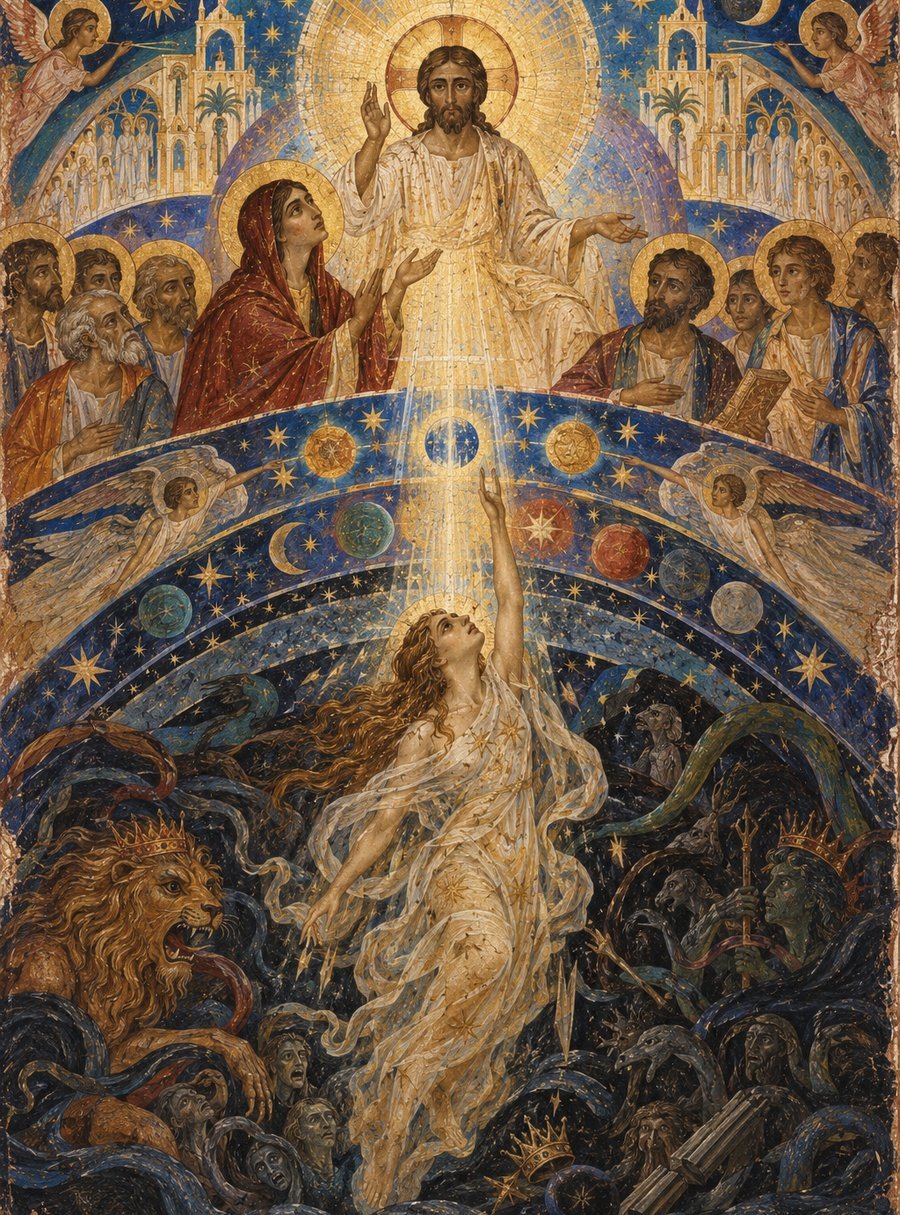
Pistis Sophia
“You are blessed beyond every woman on the earth,” the risen Jesus tells Mary Magdalene: and Peter complains she will not stop talking. The Gnostic gospel where a woman does the interpreting, in the Coptic it survived in.
Read it now
The Mary volume, complete: 26 chapters in Sahidic Coptic, word by word, with pronunciation, fluent English and a clickable dictionary. Her first question, the blessing beyond all women, both of Peter’s protests, the fall and repentances of Sophia, all five Odes of Solomon quotations, the speck-of-dust ladder, and the saying that seats her highest of all: I am they, and they are I.
❦ Read Pistis Sophia in CopticA taste of the format. Open the reader above to read all of Pistis Sophia word by word.
About this book
Why read it
A gospel the Church never included, in a language almost no one can read, in which the person who understands Jesus best is a woman. You are holding the actual Coptic of the Askew Codex, word by word.
The lore
The manuscript was bought by a London doctor, Anthony Askew, in 1773 and sat for eighty years before anyone printed it. It tells of the eleven years after the resurrection: Jesus ascends through the heavens, returns clothed in light, and explains to his disciples how Pistis Sophia: Faith-Wisdom, a power of the upper world: fell into chaos by trusting a false light, sang thirteen repentances, and was drawn back up. The disciples interpret her songs through the Psalms and the Odes of Solomon; Mary Magdalene interprets more than all the rest together.
What’s juicy
Jesus tells Mary she will become the fullness of all fullnesses. When Peter darts forward to protest that ‘this woman’ has let none of the men speak, Jesus does not silence her: he says whoever’s spirit seethes may speak, and hands Peter the floor to prove his does. Mary the mother of Jesus is told she will be called blessed from one end of the earth to the other. And the book preserves, nowhere else on earth, the lost first Ode of Solomon.
How it might change you
The Coptic keeps what every translation flattens: the Greek words for faith, wisdom, mystery, repentance and blessing sitting inside Egyptian sentences, each one a door. Read it word by word and the most famous quarrel in Gnostic literature turns out to be about who is allowed to interpret: and the book’s answer is anyone whose power has reached a boil.
Core vocabulary
The words that carry the book. Learn these and most of the text opens up; each links, in the reader, to its full entry. Counts are how often the word appears.
- ⲟⲩⲟⲉⲓⲛ light — the book’s central word265×
- ϫⲱ say, speak, tell235×
- ϣⲱⲡⲉ become, come to pass, happen169×
- ϣⲁϫⲉ word, saying153×
- ϭⲟⲙ power133×
- ⲧⲏⲣϥ the All, the universe124×
- ⲉⲃⲟⲗ out, forth, away111×
- ⲥⲟⲫⲓⲁ wisdom103×
- ⲙⲩⲥⲧⲏⲣⲓⲟⲛ mystery98×
- ⲉⲓ come, go92×
- ⲧⲟⲡⲟⲥ place, region87×
- ⲡⲓⲥⲧⲓⲥ faith, trust83×
- ϫⲓⲥⲉ height71×
- ϩⲉ manner, way64×
- ⲡⲉϫⲉ said (narrative formula)61×
- ϫⲓ take, receive61×
- ϫⲟⲉⲓⲥ lord, master59×
- ⲉⲓⲣⲉ do, make56×
- ⲓⲏⲥⲟⲩⲥ Jesus53×
- ⲛⲟϭ great, big53×
- ⲛⲁⲩ time, moment52×
- ⲡⲣⲟⲃⲟⲗⲟⲟⲩⲉ emanations, projections52×
- ⲁⲓⲱⲛ aeon — an age of time made into a region of heaven50×
- ϯ give48×
- ⲭⲁⲟⲥ the chaos — the lower region Sophia fell into48×
- ϥⲓ take, carry, lift48×
- ⲕⲟⲥⲙⲟⲥ world47×
- ⲉⲓⲛⲉ bring, carry46×
- ϣⲟⲣⲡ first45×
- ⲣⲱⲙⲉ man, human being45×
- ⲛⲟⲩϩⲙ rescue, deliver44×
- ⲃⲱⲗ solution43×
- ϣⲓⲛⲉ seek, ask, inquire42×
- ⲡⲉ heaven, sky40×
- ⲥⲱⲧⲙ hear39×
- ⲁⲩⲑⲁⲇⲏⲥ Self-willed — the arrogant power who rules the chaos38×
- ⲉⲥⲏⲧ down35×
- ⲙⲁⲑⲏⲧⲏⲥ disciple, student34×
- ⲕⲁⲕⲉ darkness34×
- ⲯⲩⲭⲏ soul33×
Read our finished collection · the library · The Great Library Project
Reading is always free. Patrons and founders are the ones who keep it that way.