Xenophon of Ephesus, An Ephesian Tale 1.2.6 · 1.2.6
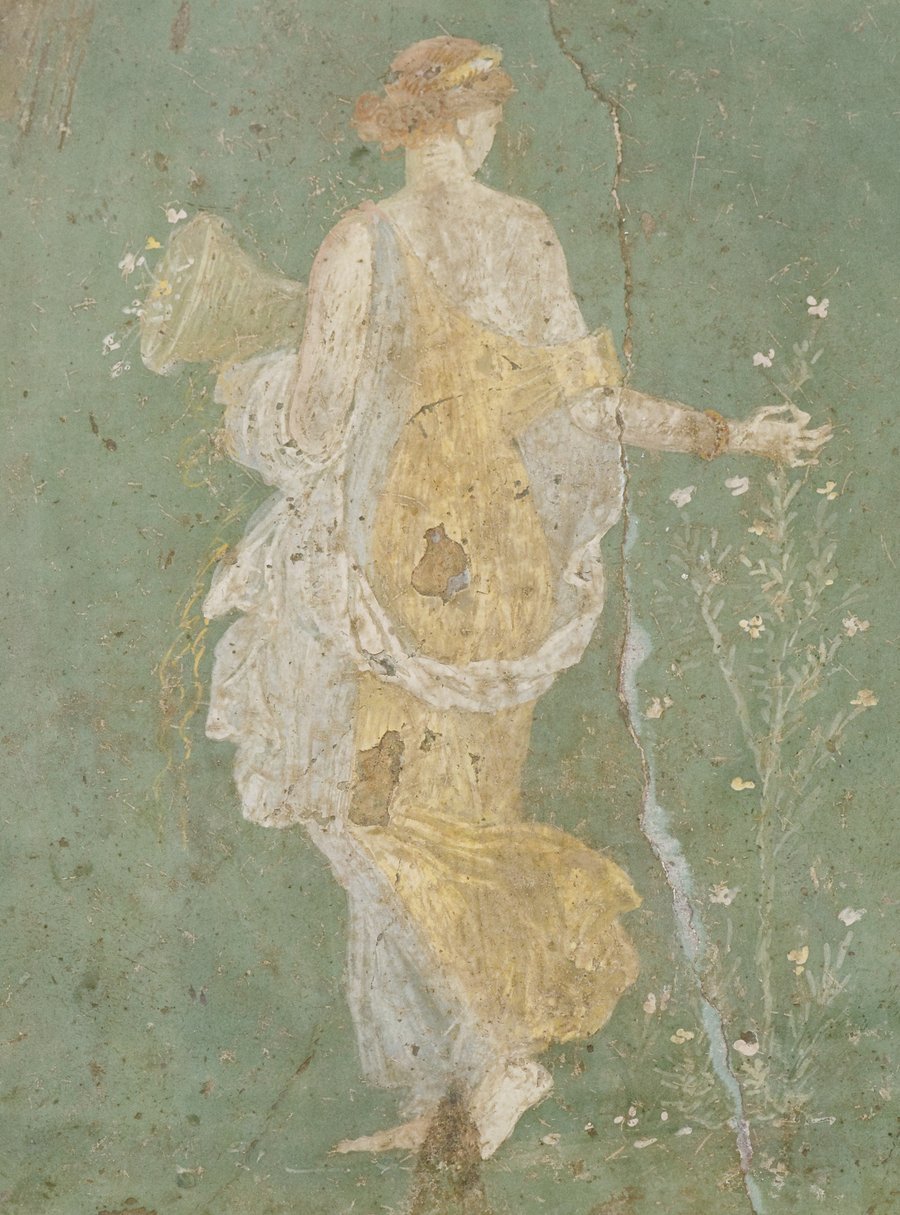
Anthia dressed as a huntress
Read the full text in our reader
καὶ ὁ τοῦ σχήματος κόσμος πολὺς εἰς ὥραν συνεβάλλετο· κόμη ξανθή, ἡ πολλὴ καθειμένη, ὀλίγη πεπλεγμένη, πρὸς τὴν τῶν ἀνέμων φορὰν κινουμένη· ὀφθαλμοὶ γοργοί, φαιδροὶ μὲν ὡς κόρης, φοβεροὶ δὲ ὡς σώφρονος· χιτὼν ἁλουργής, ζωστὸς εἰς γόνυ, μεχρὶ βραχιόνων καθειμένος, νεβρὶς περικειμένη, γωρυτὸς ἀνημμένος, τόξα, ἄκοντες φερόμενοι, κύνες ἑπόμενοι.
And the adornment of her dress added much to her beauty: blond hair, most of it hanging loose and a little braided, moving with the rush of the winds; eyes lively, bright like a girl's but forbidding like a modest woman's; a purple tunic, belted to the knee and reaching down to her upper arms; a fawnskin wrapped around her, a quiver slung on her, a bow, javelins carried, and dogs following.
Word by word
The setting
Book 1, chapter 2. The sentence about Anthia goes on: how she was dressed for the festival.
A note on this passage
This is the dress of Artemis the huntress, and in the next section the crowd takes Anthia for the goddess. In Callimachus' Hymn to Artemis the child goddess asks Zeus to let her wear a tunic belted to the knee, so that she can hunt wild beasts (Hymn to Artemis 11–12); Anthia's tunic is ζωστὸς εἰς γόνυ, "belted to the knee." ἁλουργής, "purple," is literally "sea-wrought": the dye came from the murex, a sea snail.
Read the full commentary — and tap any word for its dictionary entry — in the interlinear reader.
Open Xenophon of Ephesus, An Ephesian Tale 1.2.6 in the full reader
Always open passages in the reader
From the Great Library
You are reading a page of the Xenophon of Ephesus, An Ephesian Tale — the whole book is free in our interlinear reader.
The Great Library Project presses the classics in their original languages, glossed word by word — free to read, always. Browse the whole library.
Also on our shelves:
Xenophon of Ephesus, An Ephesian Tale 1.2.6 — The Great Library Project interlinear edition · greatlibraryproject.com/book/ephesiantale/1.2.6/