Herodotus, Histories 1.30.1 · 1.30.1
The treasure-houses
Read the full text in our reader
Αὐτῶν δὴ ὦν τούτων καὶ τῆς θεωρίης ἐκδημήσας ὁ Σόλων εἵνεκεν ἐς Αἴγυπτον ἀπίκετο παρὰ Ἄμασιν καὶ δὴ καὶ ἐς Σάρδις παρὰ Κροῖσον. ἀπικόμενος δὲ ἐξεινίζετο ἐν τοῖσι βασιληίοισι ὑπὸ τοῦ Κροίσου· μετὰ δὲ ἡμέρῃ τρίτῃ ἢ τετάρτῃ κελεύσαντος Κροίσου τὸν Σόλωνα θεράποντες περιῆγον κατὰ τοὺς θησαυρούς, καὶ ἐπεδείκνυσαν πάντα ἐόντα μεγάλα τε καὶ ὄλβια.
For these reasons, then, and to see the world, Solon went abroad and came to Egypt, to Amasis, and then to Sardis, to Croesus. When he arrived, he was entertained in the palace by Croesus; and on the third or fourth day, at Croesus's order, servants took Solon around the treasuries and showed him how great and splendid everything was.
Word by word
The setting
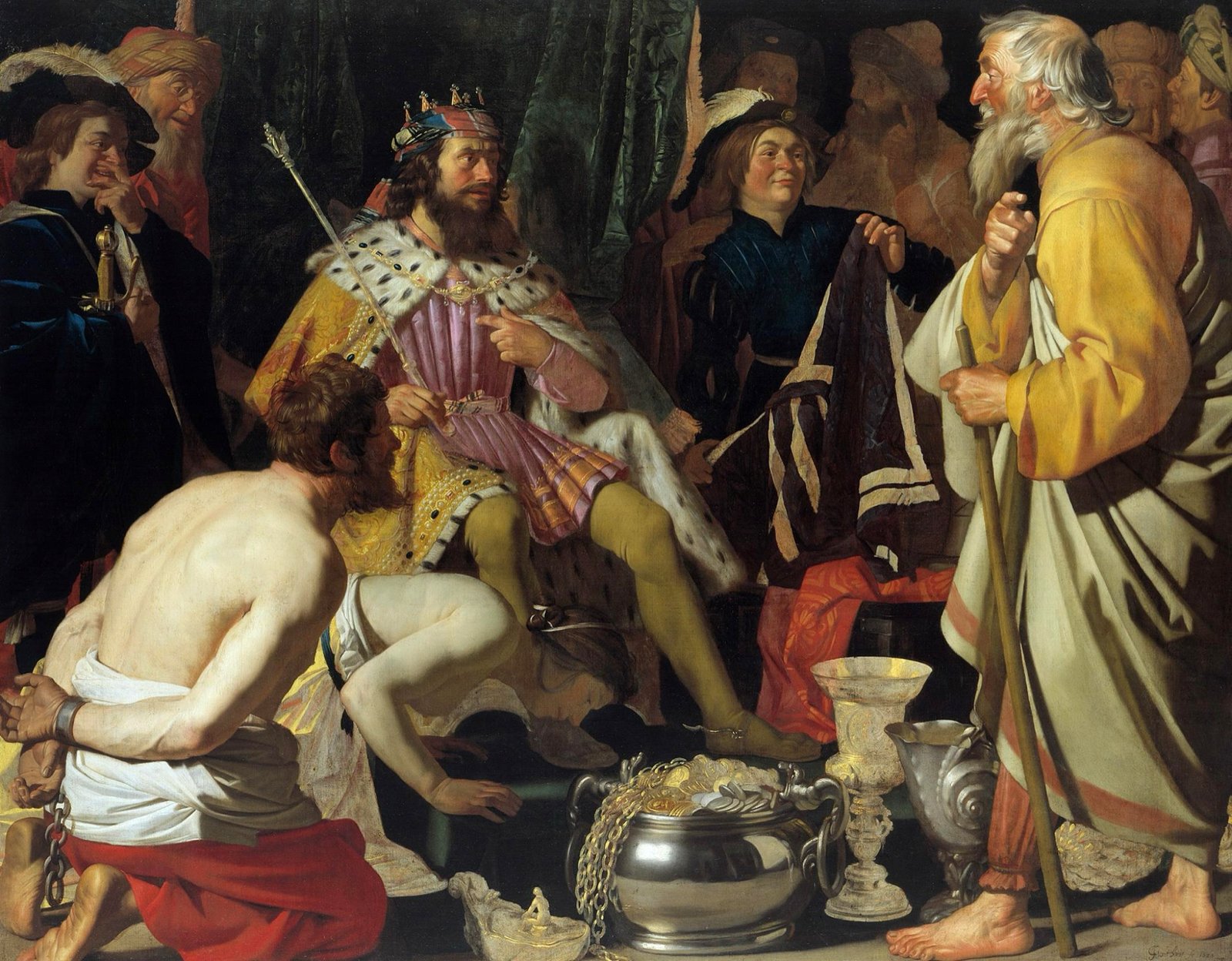
Solon travels to Egypt and then to Sardis. Croesus makes sure he sees everything.
A note on this passage
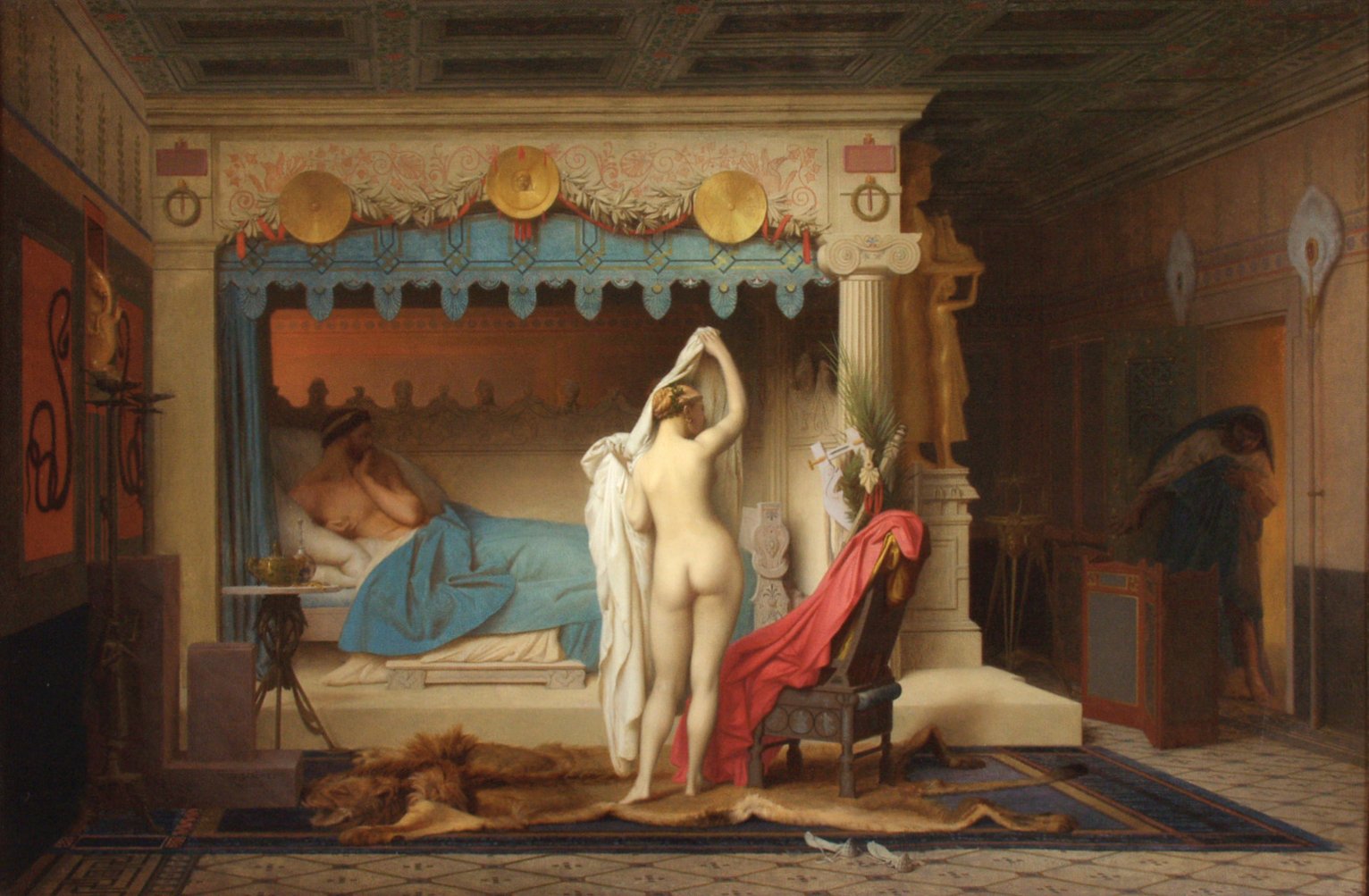
Croesus does not show Solon the treasure himself. He waits a few days, then has servants walk the guest through the treasure-houses, and they <em>epedeiknysan</em>, "showed off," everything. It is the verb the queen used of Candaules, who "displayed" her to Gyges (1.11.5), and a relative of the <em>apodexis</em>, the "showing forth," in the book's first sentence. Herodotus's kings like to exhibit what they own, and they tend to regret it.
The sentence ends on the word that will carry the whole conversation: <em>olbia</em>, the treasures are "splendid," rich, blessed. Croesus has chosen his ground. When he asks his question in the next section, he will use the same word, <em>olbiōtatos</em>, "most blessed," and he will mean what the servants just showed.
Read the full commentary — and tap any word for its dictionary entry — in the interlinear reader.
Open Herodotus, Histories 1.30.1 in the full reader
Always open passages in the reader
From the Great Library
You are reading a page of the Herodotus, Histories — the whole book is free in our interlinear reader.
The Great Library Project presses the classics in their original languages, glossed word by word — free to read, always. Browse the whole library.
Also on our shelves:
Herodotus, Histories 1.30.1 — The Great Library Project interlinear edition · greatlibraryproject.com/book/herodotus/1.30.1/