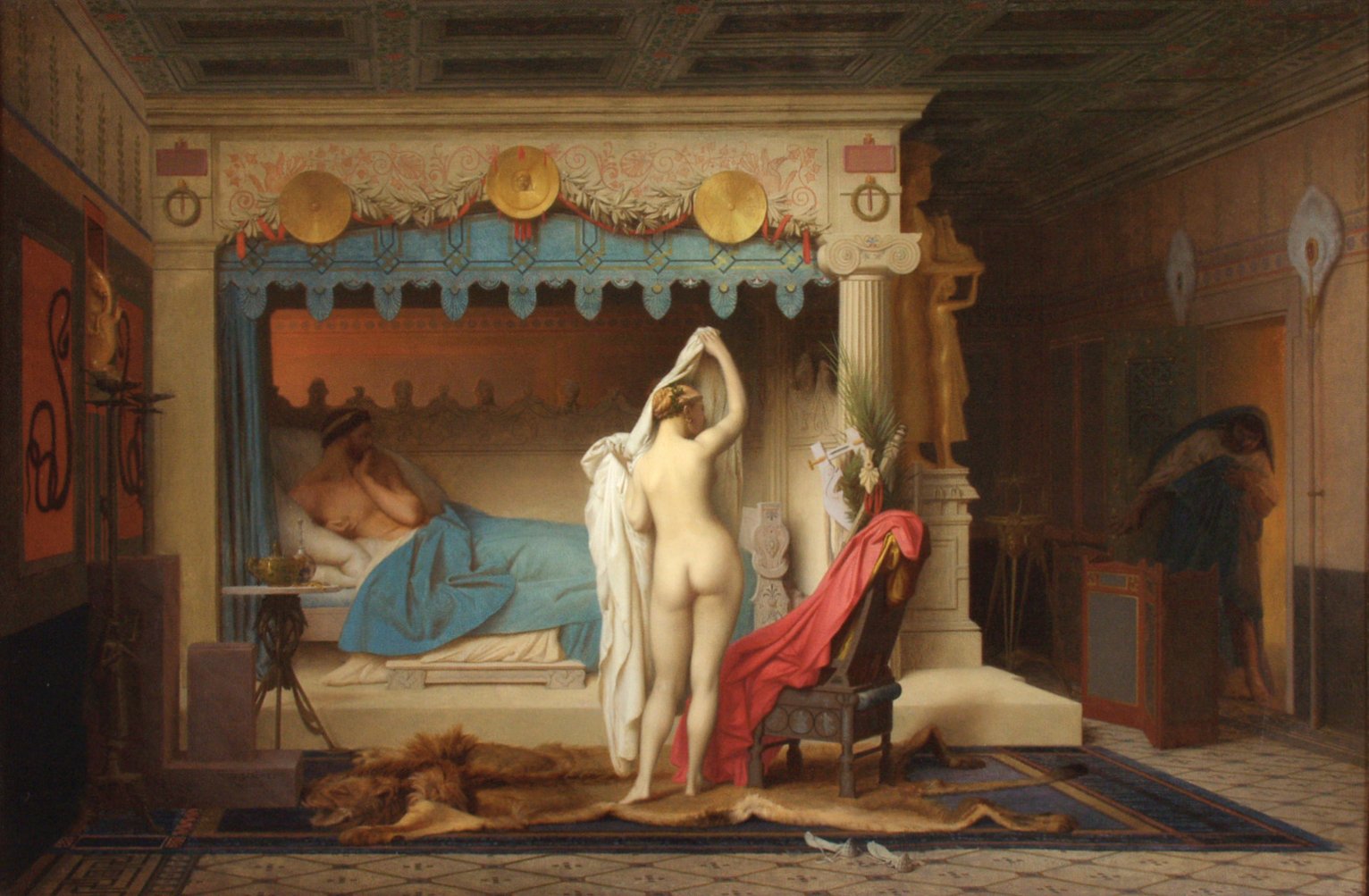
Herodotus, Histories 1.31.1 · 1.31.1
"Cleobis and Biton"
Read the full text in our reader
Herodotus — Ὡς δὲ τὰ κατὰ τὸν Τέλλον προετρέψατο ὁ Σόλων τὸν Κροῖσον εἴπας πολλά τε καὶ ὄλβια, ἐπειρώτα τίνα δεύτερον μετʼ ἐκεῖνον ἴδοι, δοκέων πάγχυ δευτερεῖα γῶν οἴσεσθαι. ὃ δʼ εἶπε
Solon — Κλέοβίν τε καὶ Βίτωνα.
When Solon had provoked Croesus by telling so much and so blessed about Tellus, Croesus asked whom he had seen second after him, fully expecting to win second prize at least. He said: "Cleobis and Biton."
Word by word
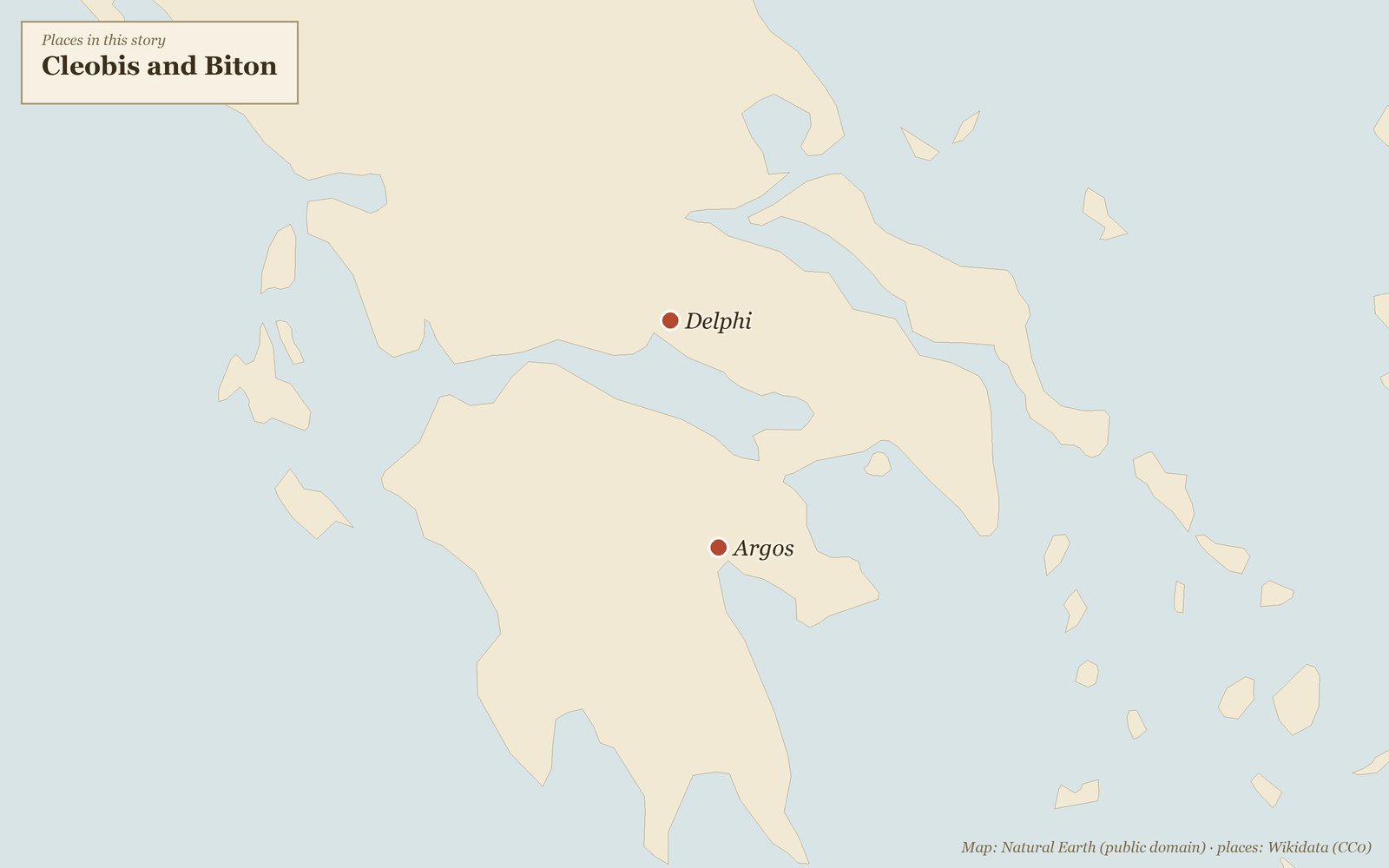
The setting
Croesus tries again, expecting at least second place.
A note on this passage
The scene has the rhythm of a comedy. Croesus, stung, asks who comes second, dokeōn pagchy deutereia gōn oisesthai, "thinking he would surely carry off the second prize at least." Deutereia is the word for the runner-up's prize at the games. The richest king in the world is now competing for silver, and he still expects to win it.
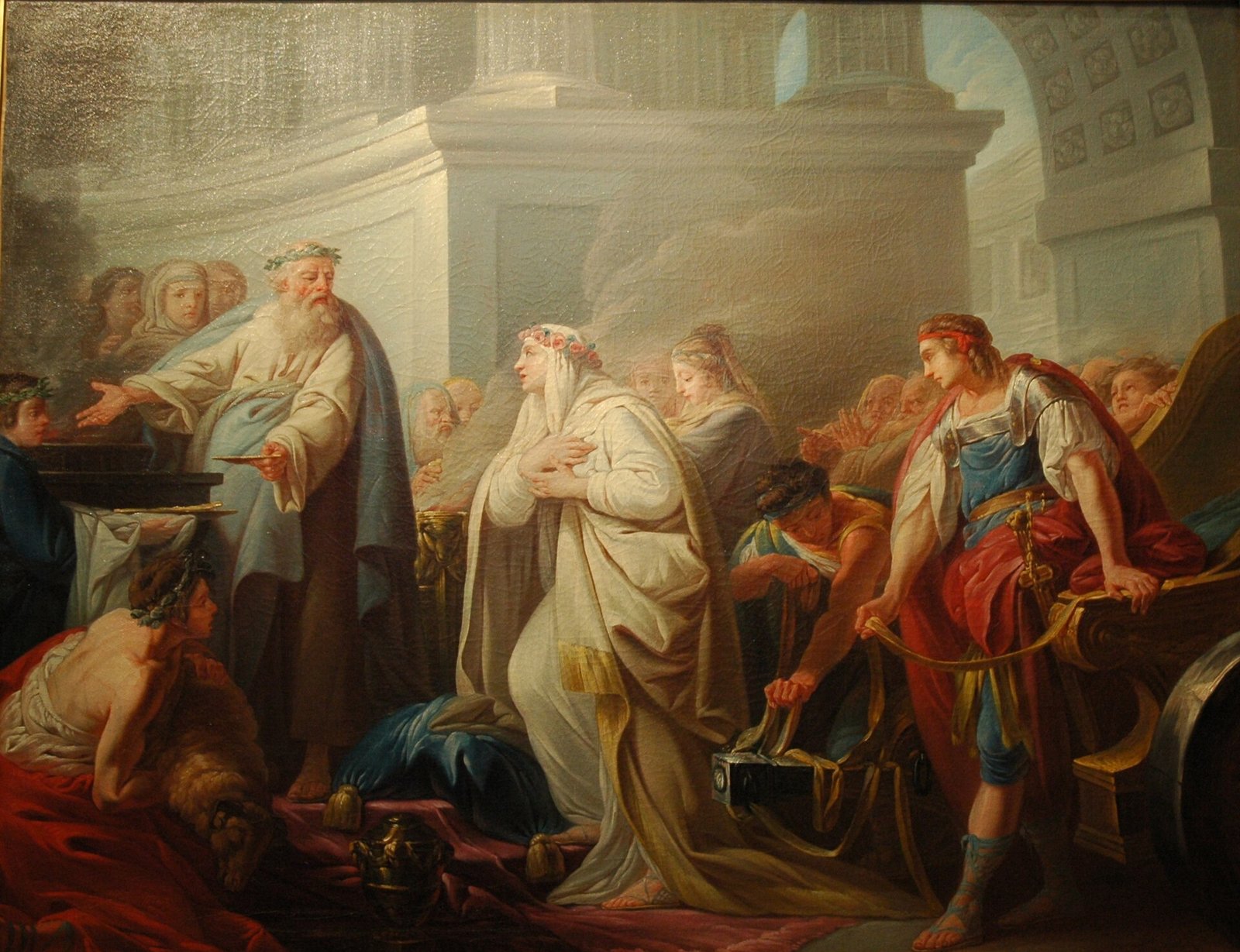
Solon names two more nobodies, and this time not even Athenians. Cleobis and Biton are young men of Argos. Herodotus lets the names land by themselves, three words and no comment, and then Solon tells their story. It is the most famous story in the conversation, and it is about a mother, a festival, and two oxen that did not come in from the field.
Read the full commentary — and tap any word for its dictionary entry — in the interlinear reader.
Open Herodotus, Histories 1.31.1 in the full reader
Always open passages in the reader
From the Great Library
You are reading a page of the Herodotus, Histories — the whole book is free in our interlinear reader.
The Great Library Project presses the classics in their original languages, glossed word by word — free to read, always. Browse the whole library.
Also on our shelves:
Herodotus, Histories 1.31.1 — The Great Library Project interlinear edition · greatlibraryproject.com/book/herodotus/1.31.1/