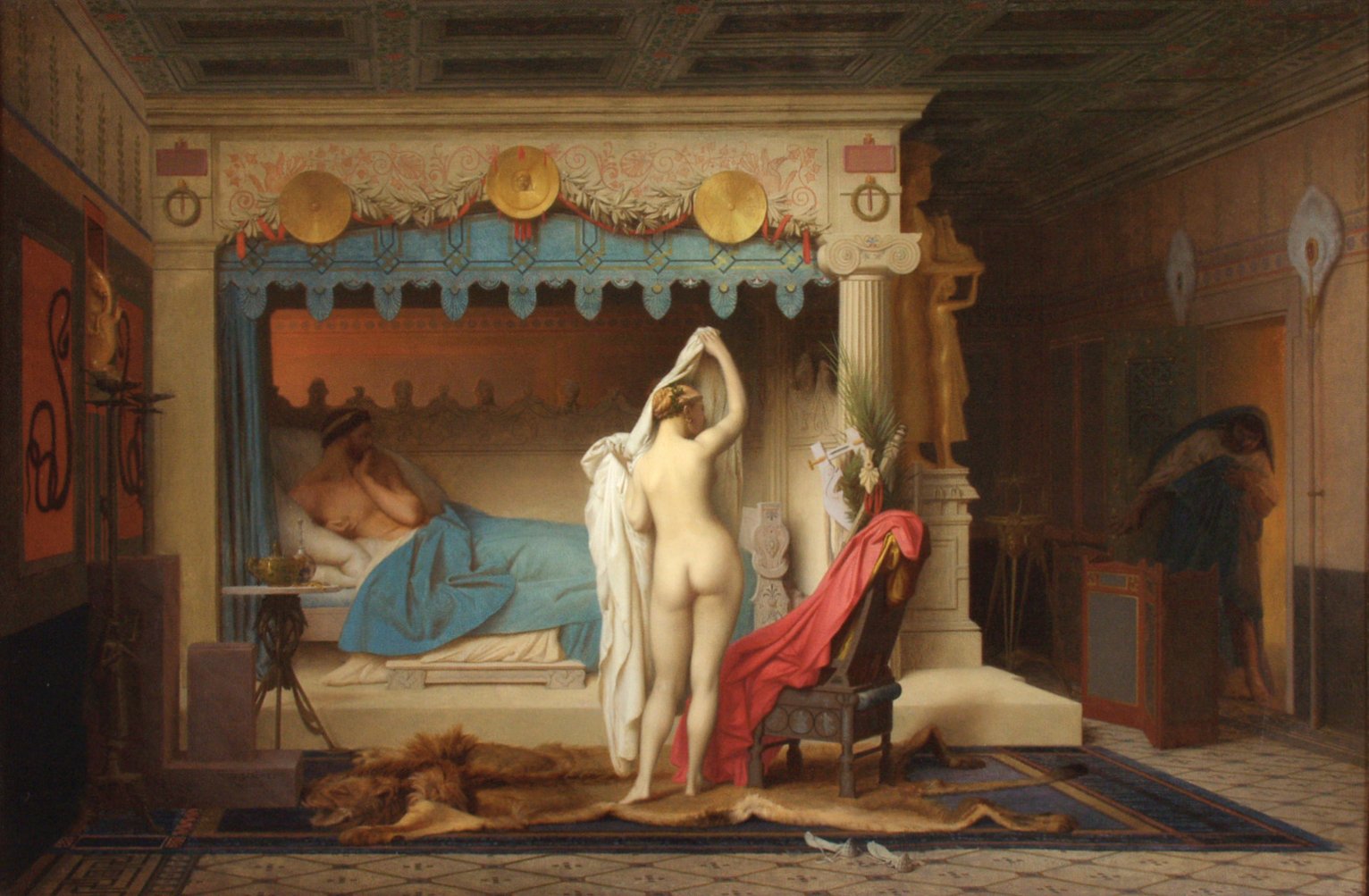
Herodotus, Histories 1.61.1 · 1.61.1
A marriage without children
Read the full text in our reader
Ἀπολαβὼν δὲ τὴν τυραννίδα τρόπῳ τῷ εἰρημένῳ ὁ Πεισίστρατος κατὰ τὴν ὁμολογίην τὴν πρὸς Μεγακλέα γενομένην γαμέει τοῦ Μεγακλέος τὴν θυγατέρα. οἷα δὲ παίδων τέ οἱ ὑπαρχόντων νεηνιέων καὶ λεγομένων ἐναγέων εἶναι τῶν Ἀλκμεωνιδέων, οὐ βουλόμενός οἱ γενέσθαι ἐκ τῆς νεογάμου γυναικὸς τέκνα ἐμίσγετό οἱ οὐ κατὰ νόμον.
Having gotten back the tyranny in the manner that had been described, Peisistratus, according to the agreement made with Megacles, marries the daughter of Megacles. But since he already had grown sons, and the Alcmaeonids were said to be accursed, not wishing children to come from his newly married wife, he had relations with her not in the customary way.
Word by word
The setting
Peisistratus, restored, marries Megacles's daughter as agreed, but will not let her bear him children, since the Alcmaeonids are held accursed.
A note on this passage
The marriage looks like the plot resolving cleanly, and Herodotus even reuses the same present-tense trick as before, gamees, "marries," landing the wedding right in front of the reader as if it is happening now. Then one clause undoes the whole arrangement: Peisistratus will not let the marriage work. The reason he gives, that the Alcmaeonids were legomenōn enageōn, "said to be accursed," reaches back decades, to a killing at the altar that Herodotus has not even told the reader about yet. A single word, enageōn, is carrying an entire family history that the text has not spelled out.
What Peisistratus actually does is stated almost clinically: emisgeto hoi ou kata nomon, "he had relations with her, not in the customary way." Herodotus does not spell out what that means, and he does not need to; the phrase is precise enough that ancient and modern readers alike have understood it the same way, intercourse deliberately arranged to avoid children. A tyrant who has just won back a city with a woman dressed as a goddess now manages his own marriage bed with the same calculation, treating his wife's body as one more instrument in a dynastic problem.
Read the full commentary — and tap any word for its dictionary entry — in the interlinear reader.
Open Herodotus, Histories 1.61.1 in the full reader
Always open passages in the reader
From the Great Library
You are reading a page of the Herodotus, Histories — the whole book is free in our interlinear reader.
The Great Library Project presses the classics in their original languages, glossed word by word — free to read, always. Browse the whole library.
Also on our shelves:
Herodotus, Histories 1.61.1 — The Great Library Project interlinear edition · greatlibraryproject.com/book/herodotus/1.61.1/