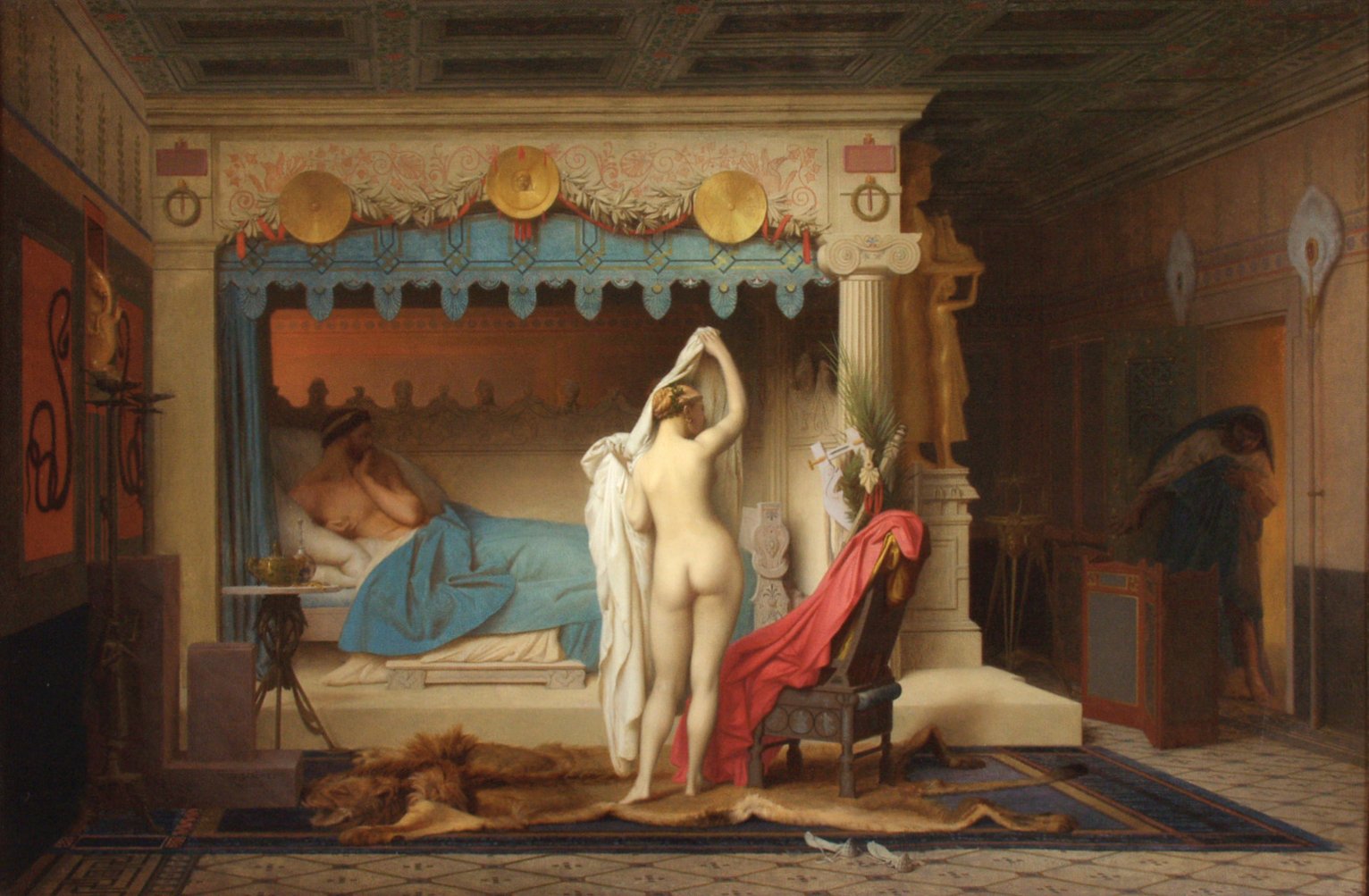
Herodotus, Histories 1.86.1 · 1.86.1
The fall of Sardis
Read the full text in our reader
Οἱ δὲ Πέρσαι τάς τε δὴ Σάρδις ἔσχον καὶ αὐτὸν Κροῖσον ἐζώγρησαν, ἄρξαντα ἔτεα τεσσερεσκαίδεκα καὶ τεσσερεσκαίδεκα ἡμέρας πολιορκηθέντα, κατὰ τὸ χρηστήριόν τε καταπαύσαντα τὴν ἑωυτοῦ μεγάλην ἀρχήν. λαβόντες δὲ αὐτὸν οἱ Πέρσαι ἤγαγον παρὰ Κῦρον.
Now the Persians took Sardis and captured Croesus himself, who had ruled fourteen years and been besieged fourteen days, and, according to the oracle, had brought his own great empire to an end. Having taken him, the Persians led him to Cyrus.
Word by word
The setting
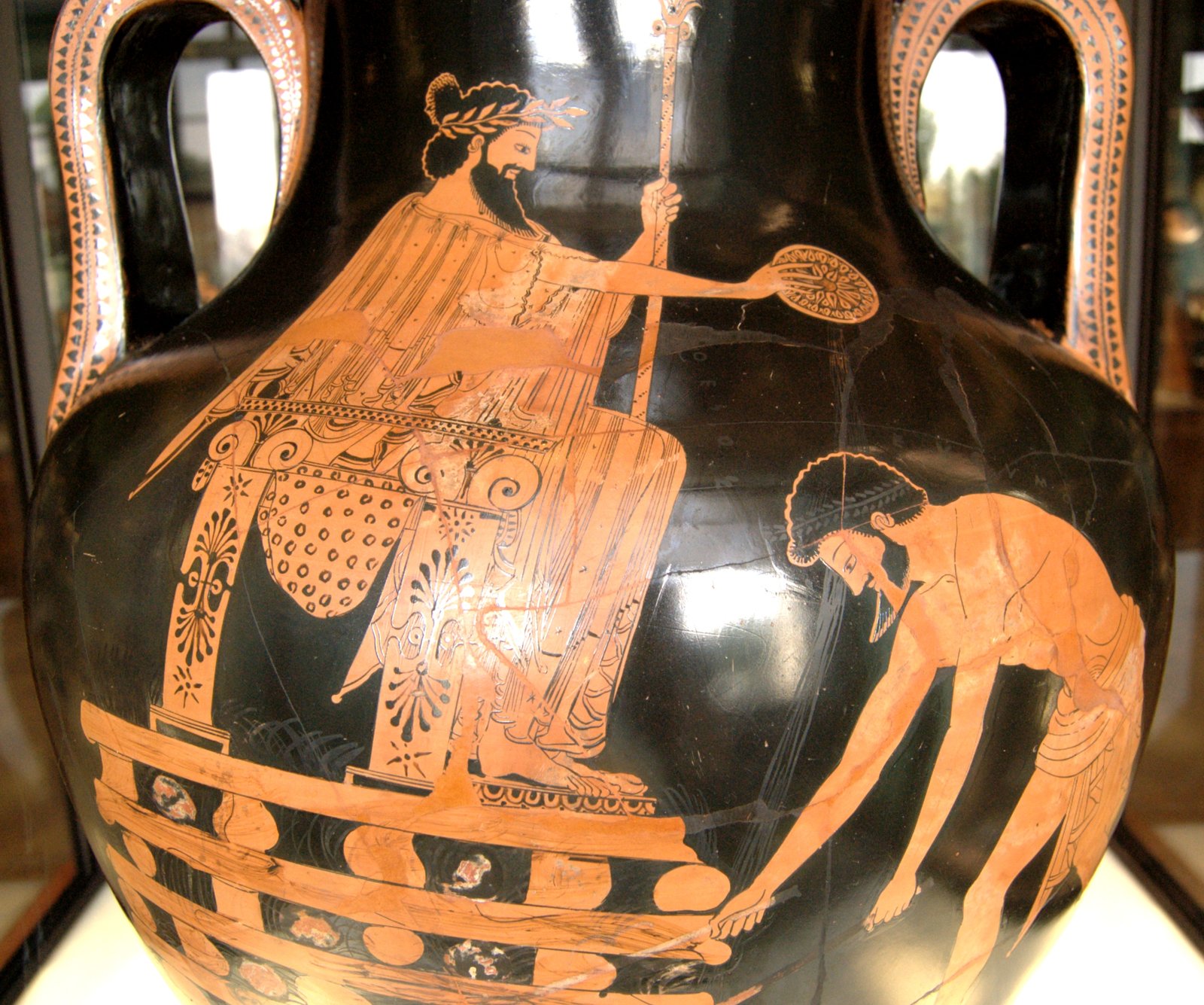
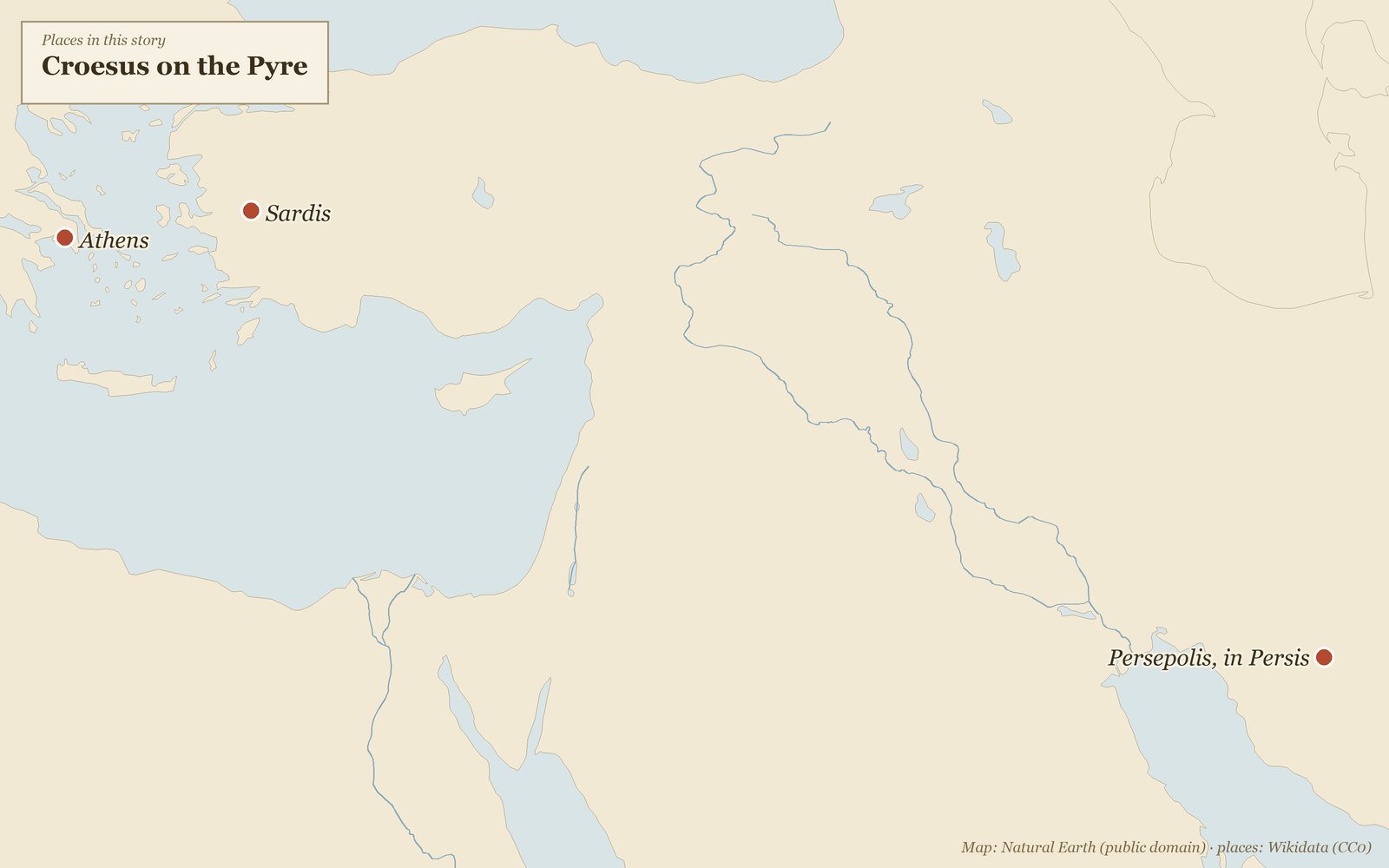
Sardis has fallen after a fourteen-day siege. The Persians capture Croesus, who has ruled for fourteen years, and bring him before Cyrus.
A note on this passage
Herodotus uses ezōgrēsan, "they took him alive," a verb built on the word for a wild creature run down and caught rather than killed. Sardis has fallen, but Croesus himself survives the fall, which is exactly what the story needs next. The fourteen years and fourteen days are not decoration: Herodotus likes paired numbers, and here a whole reign and the short siege that ends it are measured by the same count, as if his rule were closing as neatly as a circle. He adds kata to chrēstērion, "according to the oracle," a quiet confirmation that the mule riddle from three chapters back has already come true: Cyrus, son of a Median mother and a Persian father, was the mule, and Croesus read the sign wrong at the very moment he thought the danger behind him.
The last word before the sentence ends is telling: archēn, "empire, rule," the same word that closed Croesus's question to Delphi a few chapters earlier, when he asked whether his mounarchiē would last. It has not lasted. The sentence that opened with the Persians taking a city closes with a king losing everything he once asked a god about. Herodotus keeps the handoff brisk, almost businesslike: a clause of judgment on Croesus's fall, then four plain words, "they led him to Cyrus," and the narrative moves straight into the scene that has made this chapter famous for as long as anyone has read Greek.
Read the full commentary — and tap any word for its dictionary entry — in the interlinear reader.
Open Herodotus, Histories 1.86.1 in the full reader
Always open passages in the reader
From the Great Library
You are reading a page of the Herodotus, Histories — the whole book is free in our interlinear reader.
The Great Library Project presses the classics in their original languages, glossed word by word — free to read, always. Browse the whole library.
Also on our shelves:
Herodotus, Histories 1.86.1 — The Great Library Project interlinear edition · greatlibraryproject.com/book/herodotus/1.86.1/