Herodotus, Histories 1.91.1 · 1.91.1
Even a god cannot escape it
Read the full text in our reader
ἀπικομένοισι δὲ τοῖσι Λυδοῖσι καὶ λέγουσι τὰ ἐντεταλμένα τὴν Πυθίην λέγεται εἰπεῖν τάδε. τὴν πεπρωμένην μοῖραν ἀδύνατα ἐστὶ ἀποφυγεῖν καὶ θεῷ· Κροῖσος δὲ πέμπτου γονέος ἁμαρτάδα ἐξέπλησε, ὃς ἐὼν δορυφόρος Ἡρακλειδέων, δόλῳ γυναικηίῳ ἐπισπόμενος ἐφόνευσε τὸν δεσπότεα καὶ ἔσχε τὴν ἐκείνου τιμὴν οὐδέν οἱ προσήκουσαν.
When the Lydians arrived and spoke the words they had been told to say, the Pythia is said to have answered with this: It is impossible, even for a god, to escape what is fated. Croesus has paid for the fault of an ancestor five generations back, who was a bodyguard of the Heraclidae, and who, led on by a woman's treachery, killed his master and took his rank, which belonged to him not at all.
Word by word
The setting
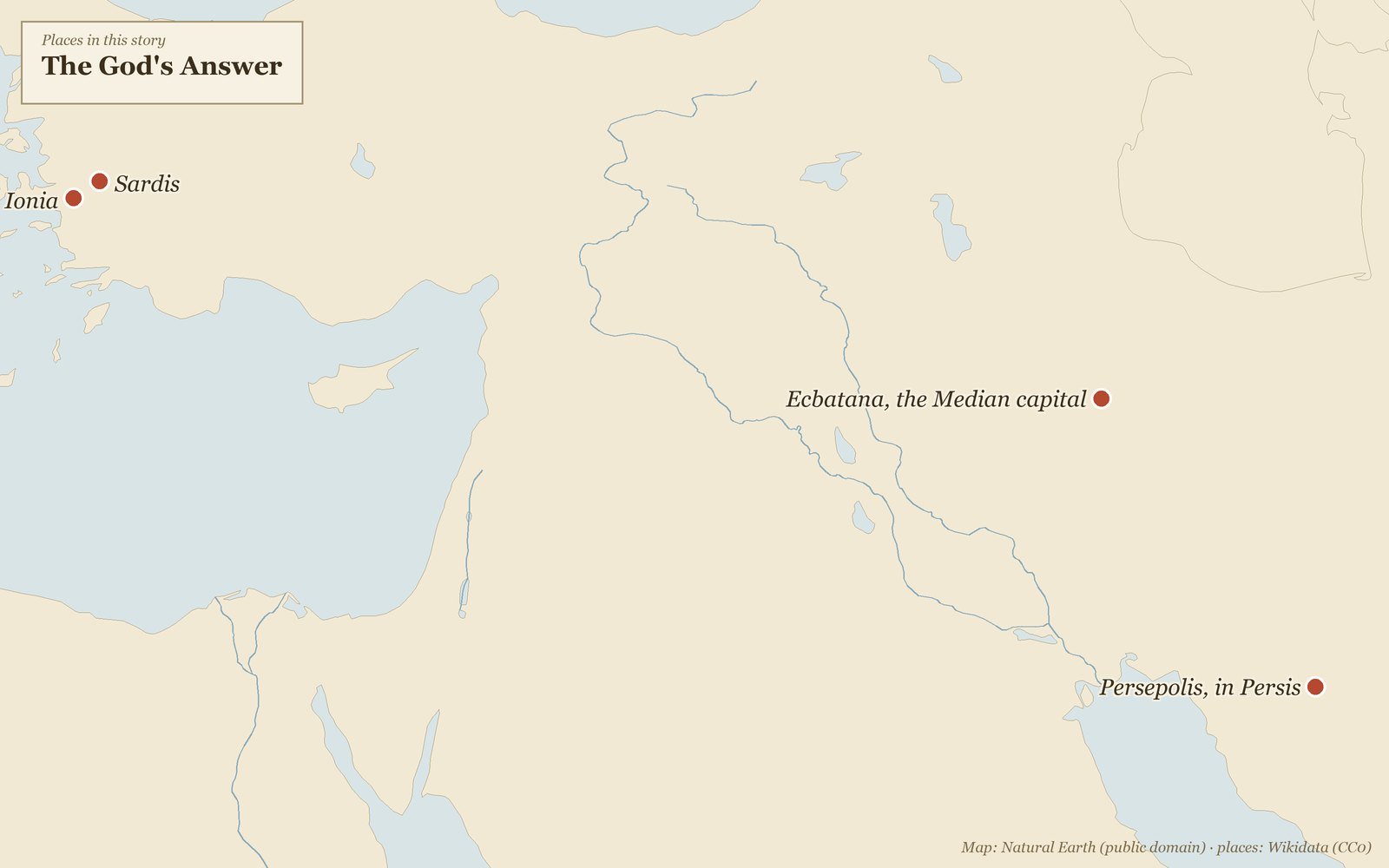
Croesus, defeated and captured by Cyrus, has sent to ask Delphi why the god misled him. This is Apollo's answer, delivered through the Pythia.
A note on this passage
The Pythia's first sentence sets the law of the whole book: peprōmenēn moiran adynata esti apophygein kai theōi, "it is impossible, even for a god, to escape the fated lot." Fate stands above Apollo himself; the oracle can soften a sentence, as the next lines show, but it cannot cancel one. Herodotus has built toward this since Solon warned Croesus that no man, however rich, can call himself happy before he dies. Now the god confirms it from the other side: not even a god escapes what is owed.
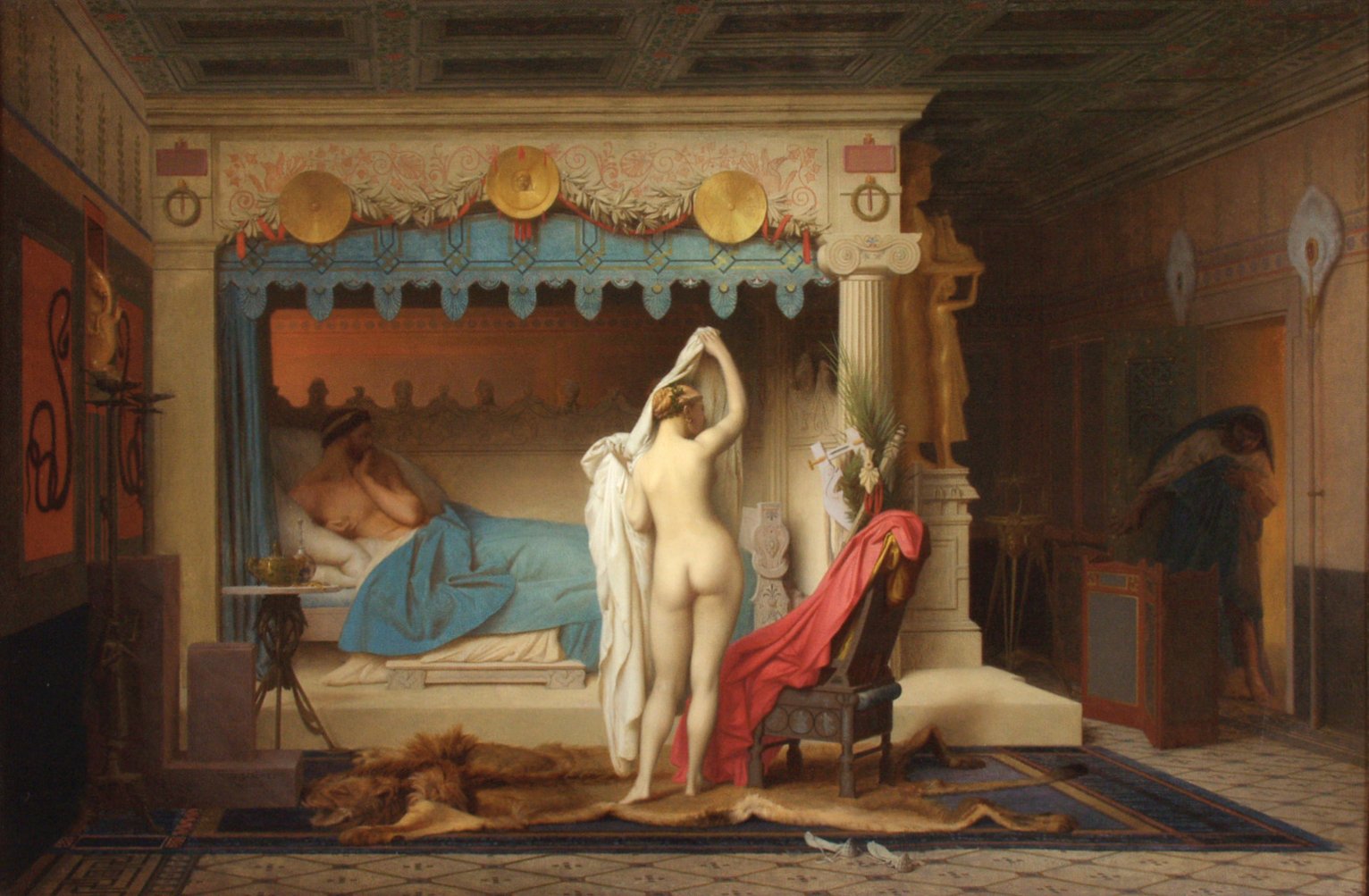
Then the Pythia names the debt. Croesus is paying for pemptou goneos hamartada, "the fault of a fifth-generation ancestor," a man who was a doryphoros, a spear-bearing bodyguard of the Heraclidae, and who killed his master by a woman's dolos, "trick." The reader has already met this man: he is Gyges, the bodyguard Candaules showed his own wife to, back at the book's opening. The story that began with one king's pride over his wife's beauty now closes with that crime landing, five generations later, on a king whose own pride brought Solon to his court.
Read the full commentary — and tap any word for its dictionary entry — in the interlinear reader.
Open Herodotus, Histories 1.91.1 in the full reader
Always open passages in the reader
From the Great Library
You are reading a page of the Herodotus, Histories — the whole book is free in our interlinear reader.
The Great Library Project presses the classics in their original languages, glossed word by word — free to read, always. Browse the whole library.
Also on our shelves:
Herodotus, Histories 1.91.1 — The Great Library Project interlinear edition · greatlibraryproject.com/book/herodotus/1.91.1/