Herodotus, Histories 1.91.6 · 1.91.6
His own fault
Read the full text in our reader
ἣ μὲν γὰρ ἦν Μηδὶς καὶ Ἀστυάγεος θυγάτηρ τοῦ Μήδων βασιλέος, ὁ δὲ Πέρσης τε ἦν καὶ ἀρχόμενος ὑπʼ ἐκείνοισι καὶ ἔνερθε ἐὼν τοῖσι ἅπασι δεσποίνῃ τῇ ἑωυτοῦ συνοίκεε. ταῦτα μὲν ἡ Πυθίη ὑπεκρίνατο τοῖσι Λυδοῖσι, οἳ δὲ ἀνήνεικαν ἐς Σάρδις καὶ ἀπήγγειλαν Κροίσῳ. ὃ δὲ ἀκούσας συνέγνω ἑωυτοῦ εἶναι τὴν ἁμαρτάδα καὶ οὐ τοῦ θεοῦ. κατὰ μὲν δὴ τὴν Κροίσου τε ἀρχὴν καὶ Ἰωνίης τὴν πρώτην καταστροφὴν ἔσχε οὕτω.
For his mother was a Mede, daughter of Astyages king of the Medes, while his father was a Persian, ruled by them, and, though beneath them all, lived with his own mistress. This is what the Pythia answered the Lydians, and they carried it back to Sardis and reported it to Croesus. When he heard it, he recognized that the fault was his own, and not the god's. So stood the matter of Croesus's rule and the first conquest of Ionia.
Word by word
The setting
The oracle's last riddle explained, and Croesus's own verdict on himself. The story that opened with Gyges closes here.
A note on this passage
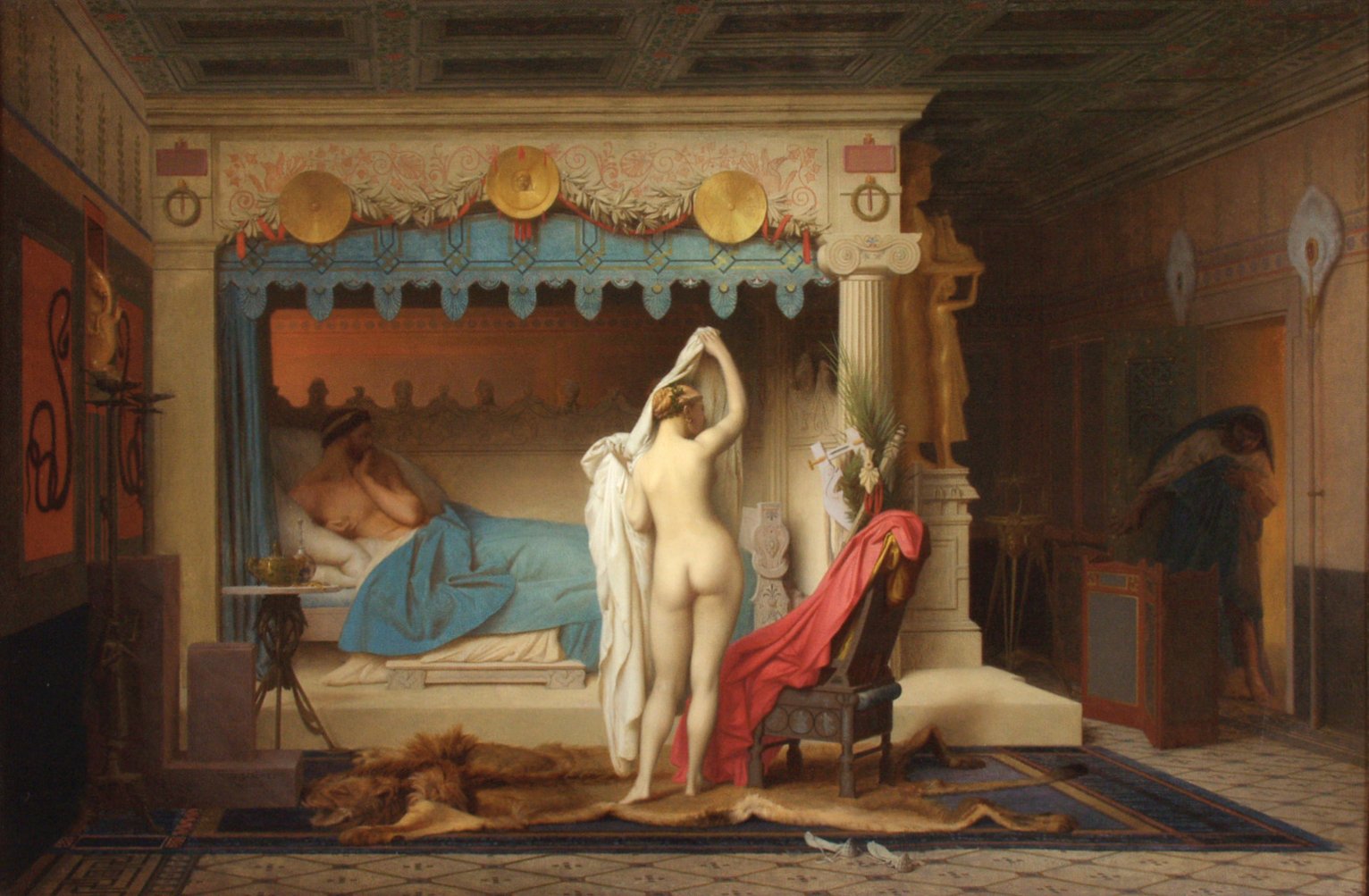
The riddle unpacks into a real genealogy. Cyrus's mother ēn Mēdis, "was a Mede," daughter of Astyages, king of the Medes, while his father was a Persian, archomenos hyp' ekeinoisi, "ruled by them," and, enerthe eōn toisi hapasi, "beneath them all," he nonetheless lived with his own despoinēi, "mistress," a king's daughter. A conquered people's subject marries into the ruling house, and the son of that marriage becomes the conqueror of both. The mule was exactly right: not one thing or the other, but the one who ends up in charge.
The chapter closes where the book has pointed since Solon: synegnō heōutou einai tēn hamartada kai ou tou theou, "he recognized the fault was his own, and not the god's." It is the last word Croesus gets to speak for himself in the story of his fall, and it is also the last payment on a debt opened five generations earlier in a bedroom, when a bodyguard named Gyges looked at a queen he was never meant to see. Herodotus ends the whole affair with one small word, houtō, "thus": so it stood, and nothing more needs saying.
Read the full commentary — and tap any word for its dictionary entry — in the interlinear reader.
Open Herodotus, Histories 1.91.6 in the full reader
Always open passages in the reader
From the Great Library
You are reading a page of the Herodotus, Histories — the whole book is free in our interlinear reader.
The Great Library Project presses the classics in their original languages, glossed word by word — free to read, always. Browse the whole library.
Also on our shelves:
Herodotus, Histories 1.91.6 — The Great Library Project interlinear edition · greatlibraryproject.com/book/herodotus/1.91.6/