Odyssey 1.1 · Book 1, lines 1–2
Invocation — the man of many turns
Read the full text in our reader
ἄνδρα μοι ἔννεπε, μοῦσα, πολύτροπον, ὃς μάλα πολλὰ πλάγχθη, ἐπεὶ Τροίης ἱερὸν πτολίεθρον ἔπερσεν·
Tell me, Muse, of the man of many turns, who wandered far and wide after he sacked Troy's sacred citadel.
Word by word
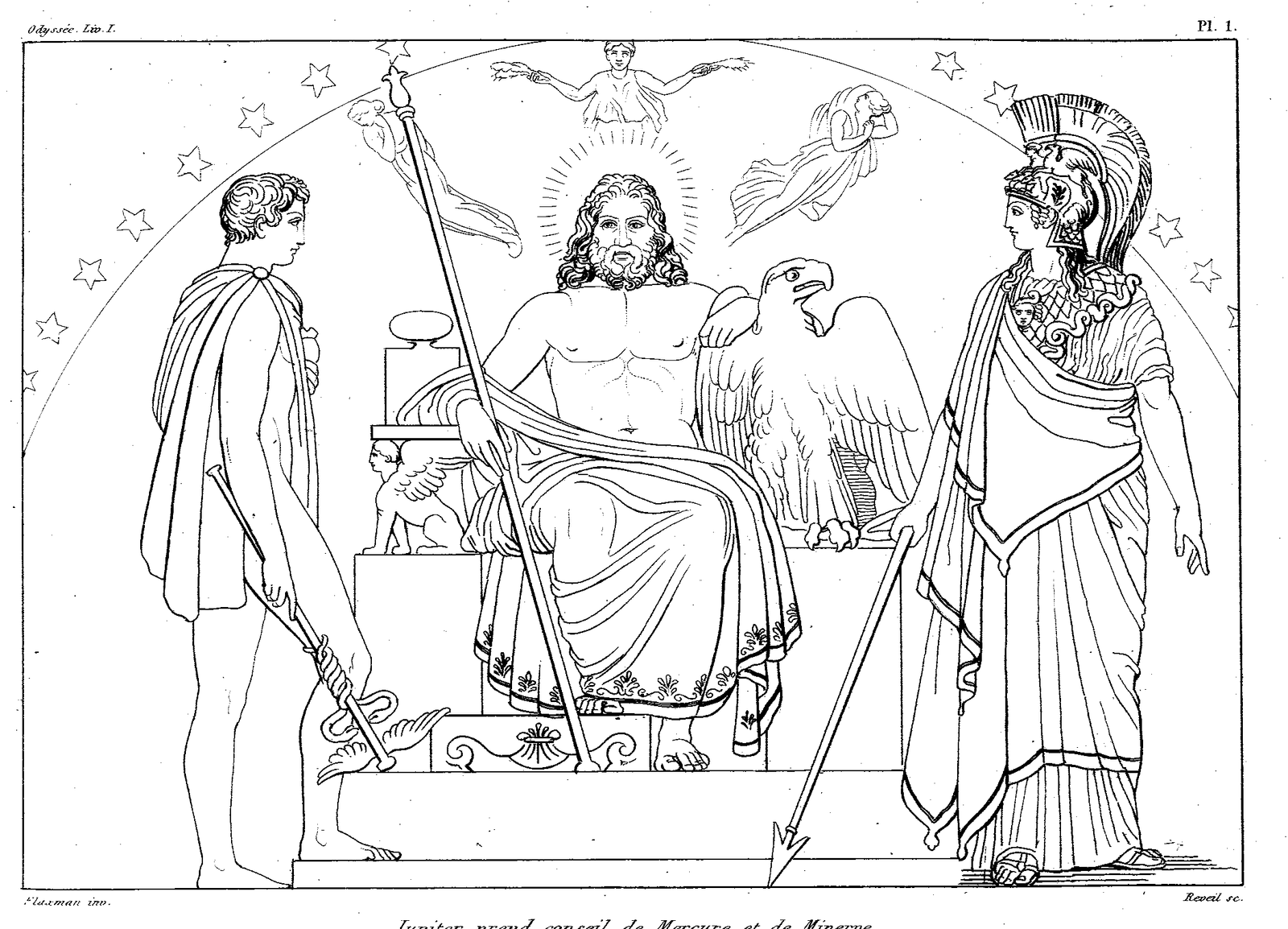
The setting
The opening of the Odyssey. The poet does not begin with a name but with a type — a man — and asks the Muse to tell of him. The whole poem is folded into these first lines: wandering, the sack of Troy already behind him, and the long way home still ahead.
A note on this passage
The poem opens on a withheld name. Not “Odysseus” but “the man” — and then the one word that fixes him, polútropos, “of many turns.” It faces two ways at once: a man turned about by the world (driven, blown off course) and a man of many turns of mind (shifty, resourceful, hard to pin down). The Muse is asked to sort him out.
The undercurrent is in what the sentence already knows. Troy is over — the great war epic is behind us in a single clause — and what remains is the wandering. The Odyssey announces itself as the poem of after: not the sack, but the long, turning way home from it.
Read the full commentary — and tap any word for its dictionary entry — in the interlinear reader.
Open Odyssey 1.1 in the full reader
Always open passages in the reader
From the Great Library
You are reading a page of the Odyssey — the whole book is free in our interlinear reader.
The Great Library Project presses the classics in their original languages, glossed word by word — free to read, always. Browse the whole library.
Also on our shelves:
Odyssey 1.1 — The Great Library Project interlinear edition · greatlibraryproject.com/book/odyssey/1.1/