Odyssey 1.32 · Book 1, lines 32–34
Zeus: mortals blame the gods
Read the full text in our reader
ὢ πόποι, οἷον δή νυ θεοὺς βροτοὶ αἰτιόωνται· ἐξ ἡμέων γάρ φασι κάκʼ ἔμμεναι, οἱ δὲ καὶ αὐτοὶ σφῇσιν ἀτασθαλίῃσιν ὑπὲρ μόρον ἄλγεʼ ἔχουσιν,
Ah, good grief, how mortals do blame the gods! For they say evils come from us; but they themselves, by their own reckless folly, have griefs beyond their lot.
Word by word
The setting
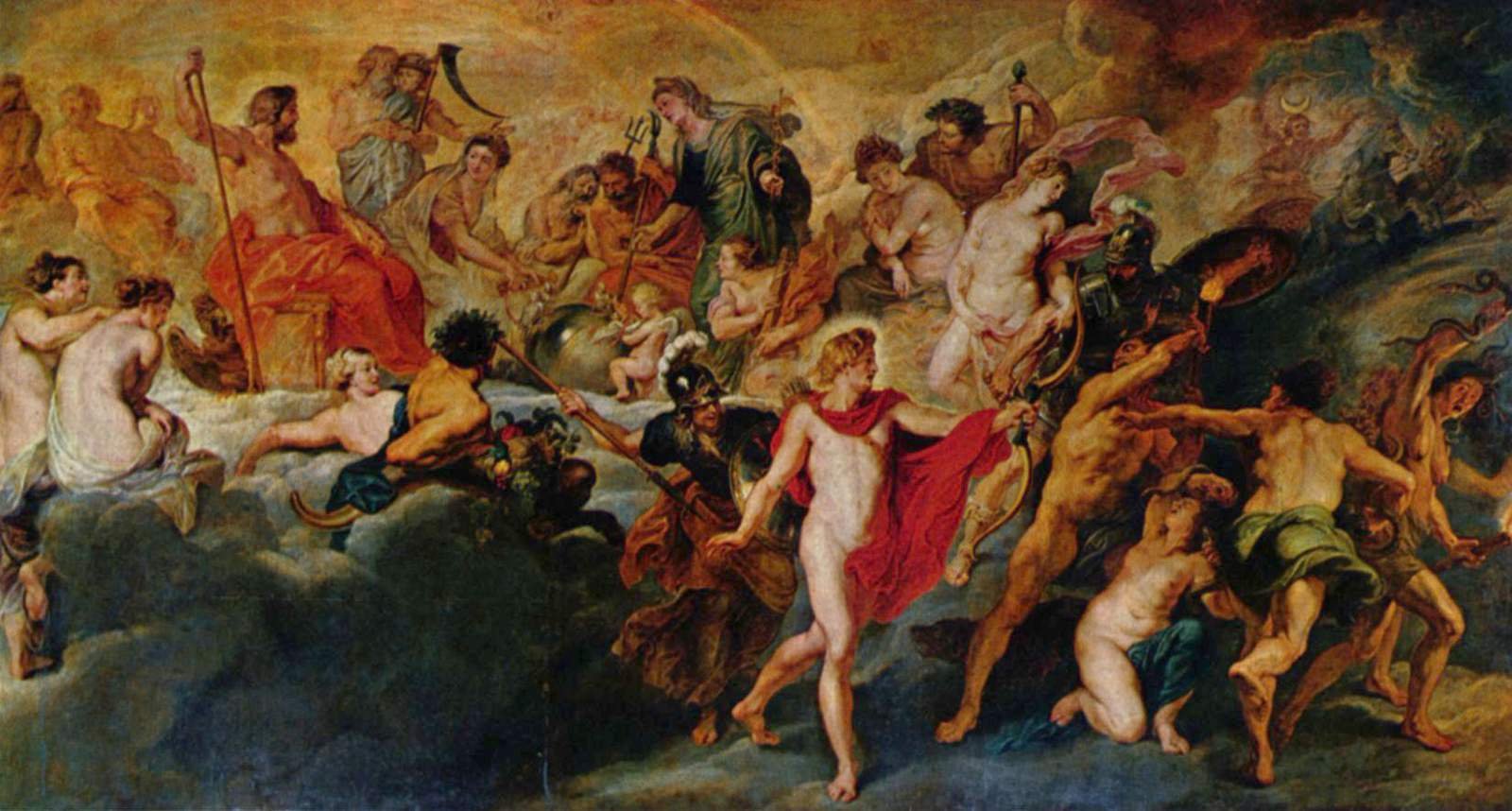
On Olympus the gods are gathered in Zeus's halls, and the father of gods and men speaks first. Brooding on Aegisthus — murdered by Orestes for killing Agamemnon — Zeus opens the poem's action with a complaint that is also its moral thesis.
A note on this passage
The first words spoken in the Odyssey are a god's, and they are a defence. Mortals, Zeus complains, lay their sufferings at heaven's door — but they add to their own grief ‘beyond their lot,’ by their own ἀτασθαλίη. It is the exact word the narrator used of Odysseus's crew twenty-five lines earlier: gods and poet agree on where much of human misery comes from.
The undercurrent is how much this concedes. Zeus does not say the gods send nothing — only that mortals make it worse. Fate allots a share of pain, μόρος; recklessness spends past the allotment. It is a startlingly moral opening for an epic: before a single adventure, the poem sets down the rule its whole plot obeys — the suitors, like the crew, will die of what they themselves do, ‘beyond their lot.’
Read the full commentary — and tap any word for its dictionary entry — in the interlinear reader.
Open Odyssey 1.32 in the full reader
Always open passages in the reader
From the Great Library
You are reading a page of the Odyssey — the whole book is free in our interlinear reader.
The Great Library Project presses the classics in their original languages, glossed word by word — free to read, always. Browse the whole library.
Also on our shelves:
Odyssey 1.32 — The Great Library Project interlinear edition · greatlibraryproject.com/book/odyssey/1.32/