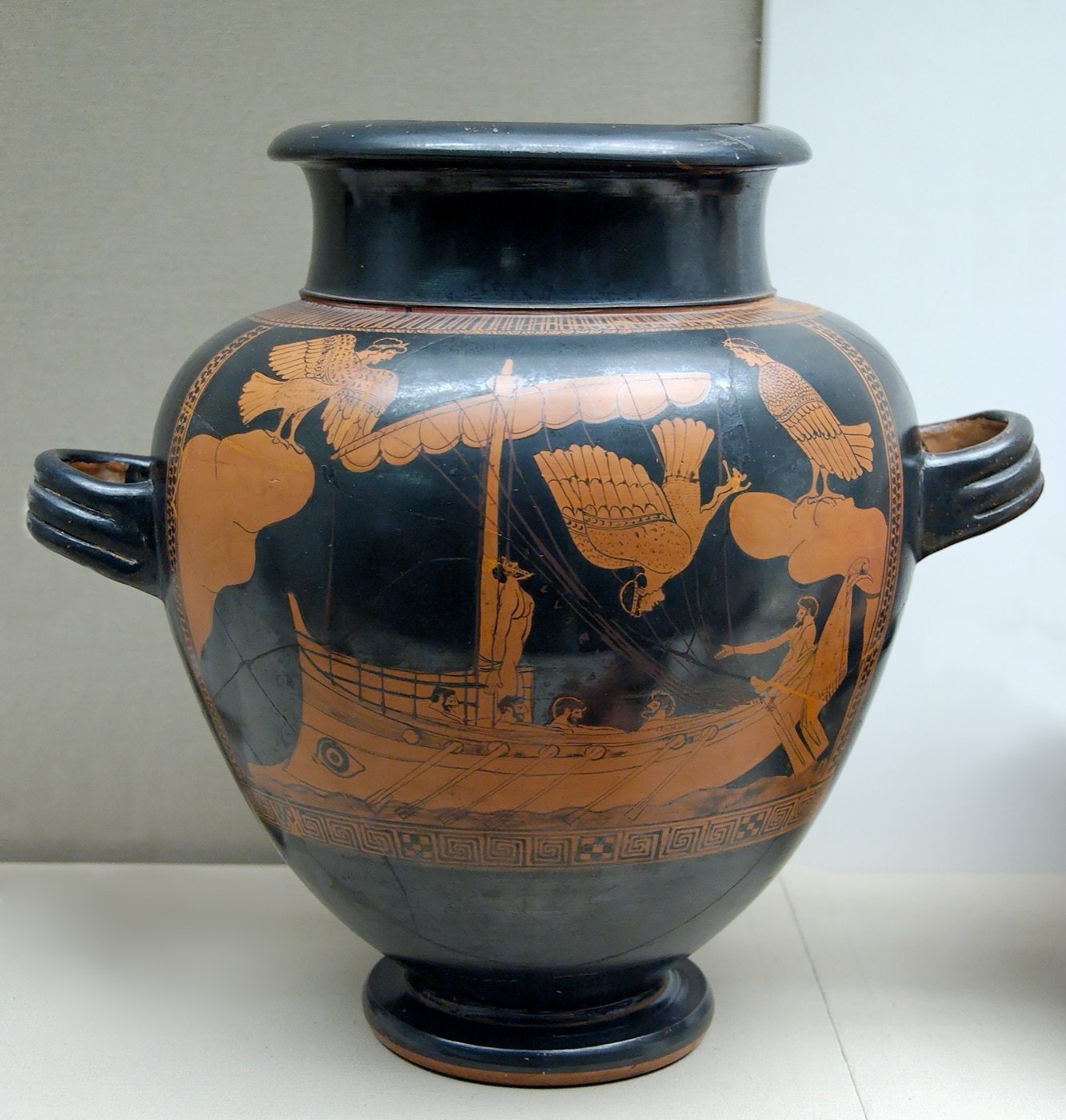
Odyssey 1.6 · Book 1, lines 6–9
But he could not save them
Read the full text in our reader
ἀλλʼ οὐδʼ ὣς ἑτάρους ἐρρύσατο ἱέμενός περ· αὐτῶν γὰρ σφετέρῃσιν ἀτασθαλίῃσιν ὄλοντο, νήπιοι, οἳ κατὰ βοῦς Ὑπερίονος Ἠελίοιο ἤσθιον· αὐτὰρ ὁ τοῖσιν ἀφείλετο νόστιμον ἦμαρ.
But not even so did he save his companions, though he longed to; for by their own reckless folly they perished — fools, who devoured the cattle of Hyperion the Sun, and he took from them their homecoming day.
Word by word
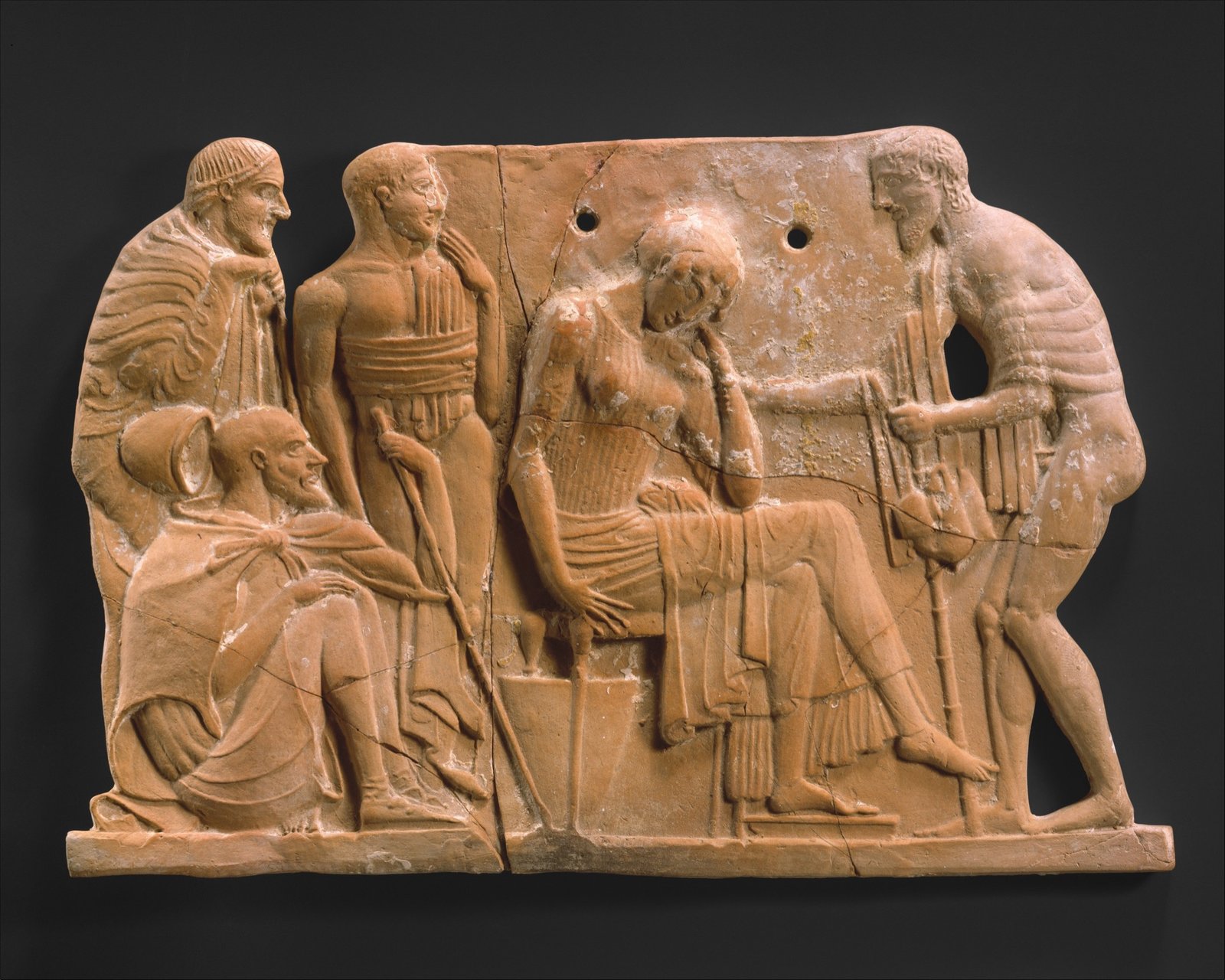
The setting
The proem's turn to loss. For all his striving, Odysseus brought none of his crew home; they destroyed themselves by eating the forbidden cattle of the Sun. The wandering hero is also the sole survivor.
A note on this passage
The proem turns from the man to his dead. He is the hero, but the crew are the poem's first casualties, and Homer is careful about the blame: not the gods, not bad luck, but their own ἀτασθαλίη — the reckless self-will that ate the Sun's cattle against every warning. He wanted to save them; wanting was not enough.
The undercurrent is the word νήπιοι, ‘fools,’ dropped like a bell over men already doomed. It is not only contempt — it is the pity you feel for a child who cannot see where a step leads. The Odyssey's moral world is set here: suffering is not simply sent from above, it is earned from below. Zeus will say the same thing, in almost the same words, twenty-six lines on.
Read the full commentary — and tap any word for its dictionary entry — in the interlinear reader.
Open Odyssey 1.6 in the full reader
Always open passages in the reader
From the Great Library
You are reading a page of the Odyssey — the whole book is free in our interlinear reader.
The Great Library Project presses the classics in their original languages, glossed word by word — free to read, always. Browse the whole library.
Also on our shelves:
Odyssey 1.6 — The Great Library Project interlinear edition · greatlibraryproject.com/book/odyssey/1.6/