Love and gender through the millennia
The Greeks wrote about love between men, and between women, in their own words and without much embarrassment, and they told stories of people who changed sex. Their translators and editors were not always so plain. When the Loeb edition of the Greek Anthology came out in 1918, its most explicit love poems were put into Latin instead of English, and Michelangelo's great-nephew turned his love poems to a man into poems to a woman. Here the texts are read word by word, from Sappho to Shakespeare, so you can see what the words say. Some are open to read now. The rest are in the press, and each one opens when readers press it.
Reading these texts in their own time
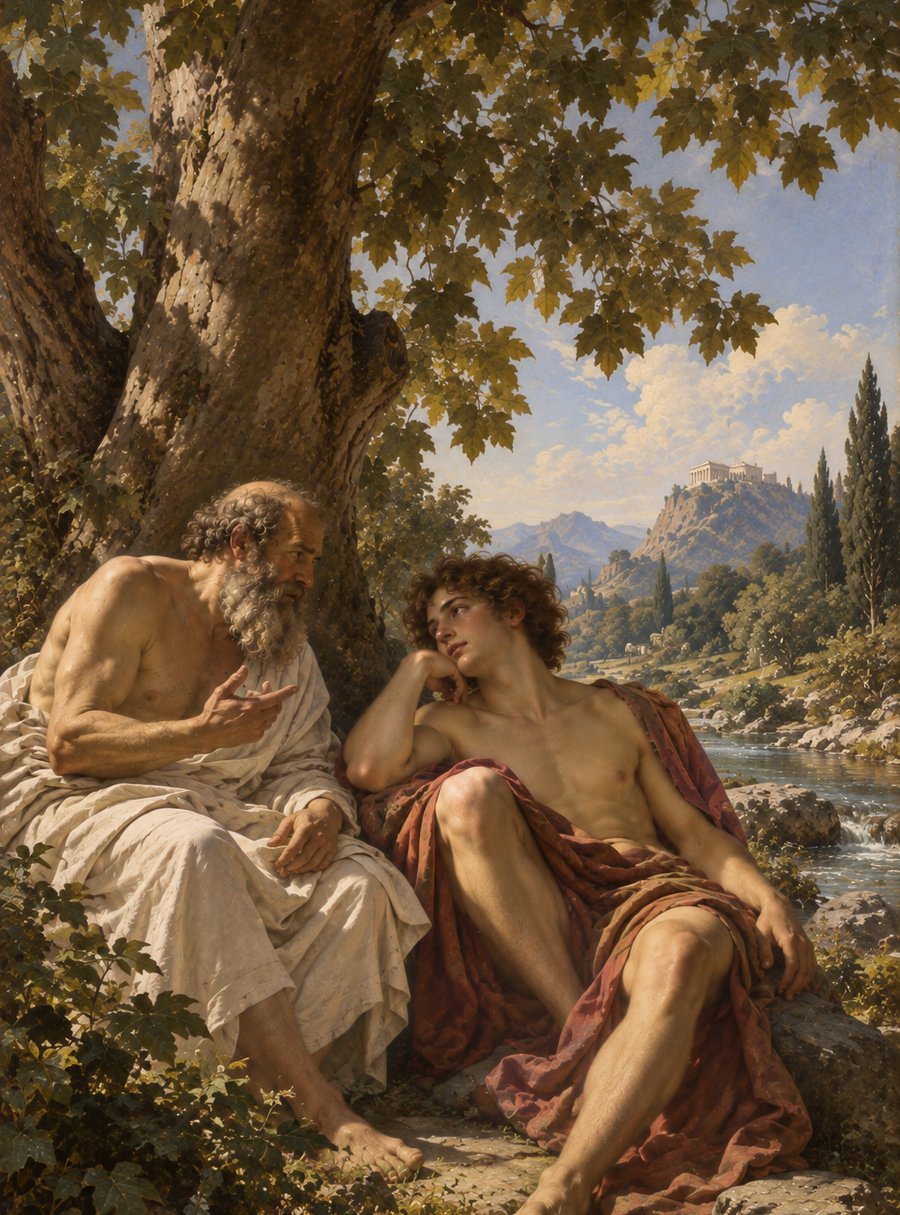
Much of what survives is about pederasty: a grown man courting an adolescent youth, a custom with its own rules, praised by some Greeks and mocked or condemned by others. It is not modern gay life, and this shelf doesn't pretend it is. Reading it honestly means reading it in its own time.
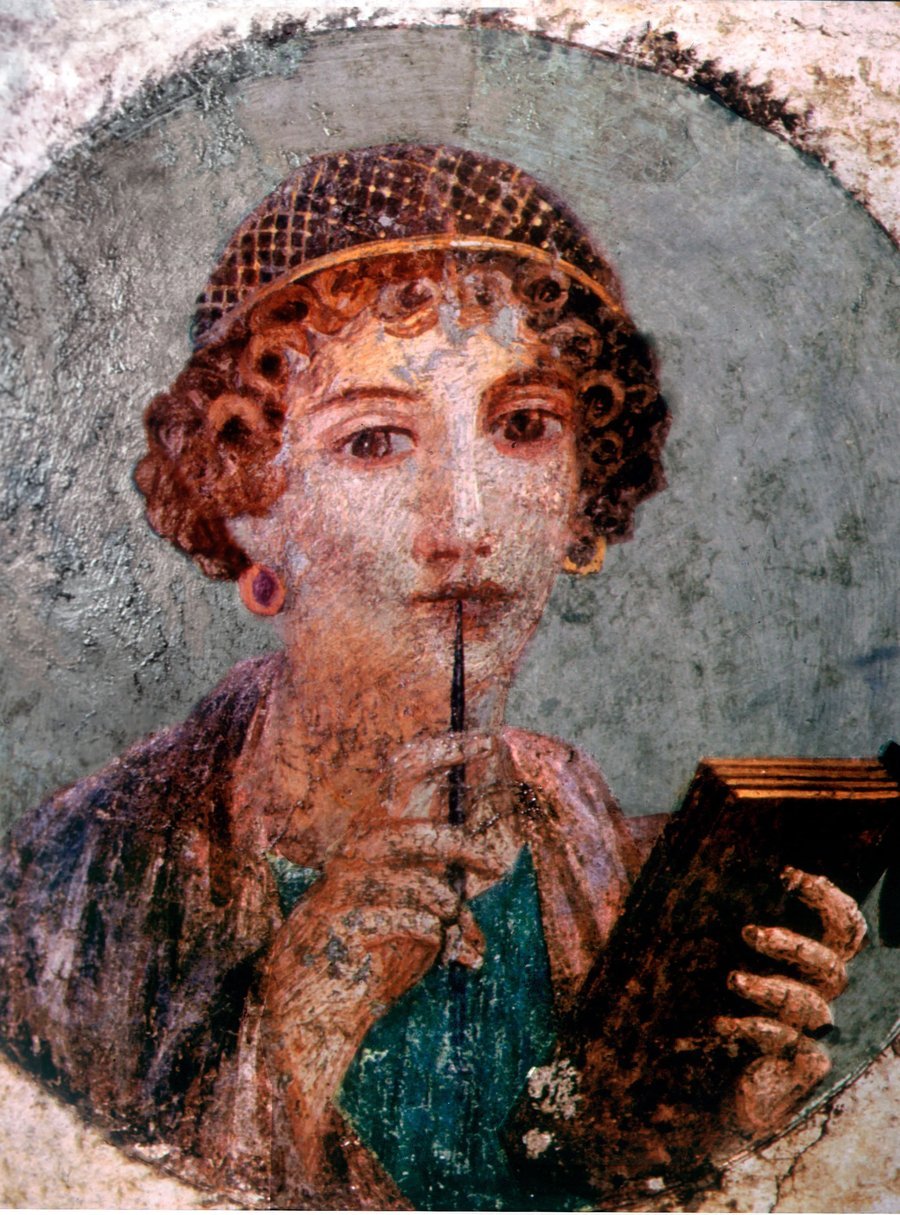
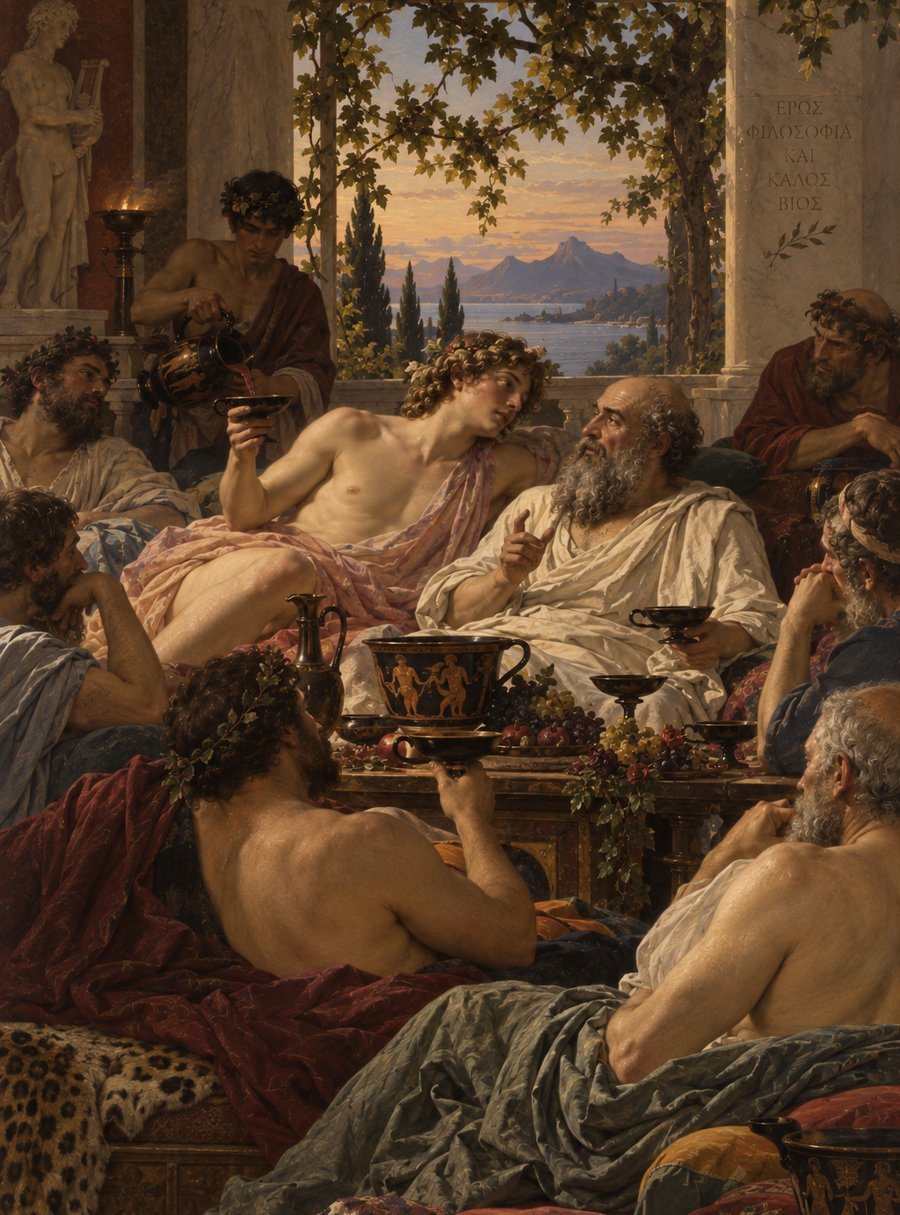
It is also not the whole story. In Plato's Symposium the tragic poet Agathon and his lover Pausanias are still together as grown men, years after Plato first shows them side by side as an older man and a youth in the Protagoras. The Sacred Band of Thebes was a corps of three hundred soldiers said to be made up of pairs of lovers. Sappho, on Lesbos, wrote of her love for women, and one feminine ending in her prayer to Aphrodite is enough to show it.
The stories of people changing sex are myths, medical marvels and religious rites: Tiresias, who lived seven years as a woman; Iphis, a girl raised as a boy; Attis, the priest of Cybele. They aren't modern trans lives either, but they are some of the oldest writing there is about a body and a gender that don't line up.
People argued about all of this, and the arguments are here too. Plato's Laws calls these unions contrary to nature, and we include it because a shelf that shows only one side isn't worth trusting.
What we leave out, and why
Nothing here is cut to spare anyone's blushes. When a scene involves a young person and is told without explicit detail, as with the fifteen-year-old Hermaphroditus in Ovid, it stays in, with a note on his age. Explicit sexual writing about minors does not appear anywhere on this site. That rule keeps Strato's explicit epigrams from Book 12 of the Greek Anthology off this shelf. The 1918 Loeb hid them in Latin; we leave them out and say so. When the Anthology joins the shelf, its page will list each poem left out by number.
‹ Back to the library · the finished collection · The Great Library Project
Reading is always free. Patrons and founders are the ones who keep it that way.