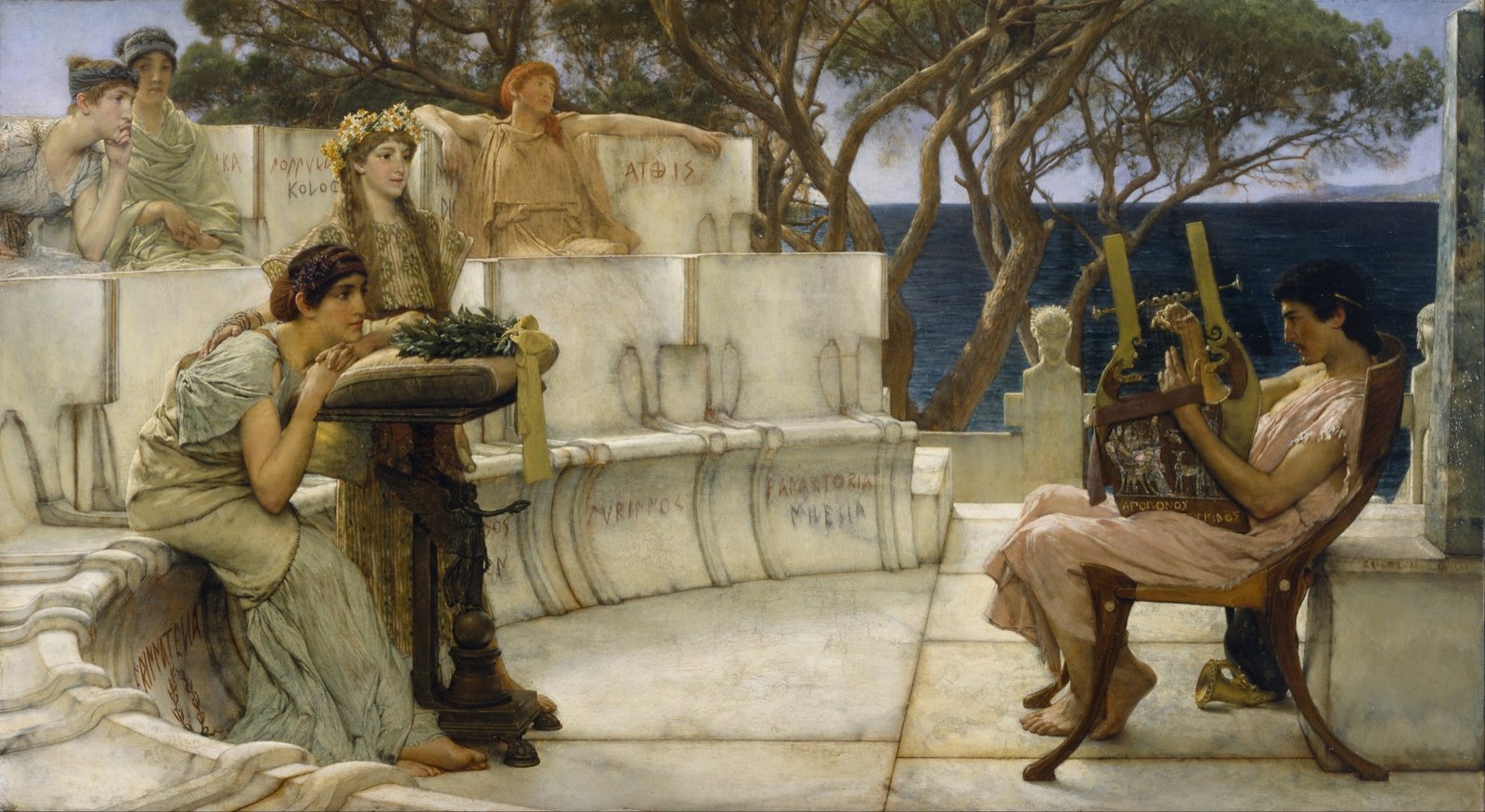
Athenaeus, The Learned Banqueters (Deipnosophistae) 555a · 555a
You have to have lived a little
Read the full text in our reader
Athenaeus, to Timocrates — Ἀντιφάνης ὁ κωμῳδιοποιός, ἑταῖρε Τιμόκρατες, ὡς ἀνεγίνωσκέ τινα τῷ βασιλεῖ Ἀλεξάνδρῳ τῶν ἑαυτοῦ κωμῳδιῶν, ὃ δὲ δῆλος ἦν οὐ πάνυ τι ἀποδεχόμενος, ‘ δεῖ γάρ, ἔφησεν, ὦ βασιλεῦ, τὸν ταῦτα ἀποδεξόμενον ἀπὸ συμβόλων τε πολλάκις δεδειπνηκέναι καὶ περὶ ἑταίρας πλεονάκις καὶ εἰληφέναι καὶ δεδωκέναι πληγάς,’ ὥς φησι Λυκόφρων ὁ Χαλκιδεὺς ἐν τοῖς περὶ Κωμῳδίας. ἡμεῖς οὖν τὸν περὶ ἐρωτικῶν λόγον ἐνταῦθα μέλλοντες κατατάττειν
Antiphanes the comic poet, my friend Timocrates, was once reading one of his comedies to King Alexander, who plainly did not care for it. “You see, my king,” he said, “to enjoy these things a man must often have dined on shared bills, and many times have taken and given punches over courtesans,” as Lycophron of Chalcis says in his books On Comedy. So we too, about to set down here our talk about love…
Word by word
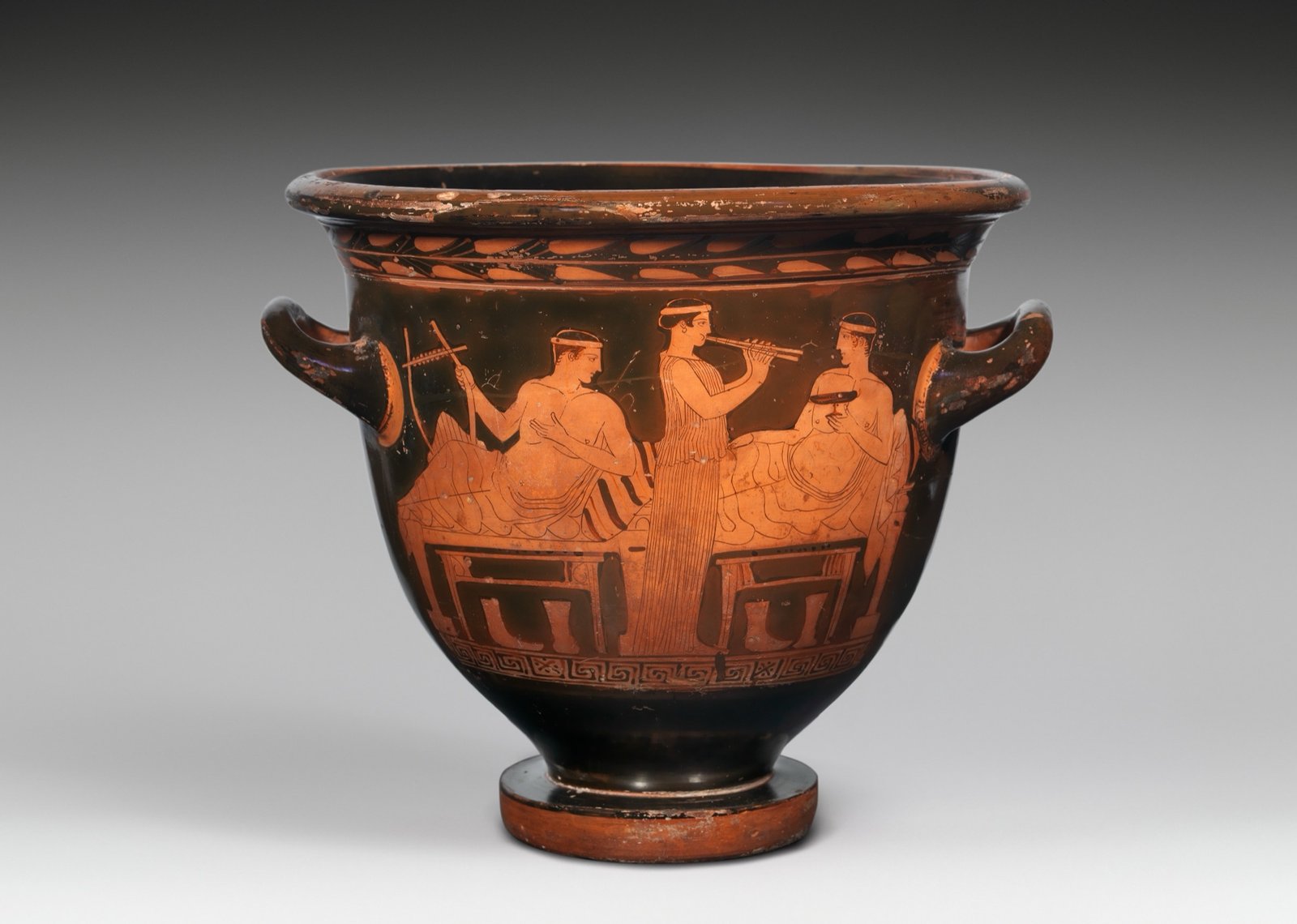
The setting
Book 13 opens. Athenaeus speaks in his own voice to his friend Timocrates, as he does at the start of each book, and sets up the subject: love, wives and courtesans.
A note on this passage
Athenaeus begins his book on love with a story about a failed reading. The young king does not laugh, and the poet tells him why: comedy about courtesans is written for men who have split the bill at a drinking club and come to blows over a woman. Alexander had conquered the world but had not lived that life.<br><br>It is a sly warning to the reader too. What follows is a long, learned evening of talk about wives, courtesans and boys, and Athenaeus hints that you will get more of the jokes if you have been out a little.
Read the full commentary — and tap any word for its dictionary entry — in the interlinear reader.
Open Athenaeus, The Learned Banqueters (Deipnosophistae) 555a in the full reader
Always open passages in the reader
From the Great Library
You are reading a page of the Athenaeus, The Learned Banqueters (Deipnosophistae) — the whole book is free in our interlinear reader.
The Great Library Project presses the classics in their original languages, glossed word by word — free to read, always. Browse the whole library.
Also on our shelves:
Athenaeus, The Learned Banqueters (Deipnosophistae) 555a — The Great Library Project interlinear edition · greatlibraryproject.com/book/deipnosophistae/555a/