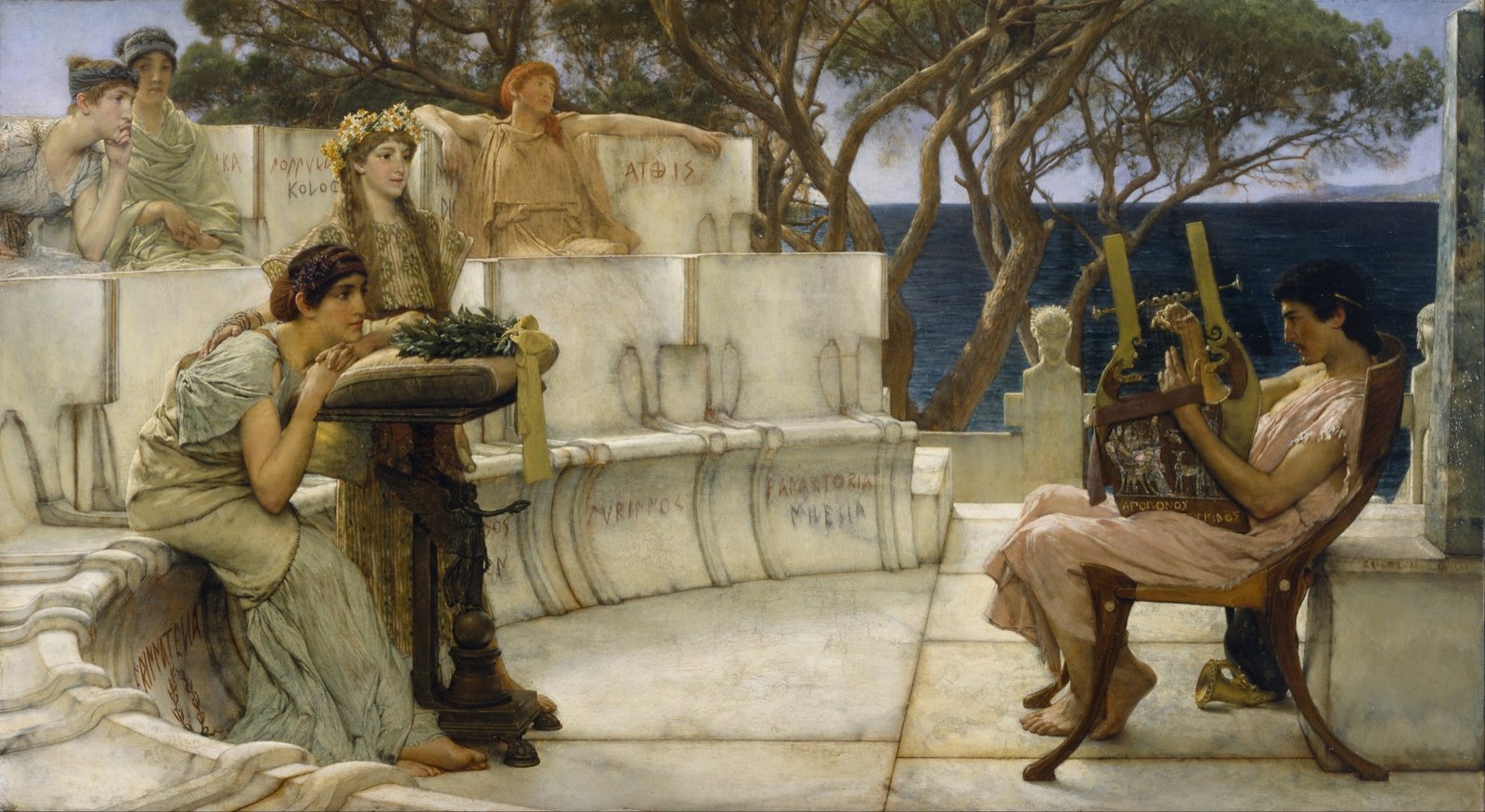
Athenaeus, The Learned Banqueters (Deipnosophistae) 591b · 591b
A monument to Greek lust
Read the full text in our reader
Myrtilus — ἐκλογὴν δὲ αὐτῇ τῶν ἀγαλμάτων ἔδωκεν, εἴτε τὸν Ἔρωτα θέλοι λαβεῖν εἴτε τὸν ἐπὶ Τριπόδων Σάτυρον. ἣ δὲ ἑλομένη τὸν Ἔρωτα ἀνέθηκεν αὐτὸν ἐν Θεσπιαῖς. αὐτῆς δὲ τῆς Φρύνης οἱ περικτίονες ἀνδριάντα ποιήσαντες ἀνέθηκαν ἐν Δελφοῖς χρύσεον ἐπὶ κίονος Πεντελικοῦ· κατεσκεύασε δ’ αὐτὸν Πραξιτέλης. ὃν καὶ θεασάμενος Κράτης ὁ κυνικὸς ἔφη τῆς τῶν Ἑλλήνων ἀκρασίας ἀνάθημα. ἕστηκε δὲ καὶ ἡ εἰκὼν αὕτη μέση τῆς Ἀρχιδάμου τοῦ
He gave her a choice of his statues, whether she wanted to take the Eros or the Satyr in the Street of Tripods. She chose the Eros and dedicated it at Thespiae. Her neighbours made a golden statue of Phryne herself and set it up at Delphi on a column of Pentelic marble; Praxiteles made it. Seeing it, Crates the Cynic called it a monument to the Greeks' lack of self-control. This statue stands between those of Archidamus, the…
Word by word
The setting
Praxiteles lets Phryne choose one of his statues, and her own golden statue goes up at Delphi. A Cynic philosopher has the last word. Grapevine: a story told by many later writers.
A note on this passage
The anecdote explains how a statue of Eros came to be a sight at Thespiae: Phryne, the town's most famous daughter, picked it and gave it to her home sanctuary. The second statue is grander still, a golden Phryne at Delphi, the most visited sanctuary in Greece.<br><br>Crates the Cynic, who lived by public insult, answers it with one word. An <i>anathema</i> is a gift dedicated to a god; Crates says this one was dedicated to Greek <i>akrasia</i>, the inability to say no.
Read the full commentary — and tap any word for its dictionary entry — in the interlinear reader.
Open Athenaeus, The Learned Banqueters (Deipnosophistae) 591b in the full reader
Always open passages in the reader
From the Great Library
You are reading a page of the Athenaeus, The Learned Banqueters (Deipnosophistae) — the whole book is free in our interlinear reader.
The Great Library Project presses the classics in their original languages, glossed word by word — free to read, always. Browse the whole library.
Also on our shelves:
Athenaeus, The Learned Banqueters (Deipnosophistae) 591b — The Great Library Project interlinear edition · greatlibraryproject.com/book/deipnosophistae/591b/