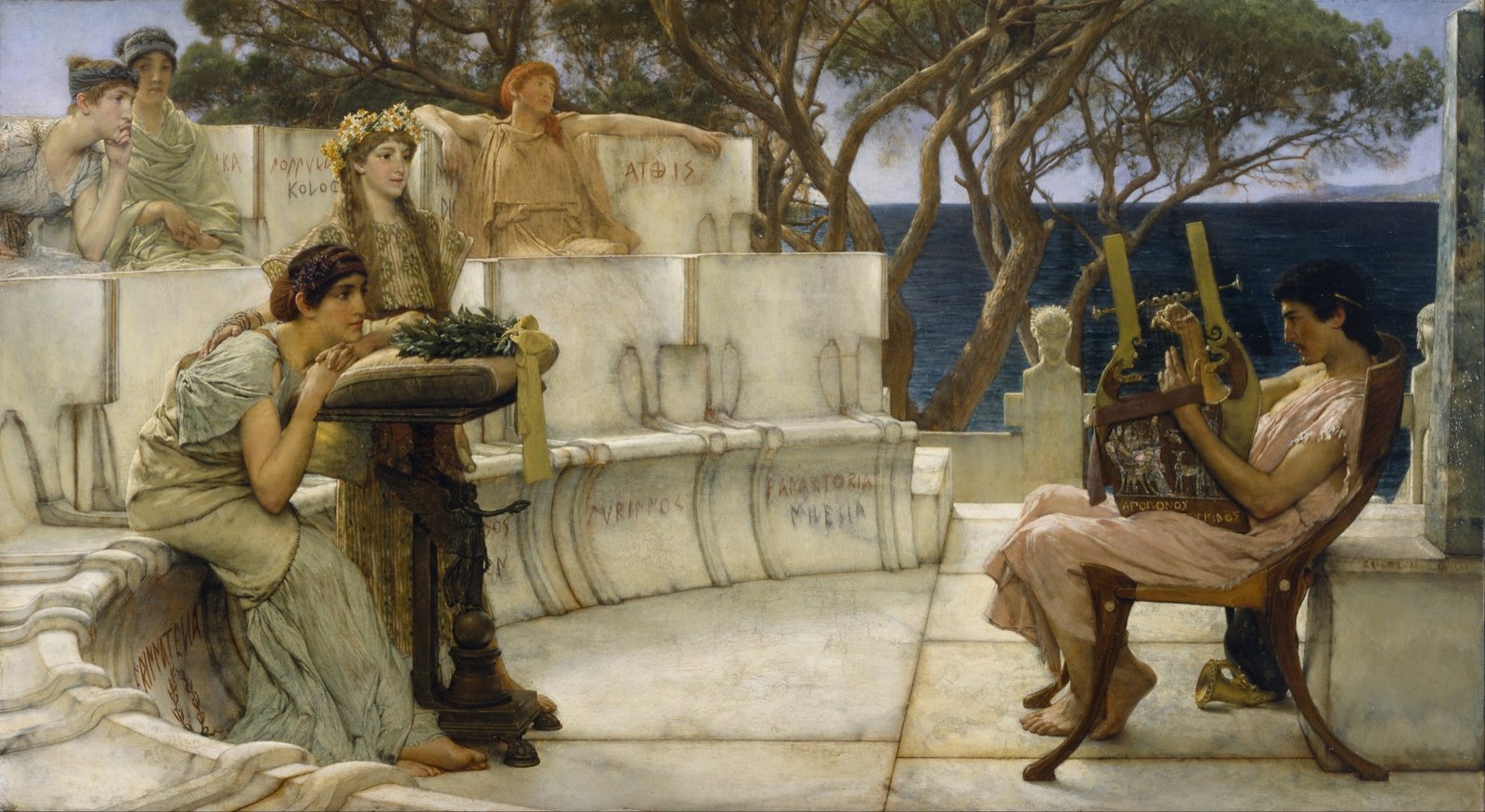
Athenaeus, The Learned Banqueters (Deipnosophistae) 603e · 603e
A lover of lads
Read the full text in our reader
Myrtilus — βασιλέως ἐρώμενος ἦν Ἀριστοκλῆς ὁ κιθαρῳδός, περὶ οὗ Ἀντίγονος ὁ Καρύστιος ἐν τῷ Ζήνωνος Βίῳ γράφει οὕτως·
Antigonus of Carystus, quoted by Myrtilus — ‘ Ἀντίγονος ὁ βασιλεὺς ἐπεκώμαζε τῷ Ζήνωνι. καί ποτε καὶ μεθ’ ἡμέραν ἐλθὼν ἔκ τινος πότου καὶ ἀναπηδήσας πρὸς τὸν Ζήνωνα ἔπεισεν αὐτὸν συγκωμάσαι αὑτῷ πρὸς Ἀριστοκλέα τὸν κιθαρῳδόν, οὗ σφόδρα ἤρα ὁ βασιλεύς.’
Myrtilus — φιλομεῖραξ δὲ ἦν ὁ Σοφοκλῆς, ὡς Εὐριπίδης φιλογύνης. Ἴων γοῦν ὁ ποιητὴς ἐν ταῖς ἐπιγραφομέναις Ἐπιδημίαις γράφει οὕτως·
Ion of Chios, quoted by Myrtilus — ‘ Σοφοκλεῖ τῷ
King Antigonus' beloved was Aristocles the lyre-singer, about whom Antigonus of Carystus writes this in his Life of Zeno: “King Antigonus used to come revelling to Zeno's door. Once, coming by day from a drinking party, he burst in on Zeno and persuaded him to go revelling with him to Aristocles the lyre-singer, whom the king loved madly.” Sophocles was a lover of lads, as Euripides was of women. Ion the poet, at any rate, writes this in his book called Visits: “Sophocles the…
Word by word
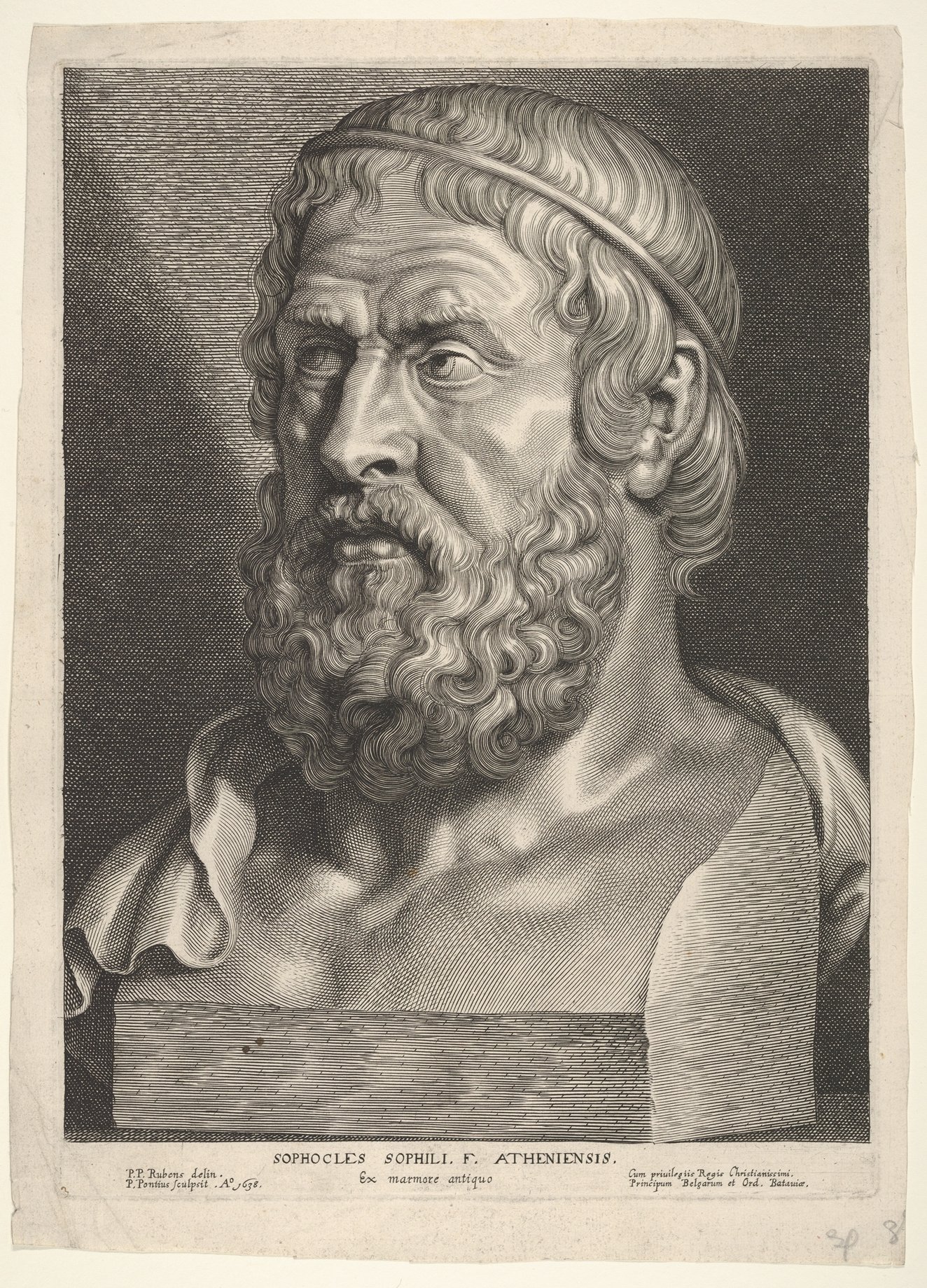
The setting
Myrtilus has been listing famous men who loved boys and young men. He gives one story about a Macedonian king, then turns to Sophocles, and hands the floor to an eyewitness.
A note on this passage
The king is Antigonus Gonatas of Macedon, a great admirer of Zeno, the founder of Stoicism. The picture is a comic one: the most austere philosopher in Athens dragged out by a tipsy king to serenade a musician. Antigonus of Carystus, who tells it, wrote lives of the philosophers in the 3rd century BC.<br><br>Then comes the line this whole section turns on. Sophocles was <i>philomeirax</i>, fond of lads, as Euripides was <i>philogynes</i>, fond of women. The two words are set side by side as a pair of tastes, with no blame in either. And Myrtilus does not ask us to take his word for Sophocles: he quotes Ion of Chios, a poet who met him.
Read the full commentary — and tap any word for its dictionary entry — in the interlinear reader.
Open Athenaeus, The Learned Banqueters (Deipnosophistae) 603e in the full reader
Always open passages in the reader
From the Great Library
You are reading a page of the Athenaeus, The Learned Banqueters (Deipnosophistae) — the whole book is free in our interlinear reader.
The Great Library Project presses the classics in their original languages, glossed word by word — free to read, always. Browse the whole library.
Also on our shelves:
Athenaeus, The Learned Banqueters (Deipnosophistae) 603e — The Great Library Project interlinear edition · greatlibraryproject.com/book/deipnosophistae/603e/