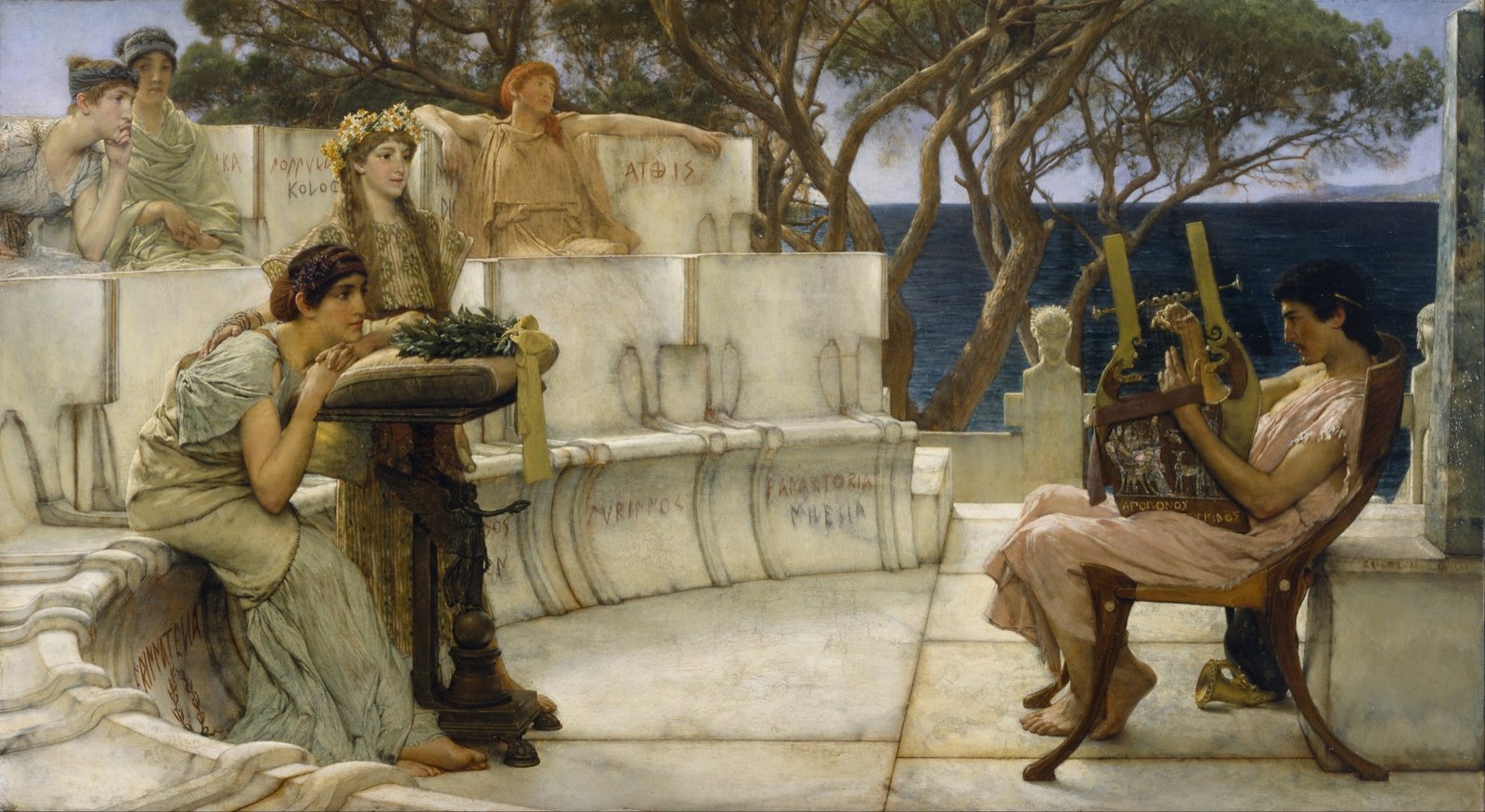
Athenaeus, The Learned Banqueters (Deipnosophistae) 604f · 604f
The Sun and the North Wind
Read the full text in our reader
Myrtilus, citing Hieronymus of Rhodes — καὶ ὁ Σοφοκλῆς ἀκούσας ἐποίησεν εἰς αὐτὸν τὸ τοιοῦτον ἐπίγραμμα, χρησάμενος τῷ περὶ τοῦ Ἡλίου καὶ Βορέου λόγῳ, καί τι πρὸς μοιχείαν αὐτοῦ παραινιττόμενος·
Sophocles' epigram — Ἥλιος ἦν, οὐ παῖς, Εὐριπίδη, ὅς με χλιαίνων γυμνὸν ἐποίησεν· σοὶ δὲ φιλοῦντι ἑταίραν Βορρᾶς ὡμίλησε. σὺ δ’ οὐ σοφός, ὃς τὸν Ἔρωτα ἀλλοτρίαν σπείρων λωποδύτην ἀπάγεις.
Myrtilus — Θεόπομπος δὲ ἐν τῷ περὶ τῶν συληθέντων ἐκ
When Sophocles heard this, he wrote the following epigram against him, using the fable of the Sun and the North Wind and hinting at Euripides' adultery: “It was the Sun, not a boy, Euripides, who warmed me and stripped me naked. But when you kissed a mistress, the North Wind kept you company. You are not wise: you sow another man's field, and then haul Love off to court as a clothes-thief.” Theopompus, in his book on the treasures plundered from…
Word by word
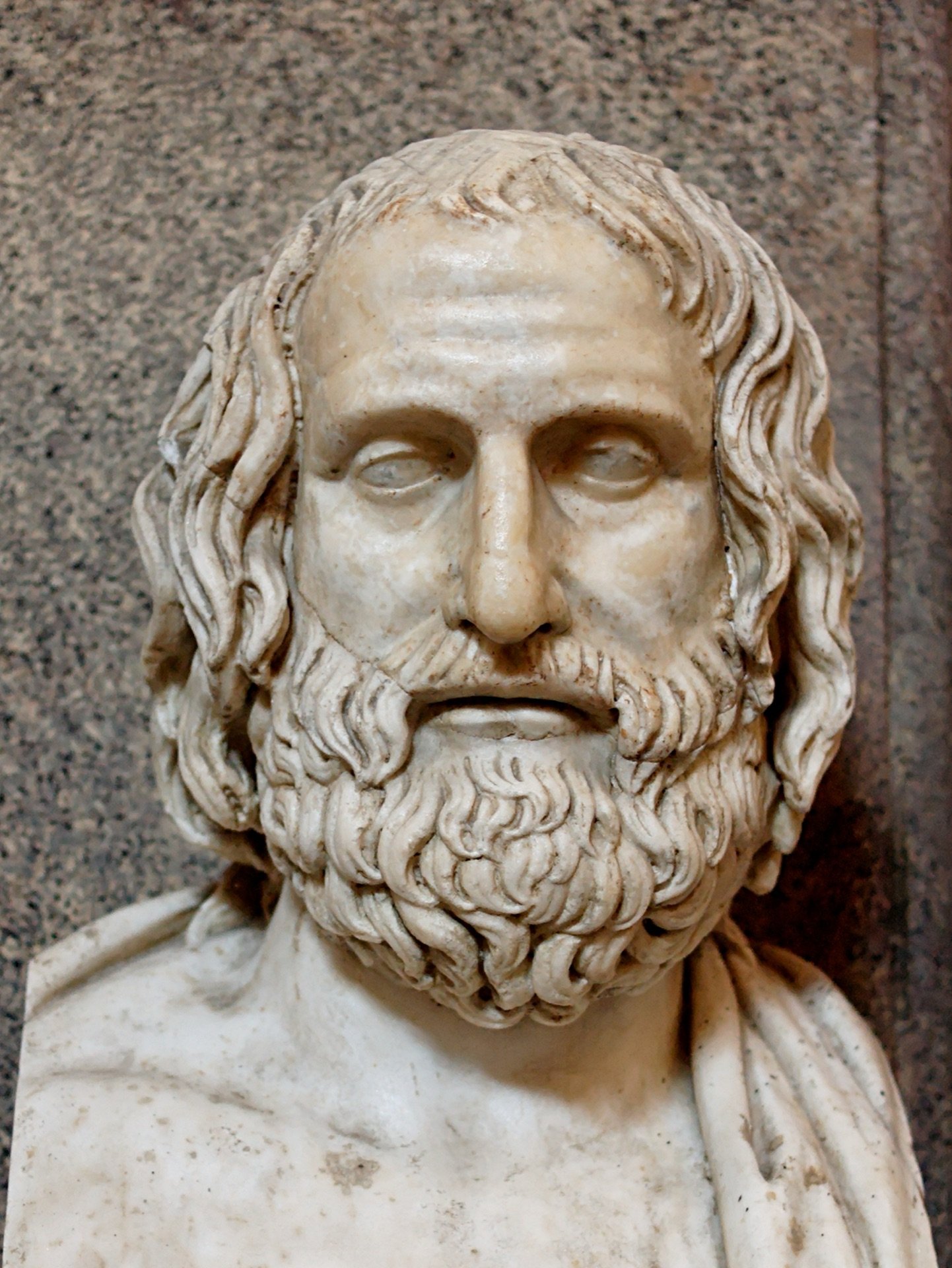
The setting
Sophocles' reply to Euripides, as Hieronymus tells it: an epigram built on Aesop's fable of the Sun and the North Wind. Grapevine: whether Sophocles wrote it is doubtful.
A note on this passage
Everyone at the table would know the fable. The North Wind and the Sun bet on which can strip a traveller of his cloak. The Wind only makes him clutch it tighter; the Sun's warmth makes him take it off himself. Sophocles, in this poem, lost his cloak to the Sun's warmth, not to the boy.<br><br>Many scholars doubt Sophocles wrote it. It reads like the kind of verse later writers composed for famous men, and it arrives through a gossip collection two centuries after the event. Athenaeus does not care who wrote it, and Myrtilus moves straight on to the next lover.
Read the full commentary — and tap any word for its dictionary entry — in the interlinear reader.
Open Athenaeus, The Learned Banqueters (Deipnosophistae) 604f in the full reader
Always open passages in the reader
From the Great Library
You are reading a page of the Athenaeus, The Learned Banqueters (Deipnosophistae) — the whole book is free in our interlinear reader.
The Great Library Project presses the classics in their original languages, glossed word by word — free to read, always. Browse the whole library.
Also on our shelves:
Athenaeus, The Learned Banqueters (Deipnosophistae) 604f — The Great Library Project interlinear edition · greatlibraryproject.com/book/deipnosophistae/604f/