Herodotus, Histories 1.0 · 1.0
The showing forth of an inquiry
Read the full text in our reader
Ἡροδότου Ἁλικαρνησσέος ἱστορίης ἀπόδεξις ἥδε, ὡς μήτε τὰ γενόμενα ἐξ ἀνθρώπων τῷ χρόνῳ ἐξίτηλα γένηται, μήτε ἔργα μεγάλα τε καὶ θωμαστά, τὰ μὲν Ἕλλησι τὰ δὲ βαρβάροισι ἀποδεχθέντα, ἀκλεᾶ γένηται, τά τε ἄλλα καὶ διʼ ἣν αἰτίην ἐπολέμησαν ἀλλήλοισι.
This is the showing forth of the inquiry of Herodotus of Halicarnassus, so that what men have done may not fade with time, and so that great and marvellous deeds, some displayed by Greeks and some by barbarians, may not go unsung; and above all, the cause for which they went to war with one another.
Word by word
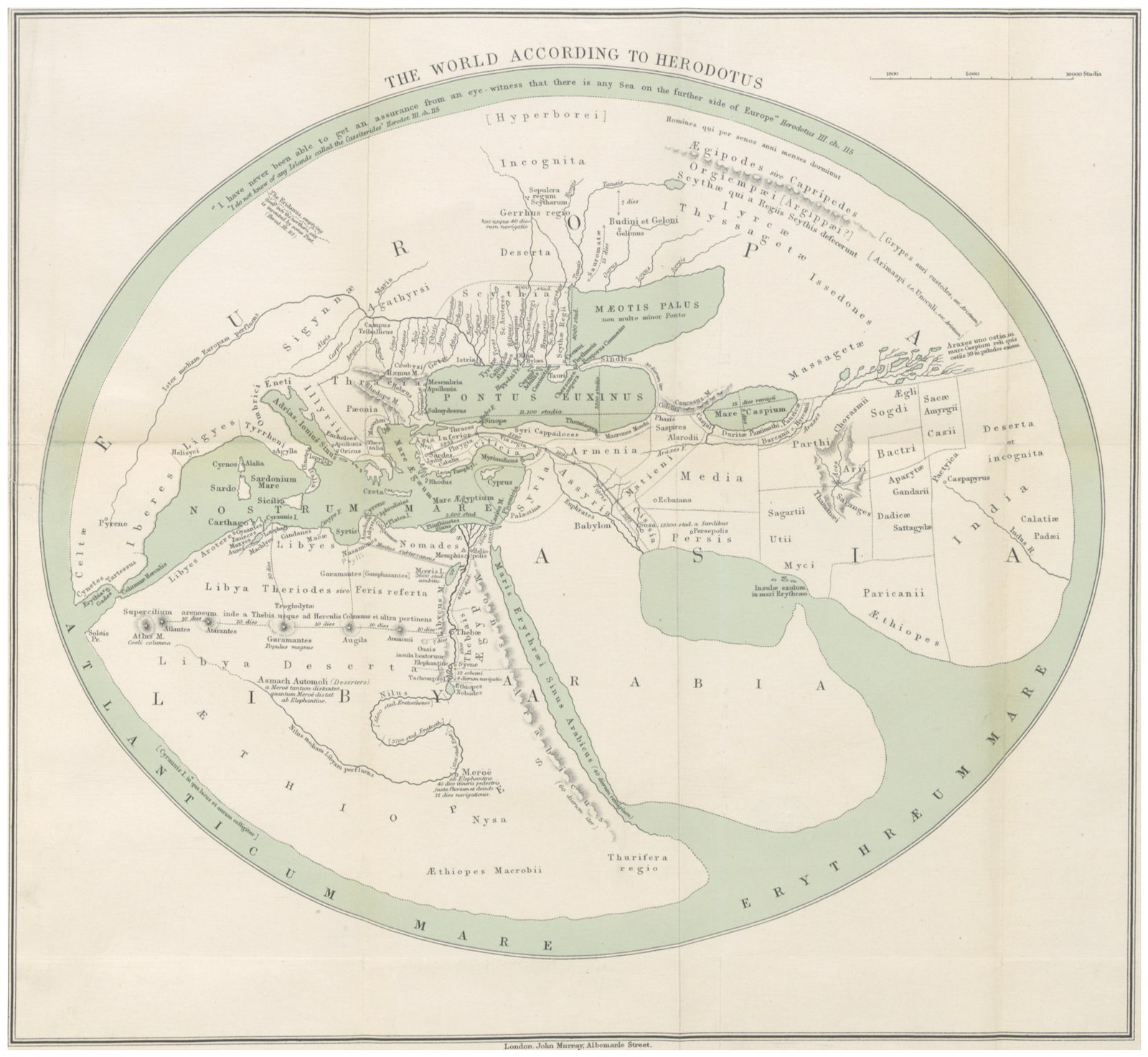
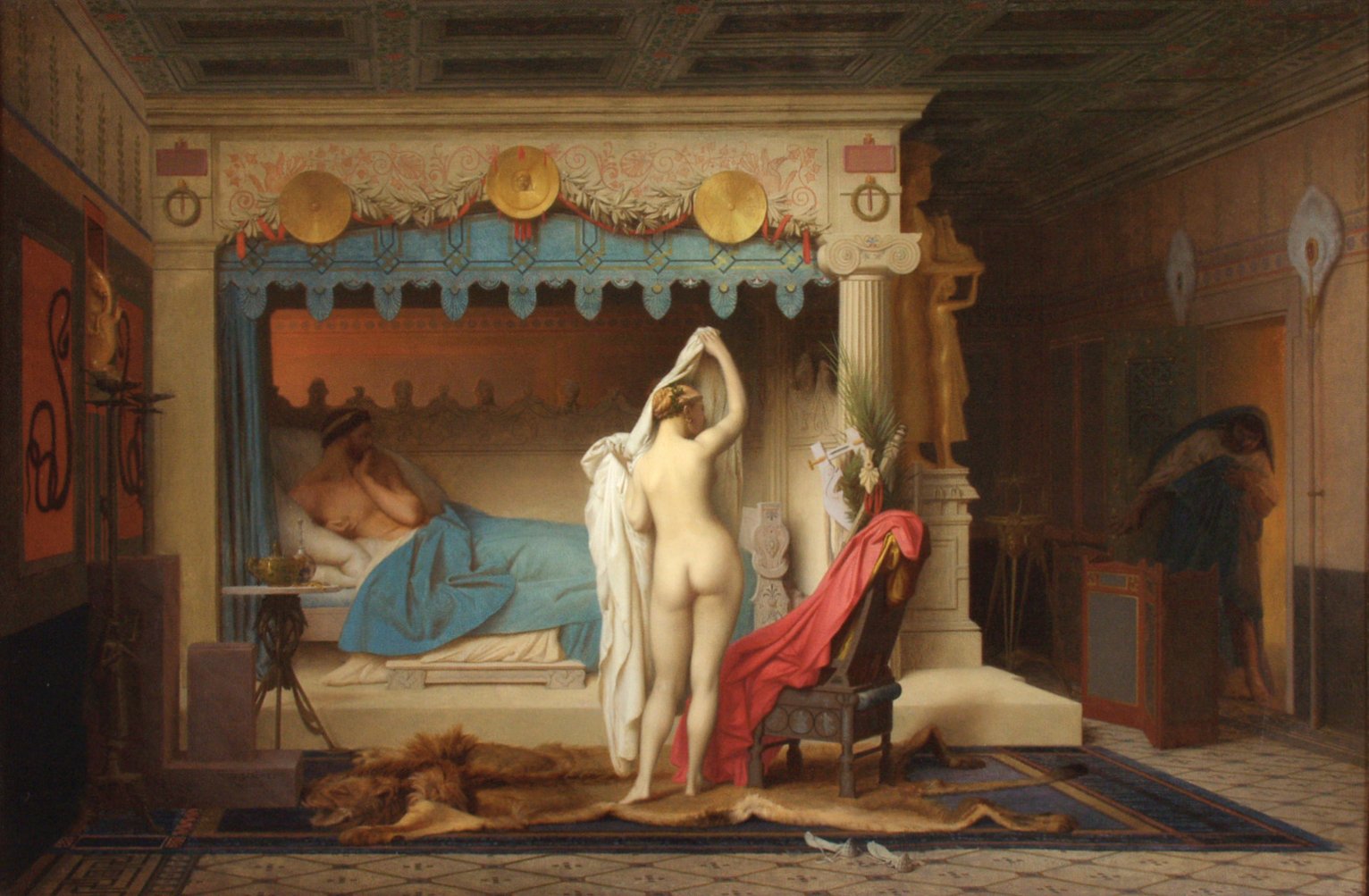
The setting
The first sentence of the whole work. Ancient books had no title page; an opening sentence like this one did that job, naming the author, his city, and what he means to do.
A note on this passage
The first sentence names the author, his city and his method in one breath. The method is historiē, and it does not yet mean "history." It means inquiry, finding out by asking. The word comes from histōr, the one who knows because he has seen or heard: the witness, or the judge whose word settles a quarrel. On the shield of Achilles in the Iliad, two men take their dispute to a histōr. So the opening tells us what kind of book this is. It is a record of what one man asked, whom he asked, and what they told him. Our word "history" is what his title became after others took up the method.
The rest of the sentence talks like Homer. The fear that great deeds will go akleā, without kleos, the fame that song confers, is the epic poet's fear, and the promise to save them is the epic poet's promise. Two things are new. The saving is done in prose, and the deeds belong to Greeks and barbaroi alike. A barbaros was anyone whose language sounded like "bar-bar" to a Greek ear; the word did not yet mean a savage, and Herodotus will spend nine books admiring Egyptians, Persians and Scythians. The last clause is the question the whole work sets out to answer: why did they go to war with one another?
Read the full commentary — and tap any word for its dictionary entry — in the interlinear reader.
Open Herodotus, Histories 1.0 in the full reader
Always open passages in the reader
From the Great Library
You are reading a page of the Herodotus, Histories — the whole book is free in our interlinear reader.
The Great Library Project presses the classics in their original languages, glossed word by word — free to read, always. Browse the whole library.
Also on our shelves:
Herodotus, Histories 1.0 — The Great Library Project interlinear edition · greatlibraryproject.com/book/herodotus/1.0/