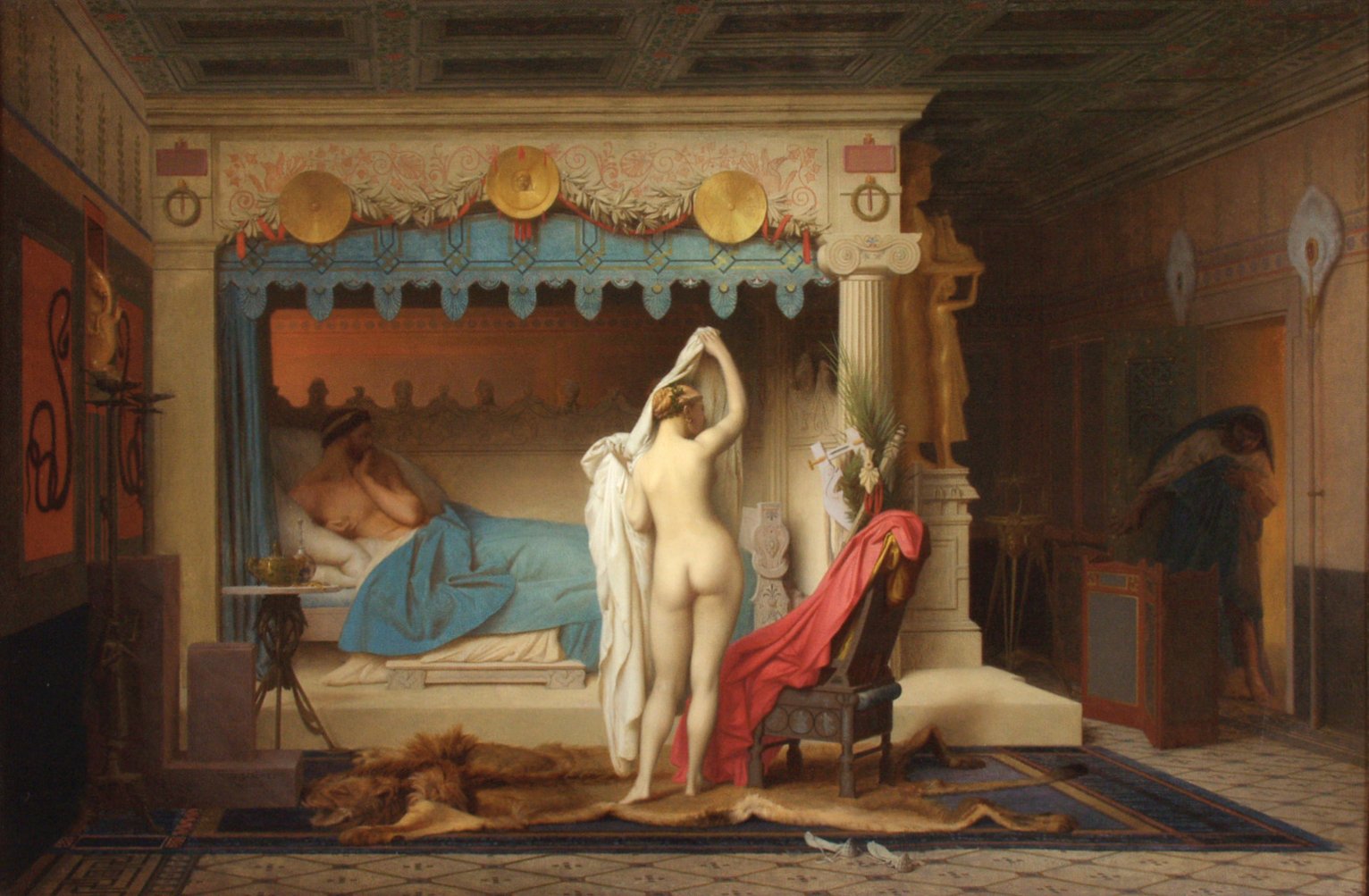
Herodotus, Histories 1.50.1 · 1.50.1
Croesus buys the god's favor
Read the full text in our reader
Μετὰ δὲ ταῦτα θυσίῃσι μεγάλῃσι τὸν ἐν Δελφοῖσι θεὸν ἱλάσκετο· κτήνεά τε γὰρ τὰ θύσιμα πάντα τρισχίλια ἔθυσε, κλίνας τε ἐπιχρύσους καὶ ἐπαργύρους καὶ φιάλας χρυσέας καὶ εἵματα πορφύρεα καὶ κιθῶνας, νήσας πυρὴν μεγάλην, κατέκαιε, ἐλπίζων τὸν θεὸν μᾶλλόν τι τούτοισι ἀνακτήσεσθαι· Λυδοῖσι τε πᾶσι προεῖπε θύειν πάντα τινὰ αὐτῶν τούτῳ ὅ τι ἔχοι ἕκαστος.
After this he tried to win over the god at Delphi with great sacrifices: he sacrificed three thousand head of every kind of sacrificial animal, burned on a great pyre couches overlaid with gold and with silver, golden bowls, purple robes and tunics, hoping thereby to win the god's favor all the more; and he commanded all the Lydians to sacrifice whatever each of them had.
Word by word
The setting
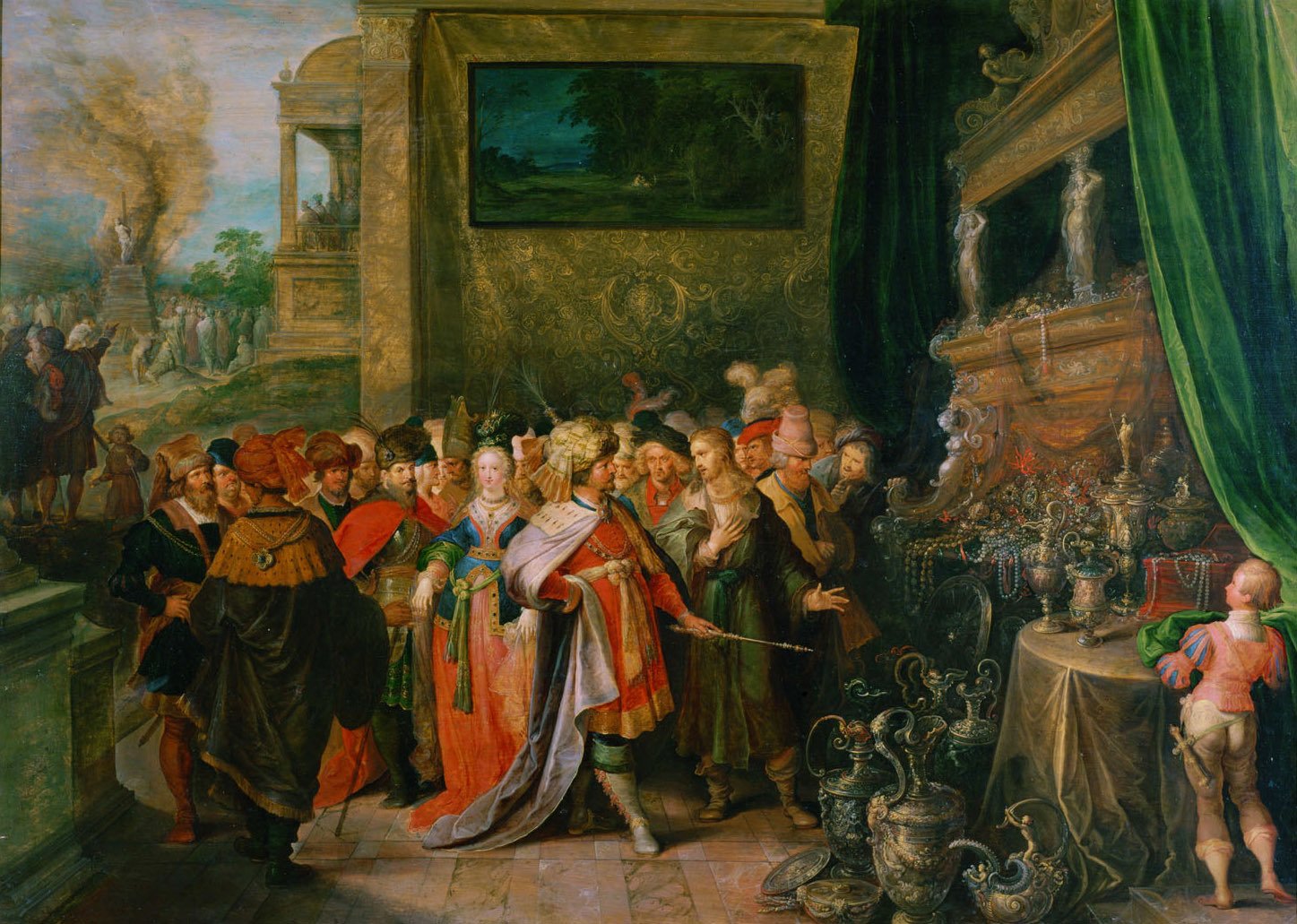
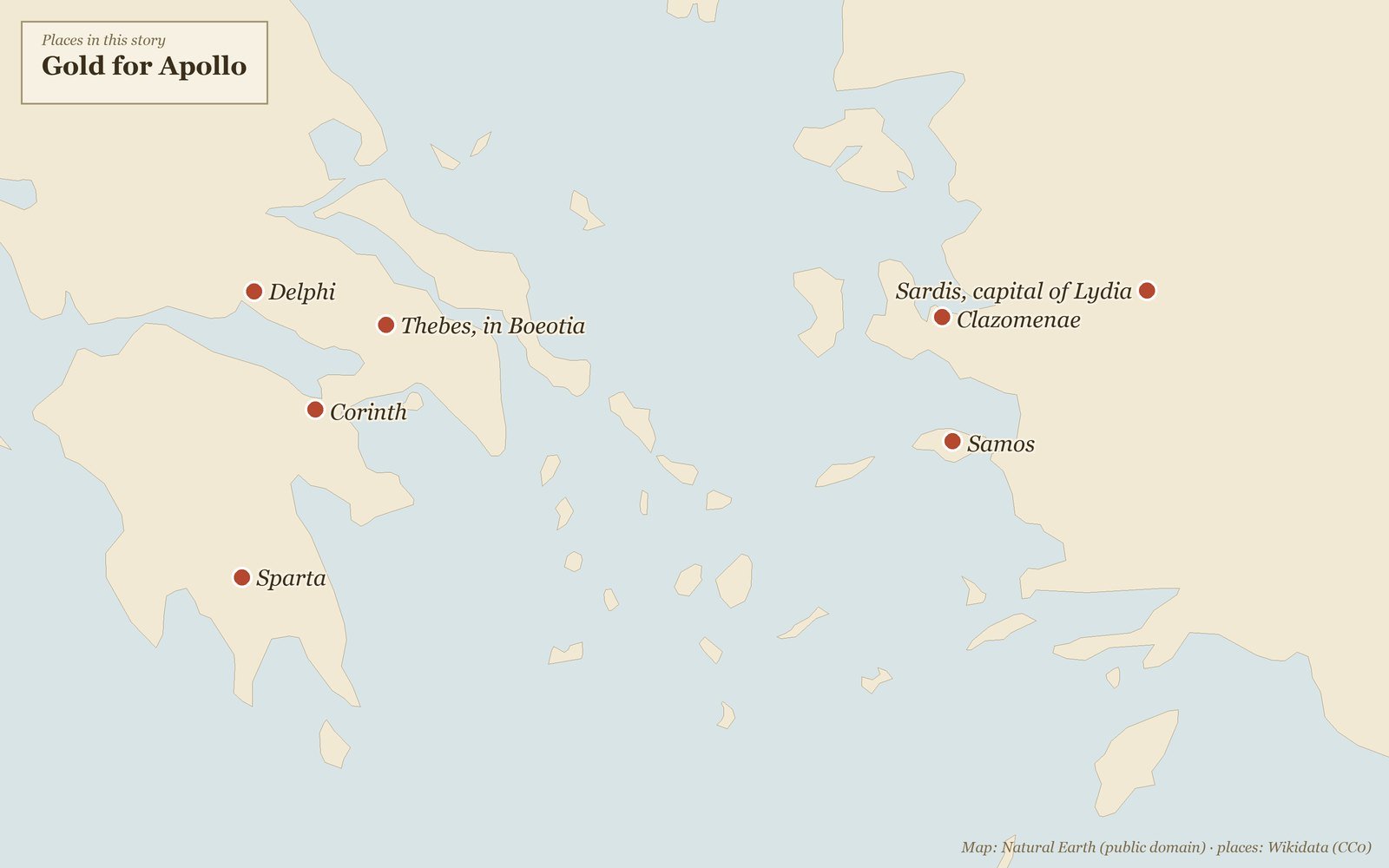
Croesus, now certain Delphi alone speaks the truth, spends extravagantly to win the god over before asking his real question.
A note on this passage
The verb for what Croesus is doing is hilasketo, imperfect, "he kept trying to win over," not a single rite but an ongoing campaign. Herodotus lists what went into it like an inventory: three thousand head of every kind of sacrificial animal, trischilia, couches plated in gold and silver, golden bowls, purple robes, tunics, all of it finally piled into one pyrē megalē, a great pyre, and burned. The catalogue form is itself an argument: this is piety measured in bulk, not in care.
The verb Herodotus gives for Croesus's hope is anaktēsesthai, "to win back, to regain," the same root used for recovering lost territory or lost favor. Croesus is not simply honoring Apollo; he is trying to buy back a god's good opinion with weight of gold, the same instinct that made him boil a tortoise to test the god's knowledge a few sections earlier. And the gesture does not stay private: he proeipe, "proclaimed publicly," that every Lydian should sacrifice whatever he had. A king's personal bribe to a god becomes, by royal order, an entire nation's bribe.
Read the full commentary — and tap any word for its dictionary entry — in the interlinear reader.
Open Herodotus, Histories 1.50.1 in the full reader
Always open passages in the reader
From the Great Library
You are reading a page of the Herodotus, Histories — the whole book is free in our interlinear reader.
The Great Library Project presses the classics in their original languages, glossed word by word — free to read, always. Browse the whole library.
Also on our shelves:
Herodotus, Histories 1.50.1 — The Great Library Project interlinear edition · greatlibraryproject.com/book/herodotus/1.50.1/