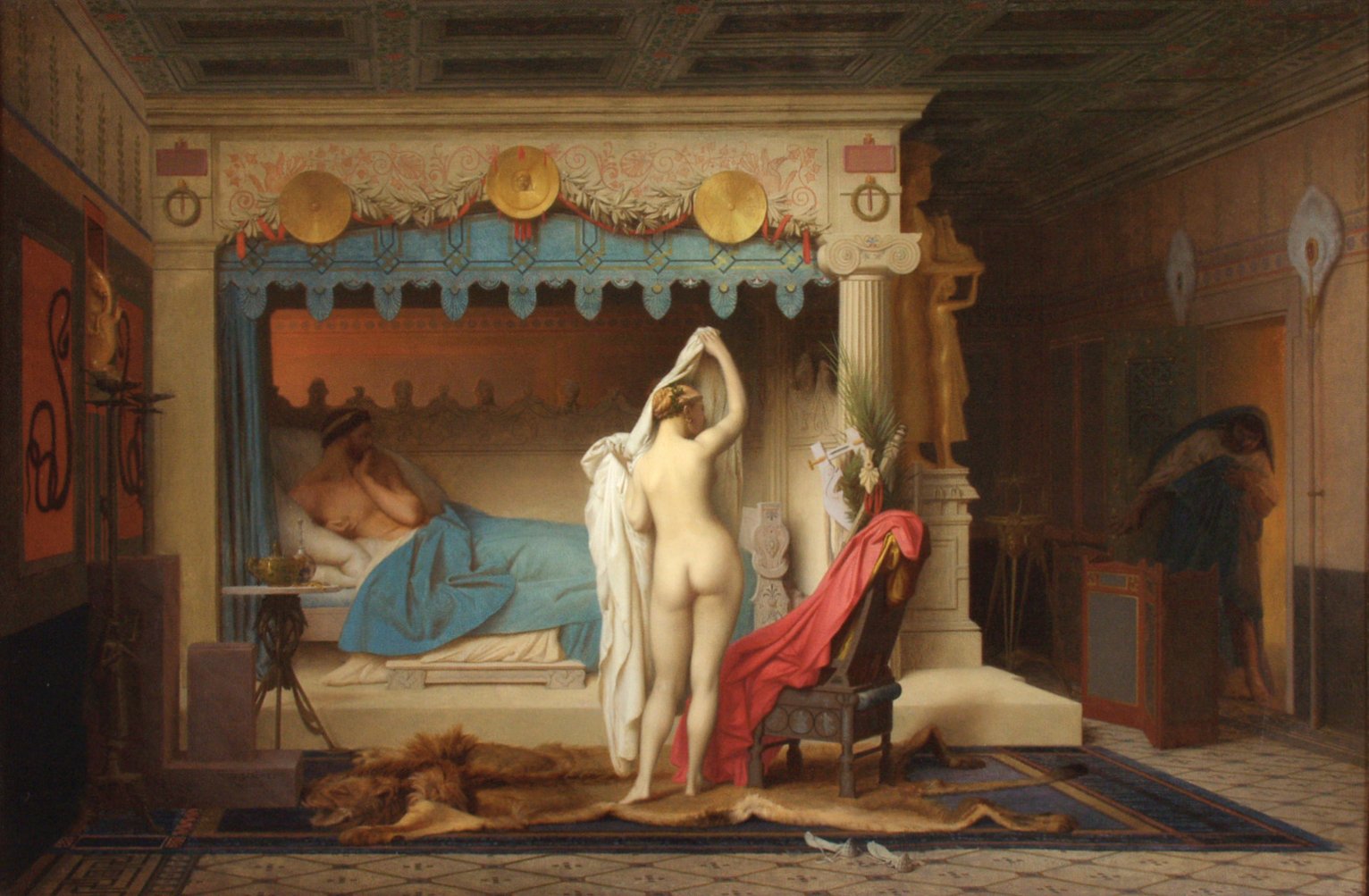
Herodotus, Histories 1.55.1 · 1.55.1
A third question
Read the full text in our reader
Δωρησάμενος δὲ τοὺς Δελφοὺς ὁ Κροῖσος ἐχρηστηριάζετο τὸ τρίτον· ἐπείτε γὰρ δὴ παρέλαβε τοῦ μαντείου ἀληθείην, ἐνεφορέετο αὐτοῦ. ἐπειρώτα δὲ τάδε χρηστηριαζόμενος, εἴ οἱ πολυχρόνιος ἔσται ἡ μουναρχίη.
Having rewarded the Delphians, Croesus consulted the oracle a third time; for since he had learned the truth of the oracle, he kept indulging himself in it. And in his consulting he asked this: whether his monarchy would be long-lasting.
Word by word
The setting
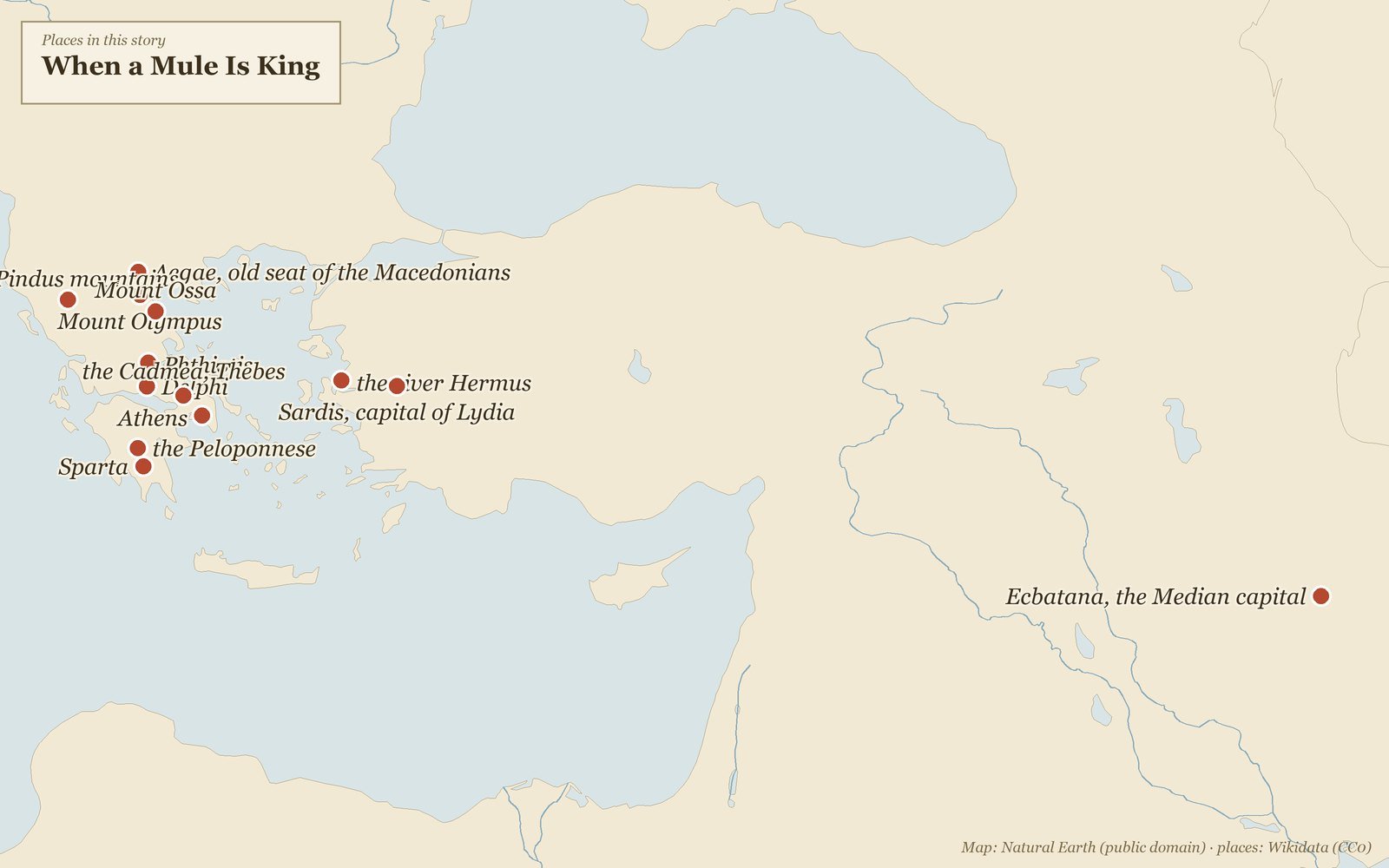
Croesus has rewarded Delphi lavishly and already asked two questions there: whether to campaign against Persia, and which Greeks to take as allies (both answered in the sections just before this one). Now, fully won over, he asks a third.
A note on this passage
Herodotus marks the shift with one verb: enephoreeto, "he kept indulging himself," built on the root of φέρω, "carry, bear." The test in chapters 46 through 48 was careful science, a hundred days counted out, answers written down and weighed against each other. By this third visit Croesus has stopped testing and started trusting completely; a king who once treated the gods like instruments under examination now treats Delphi the way a man treats a habit. The imperfect tense of the verb makes it a standing condition, not one act: this is something he keeps doing, question after question.
The question itself, mounarchiē, "monarchy," is the first time the word appears for Croesus's own rule, and it could hardly be more exposed. He wants to know whether his sole power will be polychronios, "long-lasting," and he asks it the way a man asks a doctor for good news. The reader already has Solon's warning two chapters back, that no mortal condition holds steady for long. What Croesus is about to receive is an answer built exactly to that lesson, in a shape he will not recognize until it is far too late.
Read the full commentary — and tap any word for its dictionary entry — in the interlinear reader.
Open Herodotus, Histories 1.55.1 in the full reader
Always open passages in the reader
From the Great Library
You are reading a page of the Herodotus, Histories — the whole book is free in our interlinear reader.
The Great Library Project presses the classics in their original languages, glossed word by word — free to read, always. Browse the whole library.
Also on our shelves:
Herodotus, Histories 1.55.1 — The Great Library Project interlinear edition · greatlibraryproject.com/book/herodotus/1.55.1/