Herodotus, Histories 1.60.3 · 1.60.3
The silliest trick
Read the full text in our reader
ἐνδεξαμένου δὲ τὸν λόγον καὶ ὁμολογήσαντος ἐπὶ τούτοισι Πεισιστράτου, μηχανῶνται δὴ ἐπὶ τῇ κατόδῳ πρῆγμα εὐηθέστατον, ὡς ἐγὼ εὑρίσκω, μακρῷ, ἐπεί γε ἀπεκρίθη ἐκ παλαιτέρου τοῦ βαρβάρου ἔθνεος τὸ Ἑλληνικὸν ἐὸν καὶ δεξιώτερον καὶ εὐηθείης ἠλιθίου ἀπηλλαγμένον μᾶλλον, εἰ καὶ τότε γε οὗτοι ἐν Ἀθηναίοισι τοῖσι πρώτοισι λεγομένοισι εἶναι Ἑλλήνων σοφίην μηχανῶνται τοιάδε.
Peisistratus having accepted the proposal and agreed to these terms, they then contrived, for his return, the silliest trick I can find, by far, since the Greek stock had long since been marked off from a more ancient barbarian stock by being both cleverer and more free of foolish silliness, if indeed even then these men, who among the Athenians were said to be foremost of the Greeks in cleverness, contrived the following.
Word by word
The setting
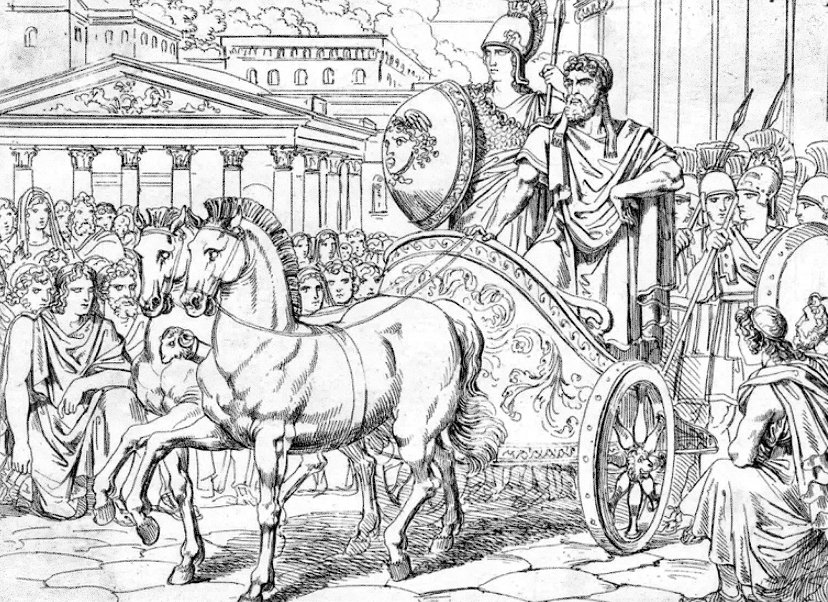
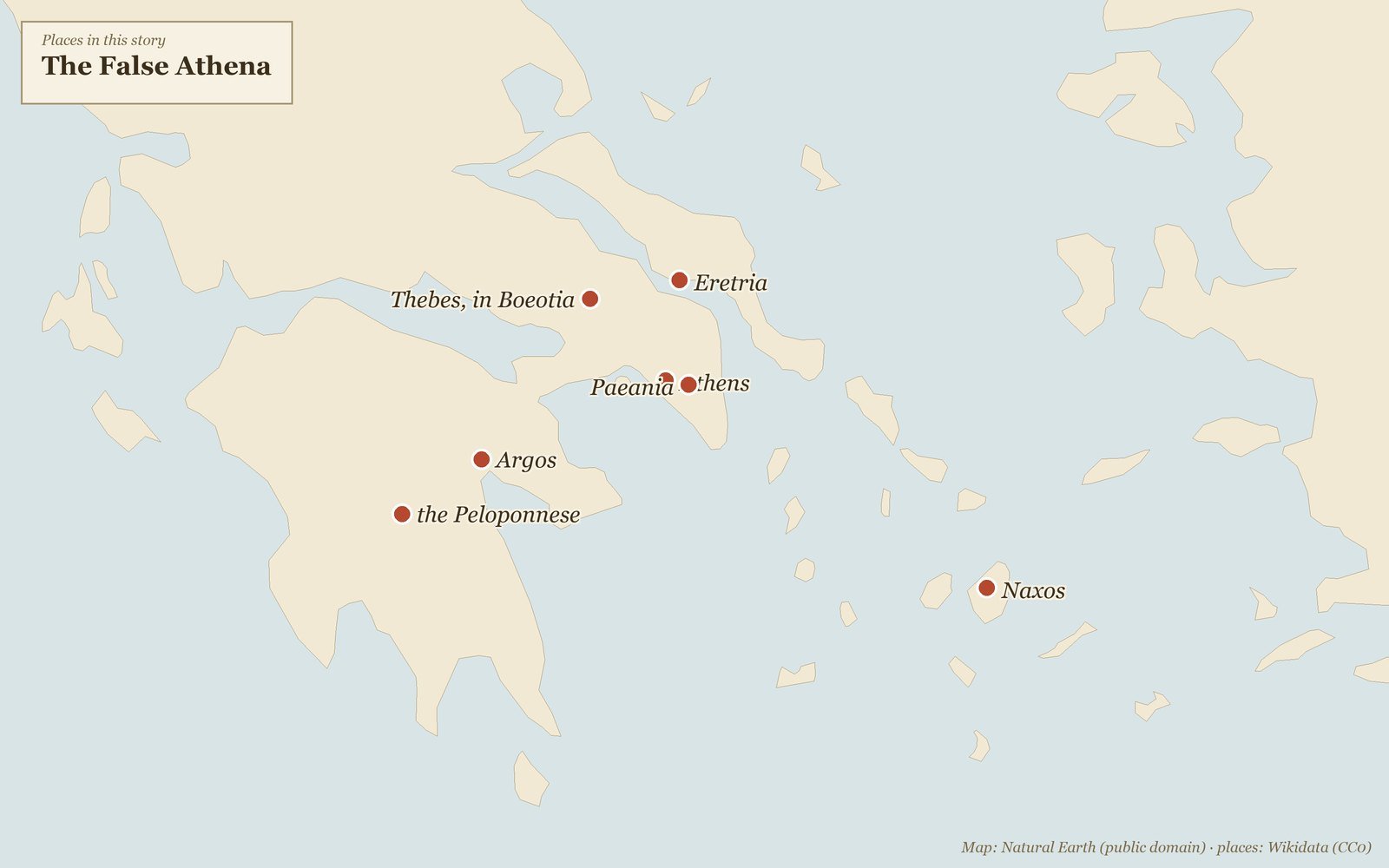
Peisistratus has agreed to marry Megacles's daughter in exchange for his restoration. Herodotus, somewhat embarrassed, introduces the scheme his allies now devise to bring him home.
A note on this passage
Herodotus stops his own story to editorialize, and the word he reaches for is euēthestaton, "silliest," then doubles it a few lines later with euētheiēs ēlithiou, "foolish silliness." He is not being coy: he thinks what is about to happen is embarrassingly stupid, and he says so before he tells it, which is rare for him. The claim he hangs this on is just as pointed, that the Greek ethnos had long since been apekrithē, "separated off," from an older barbarian stock, precisely by being cleverer and freer of nonsense. He has already used that verb once before, of the Hellenic people splitting from the Pelasgian; now he turns it against the very Athenians he just called the cleverest of all Greeks.
The joke lands because Athens is supposed to be the test case for Greek intelligence, Hellēnon prōtoisi legomenoisi einai sophiēn, "said to be foremost of the Greeks in cleverness." Herodotus sets that reputation up only to flatten it in the very next sentence with a trick so transparent it insults everyone involved: the Athenians who pulled it, and, implicitly, the Athenians who fell for it. The irony is doing real work for the book's wider theme, that cleverness is a thin, unstable thing people only sometimes live up to.
Read the full commentary — and tap any word for its dictionary entry — in the interlinear reader.
Open Herodotus, Histories 1.60.3 in the full reader
Always open passages in the reader
From the Great Library
You are reading a page of the Herodotus, Histories — the whole book is free in our interlinear reader.
The Great Library Project presses the classics in their original languages, glossed word by word — free to read, always. Browse the whole library.
Also on our shelves:
Herodotus, Histories 1.60.3 — The Great Library Project interlinear edition · greatlibraryproject.com/book/herodotus/1.60.3/