Odyssey 1.102 · Book 1, lines 102–105
A stranger on the threshold
Read the full text in our reader
βῆ δὲ κατʼ Οὐλύμποιο καρήνων ἀίξασα, στῆ δʼ Ἰθάκης ἐνὶ δήμῳ ἐπὶ προθύροις Ὀδυσῆος, οὐδοῦ ἐπʼ αὐλείου· παλάμῃ δʼ ἔχε χάλκεον ἔγχος, εἰδομένη ξείνῳ, Ταφίων ἡγήτορι Μέντῃ.
And she went darting down from the peaks of Olympus, and stood in the land of Ithaca at Odysseus's doorway, on the threshold of the court; in her palm she held the bronze spear, in the likeness of a stranger — Mentes, leader of the Taphians.
Word by word
The setting
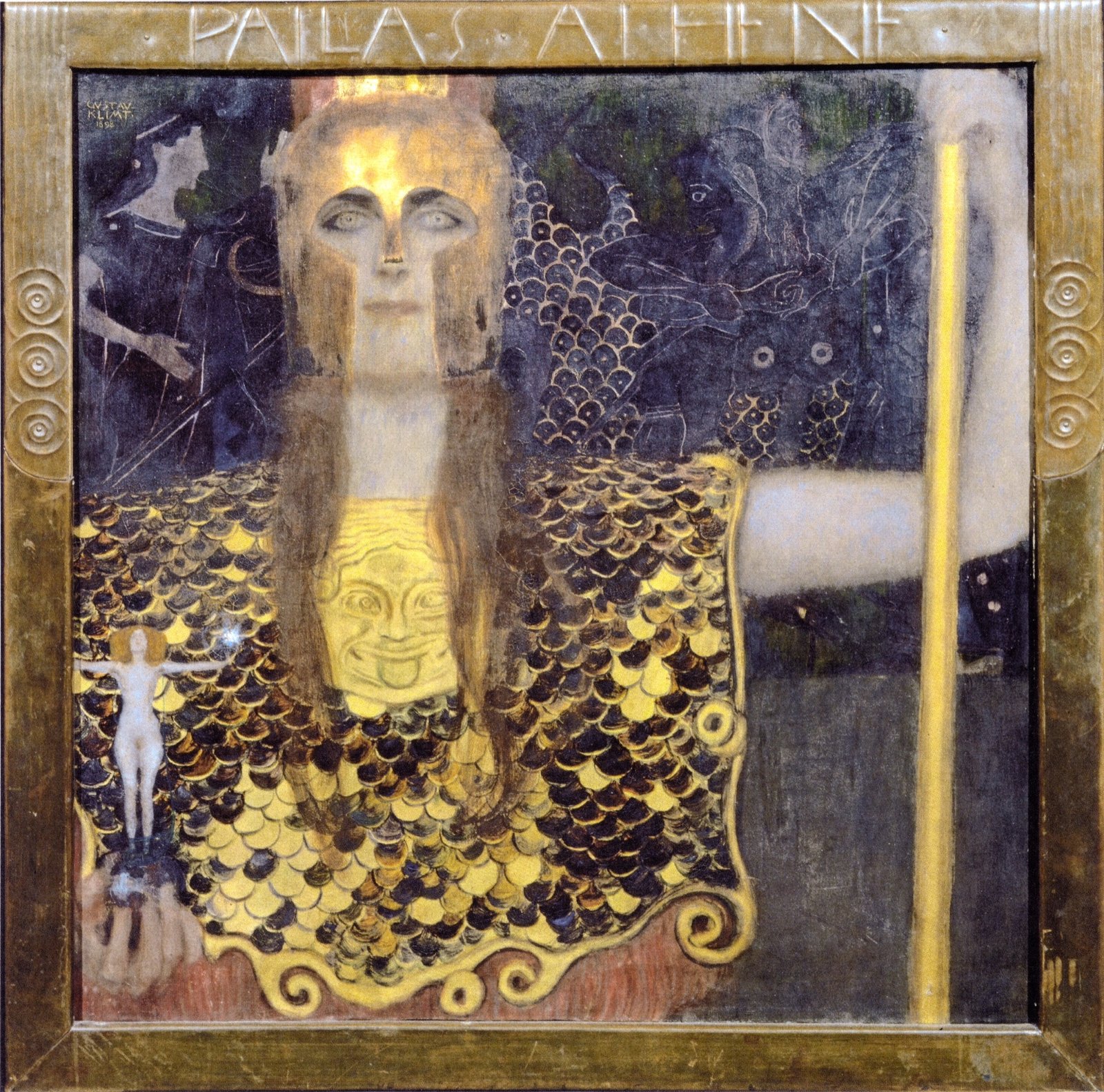
Armed, Athena leaves Olympus in a single stride of verse and lands at the front door of Odysseus's house — not as a goddess but in the shape of a traveling guest-friend: Mentes, chief of the Taphians, seafaring neighbors of Ithaca.
A note on this passage
Two clipped aorists — βῆ, στῆ: she went, she stood — take her from the peaks of Olympus to a doorstep. The poem spends nothing on the flight; what it lingers on is the exact spot where she stops: the porch, the threshold of the courtyard. She does not go in. She stands where a stranger stands, spear in hand, and waits.
The threshold is a test. Xenia — the guest-code under Zeus's own protection — begins with someone noticing the stranger at the door, and the first thing the poem does on Ithaca is put a disguised god in exactly that position. Who sees her, and how long she is left standing, will grade the whole household. The mask is chosen with care: Mentes is an old guest-friend of the family — a man this house owes a welcome.
Read the full commentary — and tap any word for its dictionary entry — in the interlinear reader.
Open Odyssey 1.102 in the full reader
Always open passages in the reader
From the Great Library
You are reading a page of the Odyssey — the whole book is free in our interlinear reader.
The Great Library Project presses the classics in their original languages, glossed word by word — free to read, always. Browse the whole library.
Also on our shelves:
Odyssey 1.102 — The Great Library Project interlinear edition · greatlibraryproject.com/book/odyssey/1.102/