
Odyssey 1.136 · Book 1, lines 136–138
Water over silver, a polished table
Read the full text in our reader
χέρνιβα δʼ ἀμφίπολος προχόῳ ἐπέχευε φέρουσα καλῇ χρυσείῃ, ὑπὲρ ἀργυρέοιο λέβητος, νίψασθαι· παρὰ δὲ ξεστὴν ἐτάνυσσε τράπεζαν.
A handmaid brought water and poured it from a fine golden pitcher, over a silver basin, for washing; and beside him she drew up a polished table.
Word by word
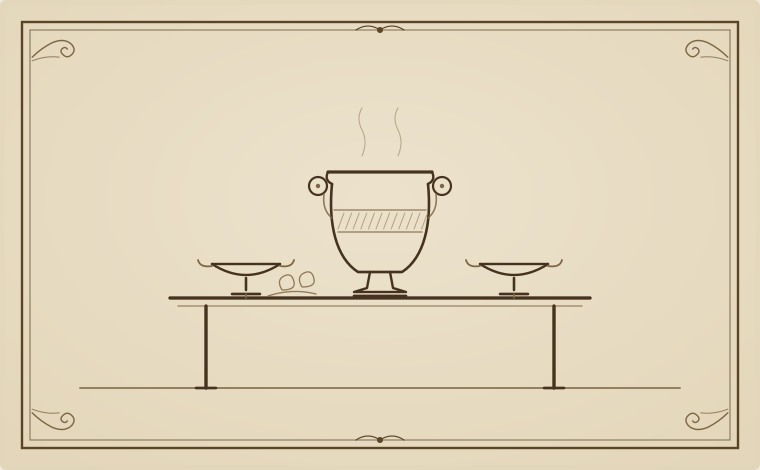
The setting
Part of the fixed guest-welcome: before any question, the visitor is given water, a table, and food. A servant begins the sequence at the newly seated guest's side.
A note on this passage
The hand-washing that opens every Homeric meal. A maid pours water from a golden jug over a silver basin so the guest can rinse, then sets a polished table at his side. The gestures are fixed; Homer's audience had heard the sequence many times before.
This is the feast type-scene, the poem's own machinery — a set run of lines reused at every meal. Its interest here is the gold and silver spent on a stranger's hands: the household's wealth is real and still flowing, poured out in full ceremony for one welcomed guest. The same rich apparatus, a few lines on, will serve the men eating the house down. The form does not distinguish the honored visitor from the parasites; only the poem does.
Read the full commentary — and tap any word for its dictionary entry — in the interlinear reader.
Open Odyssey 1.136 in the full reader
Always open passages in the reader
From the Great Library
You are reading a page of the Odyssey — the whole book is free in our interlinear reader.
The Great Library Project presses the classics in their original languages, glossed word by word — free to read, always. Browse the whole library.
Also on our shelves:
Odyssey 1.136 — The Great Library Project interlinear edition · greatlibraryproject.com/book/odyssey/1.136/