
Odyssey 1.336 · Book 1, lines 336–340
Penelope silences the singer
Read the full text in our reader
δακρύσασα δʼ ἔπειτα προσηύδα θεῖον ἀοιδόν·
Penelope — Φήμιε πολλὰ γὰρ ἄλλα βροτῶν θελκτήρια οἶδας, ἔργʼ ἀνδρῶν τε θεῶν τε, τά τε κλείουσιν ἀοιδοί· τῶν ἕν γέ σφιν ἄειδε παρήμενος, οἱ δὲ σιωπῇ οἶνον πινόντων· ταύτης δʼ ἀποπαύεʼ ἀοιδῆς
Weeping, then, she addressed the divine bard: Phemius, you know many other charms of mortals, deeds of men and gods, which the bards celebrate; sing them one of these, sitting by, and let them drink their wine in silence; but cease from this song
Word by word
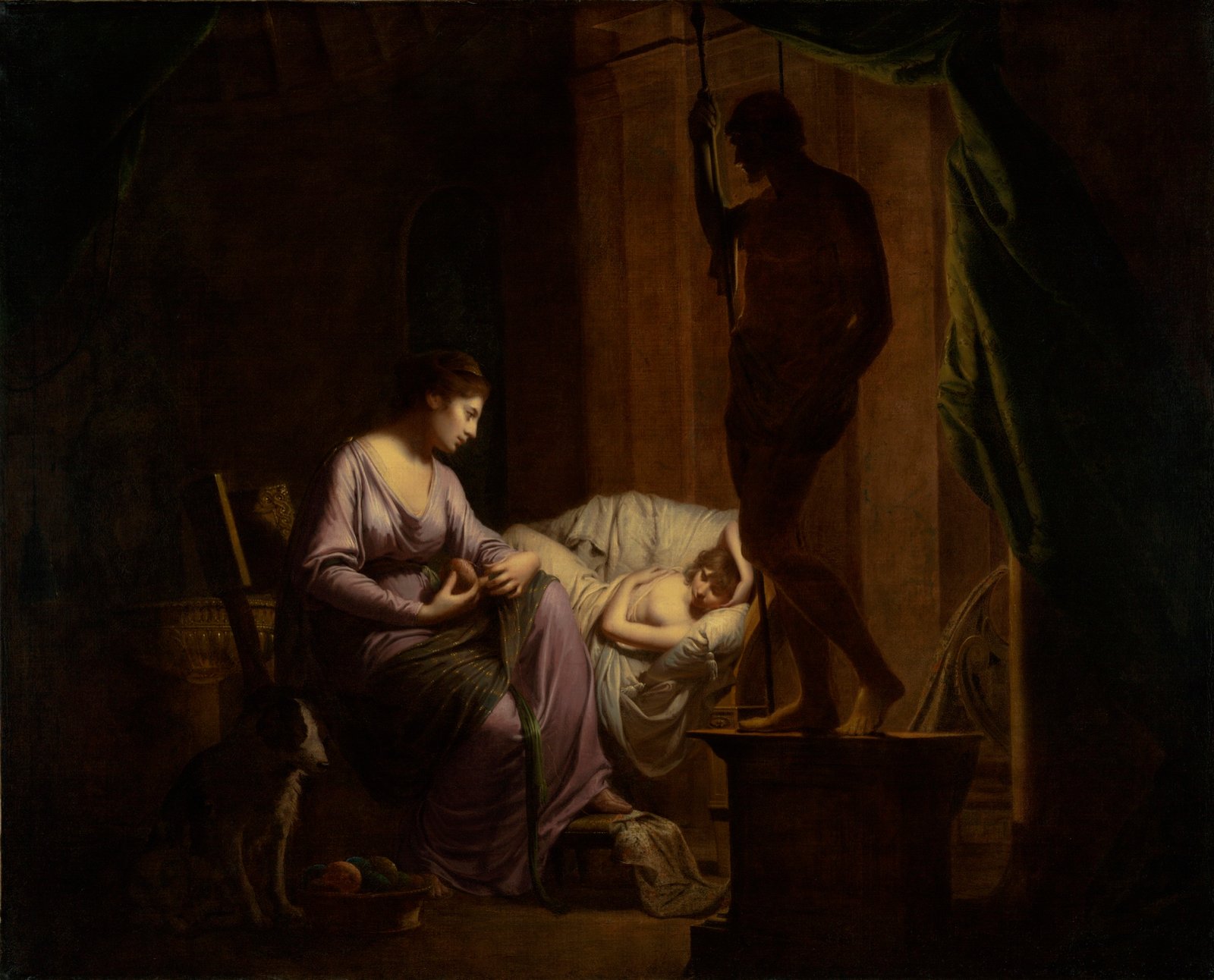
The setting
Downstairs the bard Phemius has been singing the Achaeans' bitter homecoming from Troy. Penelope, Odysseus's wife, comes down weeping and begs him to choose any other song. She does not deny his art — she knows he knows a hundred tales — only this one she cannot bear.
A note on this passage
Penelope comes down in tears and asks for a different song. She is careful with the singer: she grants his whole art first — he knows the deeds of men and gods, the whole repertoire — and only then names the one tale she cannot hear. It is a request, not a command; the mistress of the house pleading with an entertainer.
The undercurrent is what a song is here. Phemius' tales are θελκτήρια, ‘charms’ — the same word used for magic that binds and soothes. Song in this world does something to the listener; it enchants. Penelope's grief is proof of the power: the one thing the charm cannot do is un-hurt her, because the song of the returns is also the story of her own life.
Read the full commentary — and tap any word for its dictionary entry — in the interlinear reader.
Open Odyssey 1.336 in the full reader
Always open passages in the reader
From the Great Library
You are reading a page of the Odyssey — the whole book is free in our interlinear reader.
The Great Library Project presses the classics in their original languages, glossed word by word — free to read, always. Browse the whole library.
Also on our shelves:
Odyssey 1.336 — The Great Library Project interlinear edition · greatlibraryproject.com/book/odyssey/1.336/