Phaedrus 274c · 274c
Theuth, Inventor of Letters
Read the full text in our reader
Socrates — ἤκουσα τοίνυν περὶ Ναύκρατιν τῆς Αἰγύπτου γενέσθαι τῶν ἐκεῖ παλαιῶν τινα θεῶν, οὗ καὶ τὸ ὄρνεον ἱερὸν ὃ δὴ καλοῦσιν Ἶβιν· αὐτῷ δὲ ὄνομα τῷ δαίμονι εἶναι Θεύθ. τοῦτον δὴ πρῶτον ἀριθμόν τε καὶ λογισμὸν εὑρεῖν καὶ γεωμετρίαν καὶ ἀστρονομίαν, ἔτι δὲ πεττείας τε καὶ κυβείας, καὶ δὴ καὶ γράμματα
I heard, then, that near Naucratis in Egypt there lived one of that country's ancient gods — the one whose sacred bird is called the Ibis, and the daimon's own name was Theuth. It was he who first invented number and calculation, geometry and astronomy, games of draughts and dice besides — and, above all else, letters.
Word by word
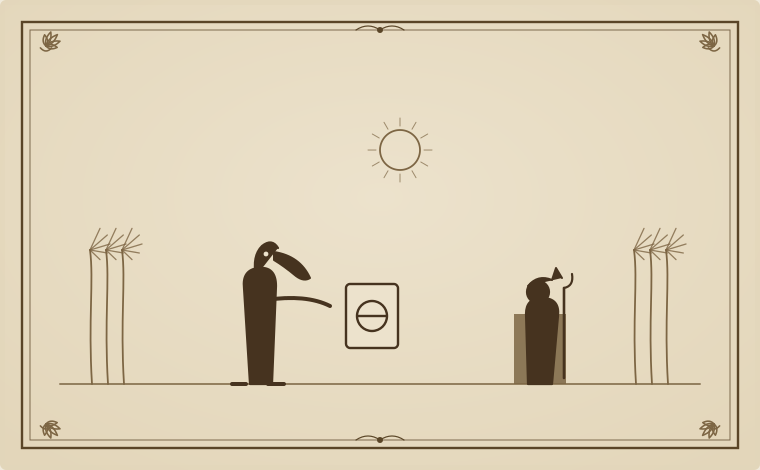
The setting
To judge writing, Socrates reaches for a story from old Egypt: the ibis-god Theuth, inventor of number, geometry, astronomy — also dice — and, crowning the list, letters.
A note on this passage
Asked whether writing is a good, Socrates does not argue — he tells a story, and sets it in Egypt, the land Greeks used as shorthand for wisdom older than memory (in the <em>Timaeus</em>, an Egyptian priest tells Solon: 'you Greeks are always children'). The inventor is Thoth — Hellenized as <em>Theuth</em>, called a <em>daímōn</em>, divinity-as-force — the ibis-headed scribe of the Egyptian gods, whose sacred bird probes the Nile mud with a bill like a reed pen. Later Greeks would fold him into Hermes; the 'Hermes Trismegistus' of the alchemists is this god's long afterlife.<br><br>The inventory is a deliberate comedy of scale: number, calculation, geometry, astronomy — <em>draughts and dice</em> — and letters. The technologies of knowledge arrive in one basket with the technologies of killing time, and the gambler's cube sits next to the alphabet. That is the tale's first lesson before the famous verdict is even spoken: invention is indiscriminate; the same genius produces the calendar and the casino. Every gift will need a judge — which is why the story now walks all of them upriver to a king.
Read the full commentary — and tap any word for its dictionary entry — in the interlinear reader.
Open Phaedrus 274c in the full reader
Always open passages in the reader
From the Great Library
You are reading a page of the Phaedrus — the whole book is free in our interlinear reader.
The Great Library Project presses the classics in their original languages, glossed word by word — free to read, always. Browse the whole library.
Also on our shelves:
Phaedrus 274c — The Great Library Project interlinear edition · greatlibraryproject.com/book/phaedrus/274c/