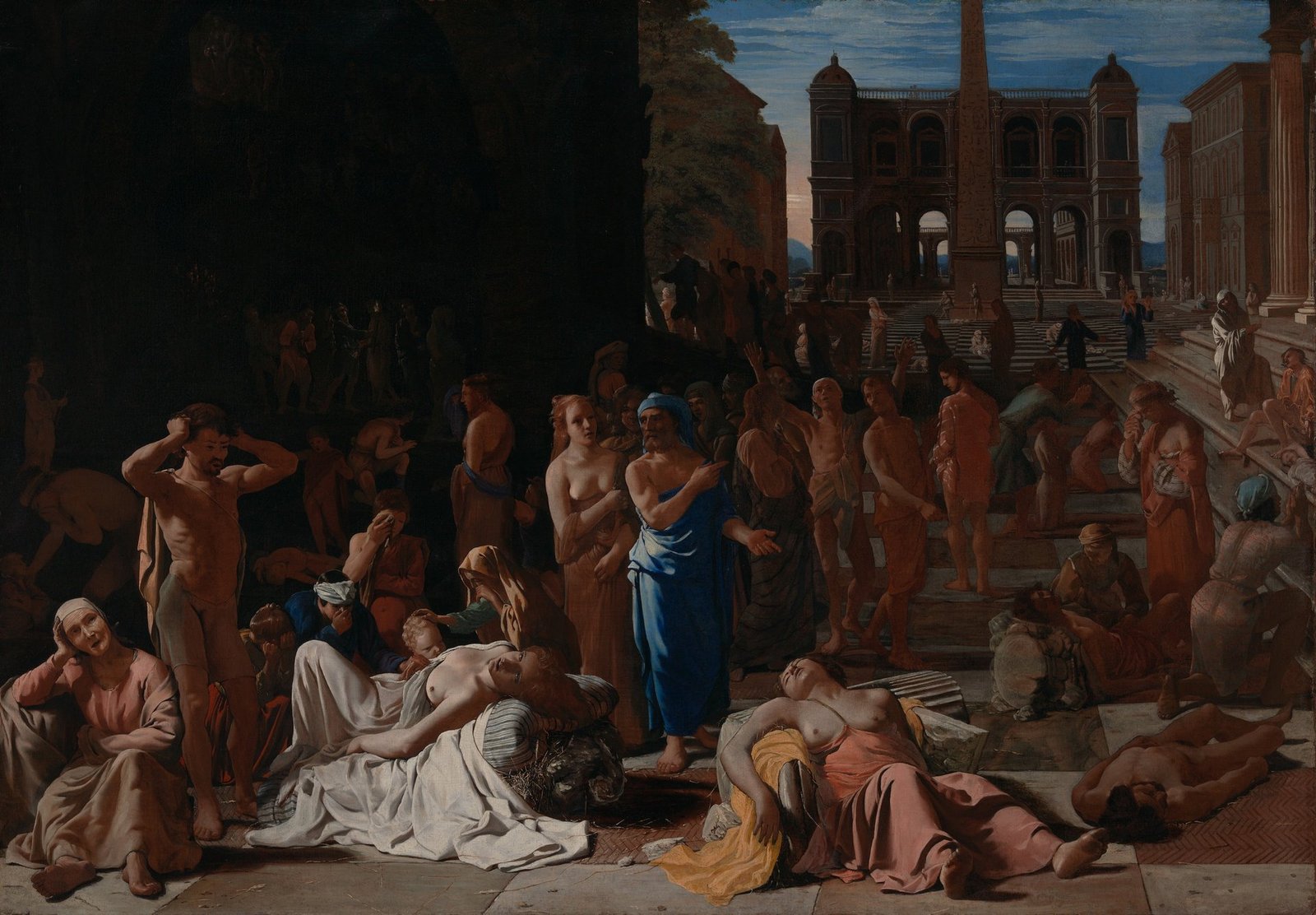
Thucydides, History of the Peloponnesian War 1.1.2 · 1.1.2
The greatest upheaval
Read the full text in our reader
κίνησις γὰρ αὕτη μεγίστη δὴ τοῖς Ἕλλησιν ἐγένετο καὶ μέρει τινὶ τῶν βαρβάρων, ὡς δὲ εἰπεῖν καὶ ἐπὶ πλεῖστον ἀνθρώπων.
This was the greatest upheaval ever to come upon the Greeks, and upon a part of the non-Greek peoples as well, and, one might say, upon most of mankind.
Word by word
The setting
He claims this was the biggest shaking the Greeks had known, and one that reached many non-Greek peoples and nearly all of mankind.
A note on this passage
The word for the war is kinēsis, "a moving" or "a shaking." Here Thucydides calls the war a disturbance that moved whole populations, and the superlative megistē, "greatest," repeats the claim made in the first sentence. The Greeks are the first to be affected, then merei tini tōn barbarōn, "some portion of the barbarians," and by barbaroi he simply means those who were not Greek speakers.
Then comes a hedge. hōs de eipein, "so to say," softens the last step, epi pleiston anthrōpōn, "over the greatest part of mankind." He enlarges the circle in three stages, Greeks, some foreigners, almost everyone, and he stops short of a flat claim to cover all humanity.
Read the full commentary — and tap any word for its dictionary entry — in the interlinear reader.
Open Thucydides, History of the Peloponnesian War 1.1.2 in the full reader
Always open passages in the reader
From the Great Library
You are reading a page of the Thucydides, History of the Peloponnesian War — the whole book is free in our interlinear reader.
The Great Library Project presses the classics in their original languages, glossed word by word — free to read, always. Browse the whole library.
Also on our shelves:
Thucydides, History of the Peloponnesian War 1.1.2 — The Great Library Project interlinear edition · greatlibraryproject.com/book/thucydides/1.1.2/