Plato, Timaeus 21e · 21e
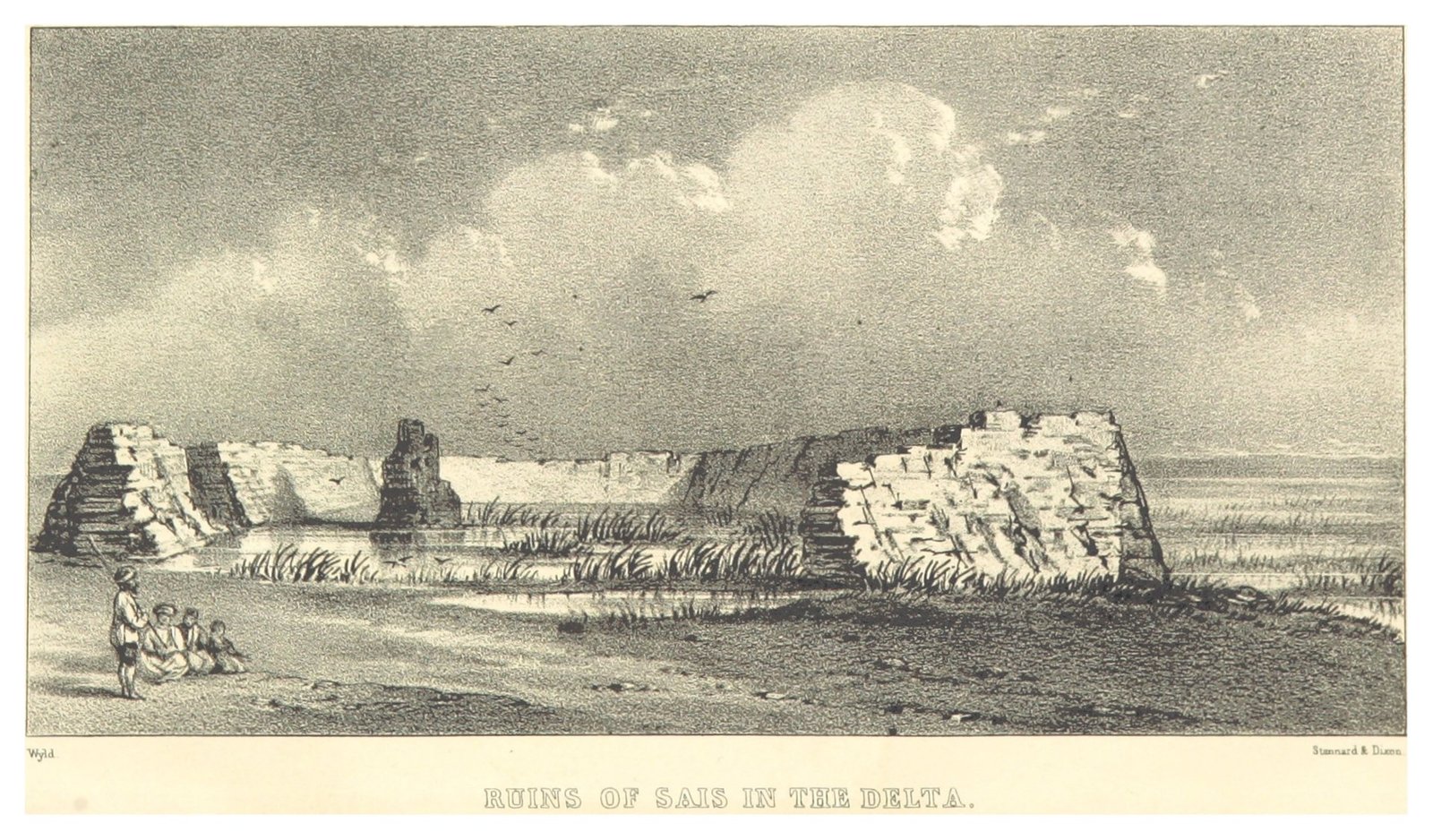
Saïs in the Delta
Read the full text in our reader
Critias — ἔστιν τις κατʼ Αἴγυπτον, ἦ δʼ ὅς, ἐν τῷ Δέλτα, περὶ ὃν κατὰ κορυφὴν σχίζεται τὸ τοῦ Νείλου ῥεῦμα Σαϊτικὸς ἐπικαλούμενος νομός, τούτου δὲ τοῦ νομοῦ μεγίστη πόλις Σάις— ὅθεν δὴ καὶ Ἄμασις ἦν ὁ βασιλεύς— οἷς τῆς πόλεως θεὸς ἀρχηγός τίς ἐστιν, Αἰγυπτιστὶ μὲν τοὔνομα Νηίθ, Ἑλληνιστὶ δέ, ὡς ὁ ἐκείνων λόγος, Ἀθηνᾶ· μάλα δὲ φιλαθήναιοι καί τινα τρόπον οἰκεῖοι τῶνδʼ εἶναί φασιν. οἷ δὴ Σόλων ἔφη πορευθεὶς σφόδρα τε γενέσθαι παρʼ αὐτοῖς ἔντιμος,
Critias: In Egypt, he said, there is a district in the Delta, around whose top the stream of the Nile splits, called the Saitic district. The greatest city of this district is Saïs, from which King Amasis also came. A certain goddess is the founder of their city. Her name in Egyptian is Neith, and in Greek, as their account has it, Athena. They are very friendly to Athens and, they say, in some way akin to these people. To this place, Solon said, he travelled, and was greatly honoured among them,
Word by word
The setting
The tale starts in Egypt, in the Delta, in the district of Saïs. Its city goddess is called Neith by the Egyptians and, they say, Athena by the Greeks, and the people of Saïs are friendly to Athens. Solon travelled there and was greatly honoured.
A note on this passage
The geography is given by a chain of genitives and relative clauses, Delta, Saïtikos nomos, Sáis, and the king Amasis is named as someone who came from that city, which anchors the story in a known place and time. The verb schizetai, "is split," describes the Nile dividing at its head, kata koryphēn. Burnet prints the goddess's Egyptian name as Nēith, and the sentence gives it twice over by language, Aigyptisti and Hellēnisti, with hōs ho ekeinōn logos, "as their account has it," so the Greek name is stated on the Egyptians' authority.
The friendship of Saïs for Athens is also reported at one remove, phasin, "they say," and it is described with two words, philathēnaioi, "friendly to Athens," and oikeioi, "of the same household," meaning akin. A new turn of speech opens at hoi dē Sólōn ephē, where the grandfather's report of Solon begins: Solon poreutheis, having made the journey, was entimos, held in honour, among them.
Read the full commentary — and tap any word for its dictionary entry — in the interlinear reader.
Open Plato, Timaeus 21e in the full reader
Always open passages in the reader
From the Great Library
You are reading a page of the Plato, Timaeus — the whole book is free in our interlinear reader.
The Great Library Project presses the classics in their original languages, glossed word by word — free to read, always. Browse the whole library.
Also on our shelves:
Plato, Timaeus 21e — The Great Library Project interlinear edition · greatlibraryproject.com/book/timaeus/21e/