Plato, Timaeus 24e · 24e
The Atlantic sea and the Pillars of Heracles
Read the full text in our reader
Critias — ἓν ὑπερέχει μεγέθει καὶ ἀρετῇ· λέγει γὰρ τὰ γεγραμμένα ὅσην ἡ πόλις ὑμῶν ἔπαυσέν ποτε δύναμιν ὕβρει πορευομένην ἅμα ἐπὶ πᾶσαν Εὐρώπην καὶ Ἀσίαν, ἔξωθεν ὁρμηθεῖσαν ἐκ τοῦ Ἀτλαντικοῦ πελάγους. τότε γὰρ πορεύσιμον ἦν τὸ ἐκεῖ πέλαγος· νῆσον γὰρ πρὸ τοῦ στόματος εἶχεν ὃ καλεῖτε, ὥς φατε, ὑμεῖς Ἡρακλέους στήλας, ἡ δὲ νῆσος ἅμα Λιβύης ἦν καὶ Ἀσίας μείζων, ἐξ ἧς ἐπιβατὸν ἐπὶ τὰς ἄλλας νήσους τοῖς τότε ἐγίγνετο πορευομένοις, ἐκ δὲ τῶν νήσων
one surpasses the rest in greatness and in excellence. The records tell how great a power your city once stopped, a power that was marching in insolence at once against all of Europe and Asia, having set out from outside, from the Atlantic sea. For at that time the sea there could be sailed. It had an island in front of its mouth, the place you call, as you say, the Pillars of Heracles, and the island was larger than Libya and Asia together. From it travellers of that time could cross to the other islands, and from the islands
Word by word
The setting
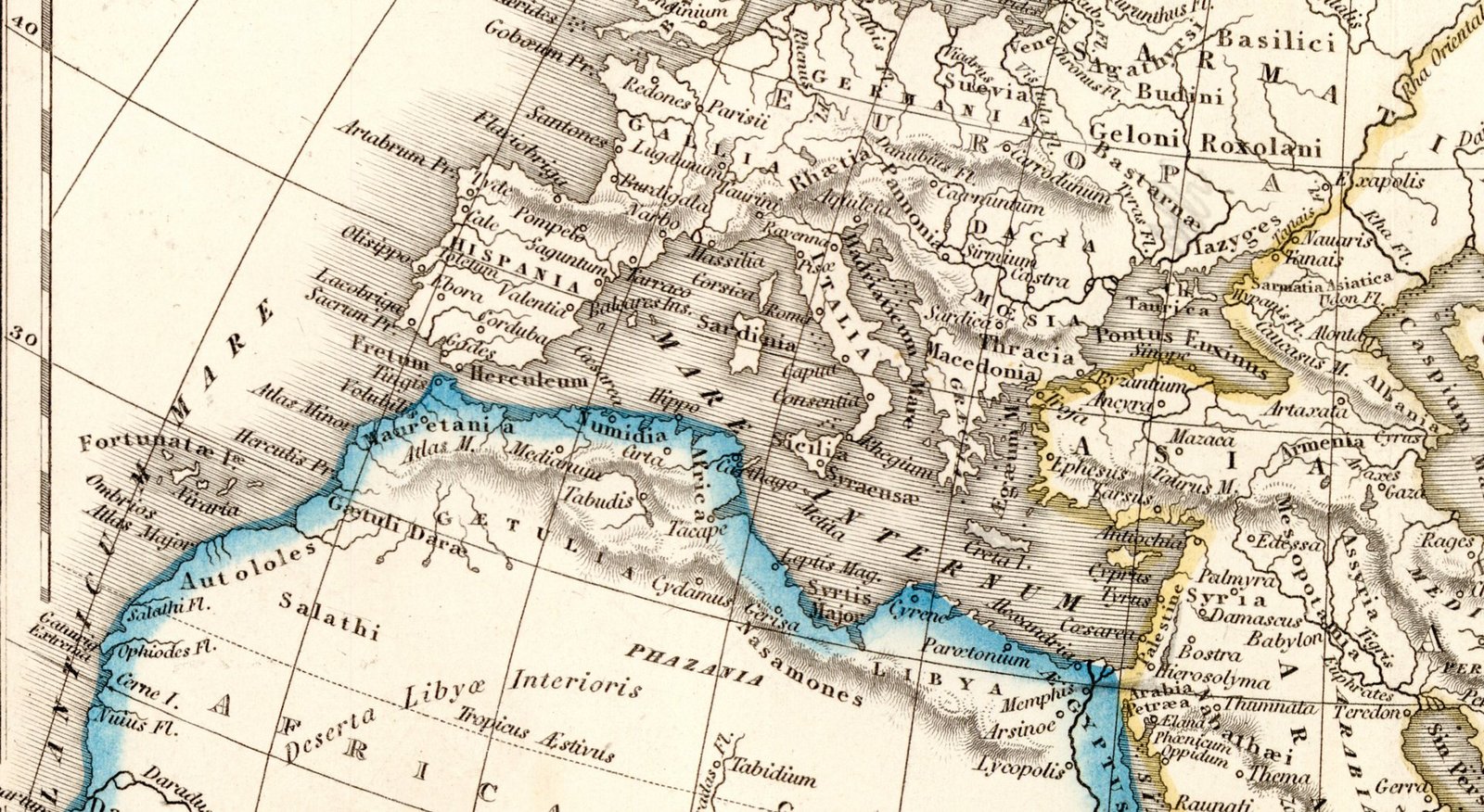
The priest names the one deed that surpasses all the rest: Athens stopped a great power that came against Europe and Asia from the Atlantic sea. He explains that the sea was then passable, because of an island lying in front of the mouth that the Greeks call the Pillars of Heracles.
A note on this passage
The word for insolence is hybris, here in the dative, hybrei: the power came "in" or "with" it. In Greek the word covers violence done out of arrogance, so the clause says the power was moving against Europe and Asia in that spirit. The root poreuomai turns up three times in the passage. The power is poreuomenēn, marching, the sea is poreusimon, passable, and the people who cross from island to island are poreuomenois, travellers. Atlantic is the adjective Atlantikon, and pelagos is the open sea.
The geography is given as the priest speaks it. The island lay pro tou stomatos, "in front of the mouth," and the mouth is what the Greeks call Hērakleous stēlas, the Pillars of Heracles, with stēlē meaning a standing stone or column. The priest adds hōs phate, "as you say," which sets the name down as a Greek one. Libya is the Greek name for the African land. The priest says the island was meizōn, larger than Libya and Asia together, and the account is another link in the chain Critias keeps pointing to, since it comes from the priest through Solon to old Critias and so to the speaker.
Read the full commentary — and tap any word for its dictionary entry — in the interlinear reader.
Open Plato, Timaeus 24e in the full reader
Always open passages in the reader
From the Great Library
You are reading a page of the Plato, Timaeus — the whole book is free in our interlinear reader.
The Great Library Project presses the classics in their original languages, glossed word by word — free to read, always. Browse the whole library.
Also on our shelves:
Plato, Timaeus 24e — The Great Library Project interlinear edition · greatlibraryproject.com/book/timaeus/24e/