Thucydides, History of the Peloponnesian War 2.47.3 · 2.47.3
The plague reaches Athens
Read the full text in our reader
καὶ ὄντων αὐτῶν οὐ πολλάς πω ἡμέρας ἐν τῇ Ἀττικῇ ἡ νόσος πρῶτον ἤρξατο γενέσθαι τοῖς Ἀθηναίοις, λεγόμενον μὲν καὶ πρότερον πολλαχόσε ἐγκατασκῆψαι καὶ περὶ Λῆμνον καὶ ἐν ἄλλοις χωρίοις, οὐ μέντοι τοσοῦτός γε λοιμὸς οὐδὲ φθορὰ οὕτως ἀνθρώπων οὐδαμοῦ ἐμνημονεύετο γενέσθαι.
The invaders had not yet been many days in Attica when the sickness first began to appear among the Athenians. It was said to have struck earlier in many places, around Lemnos and elsewhere, but nowhere was a plague so great, or such a destruction of human lives, remembered to have happened.
Word by word
The setting
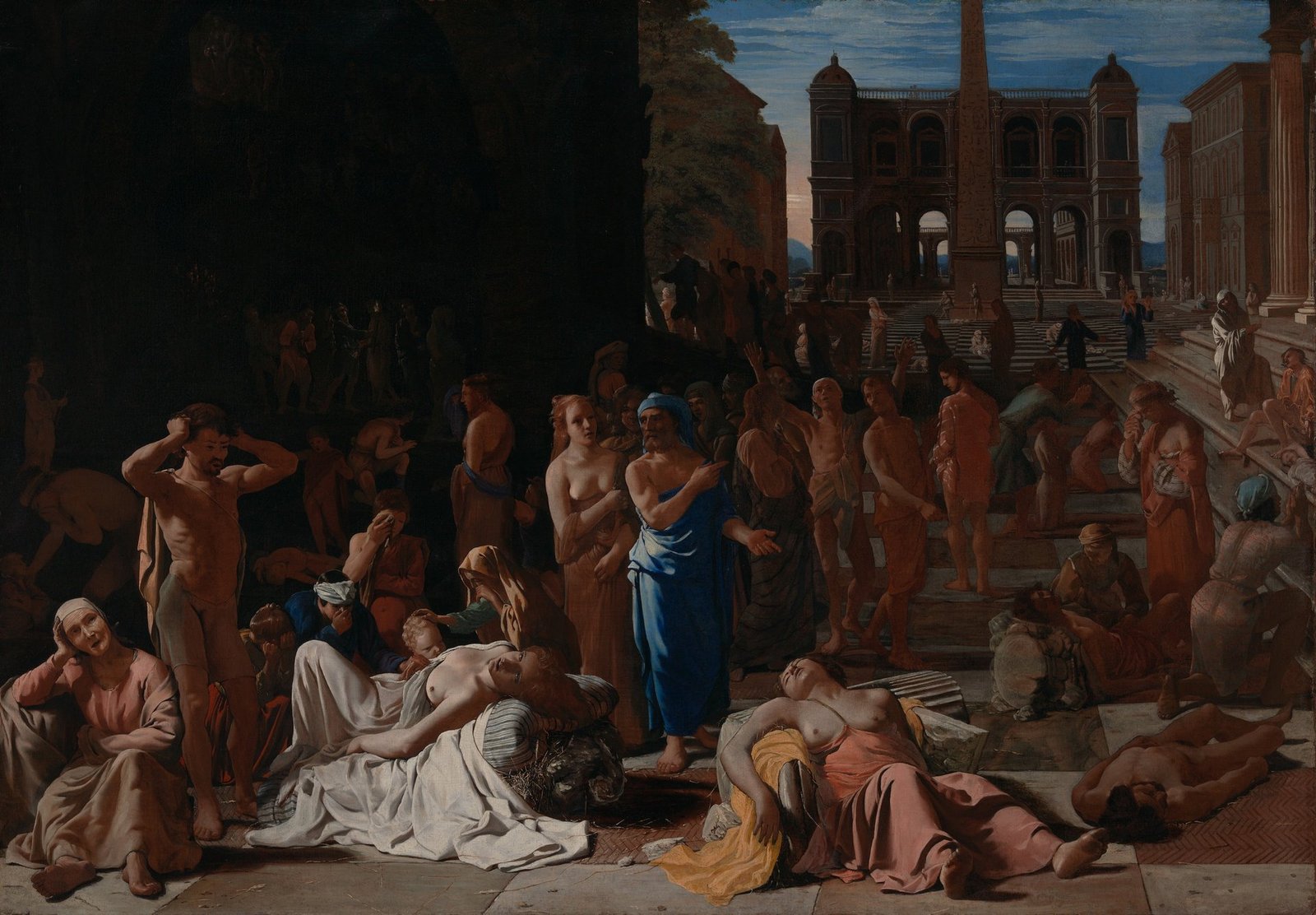
Only a few days after the invasion begins, the sickness first breaks out among the Athenians. Thucydides notes that it was reported elsewhere before, but never so severe.
A note on this passage
The disease arrives as hē nosos, "the sickness," with the definite article, as if the reader already knows which one he means. The first real piece of timing comes in a genitive absolute, ontōn autōn ou pollas pō hēmeras, "they not yet being many days" in the country, so the plague begins soon after the invasion. The verb ērxato genesthai, "began to come about," marks a start with no cause given.
He then looks for earlier cases. Enkataskēpsai is a compound of skēptō, which describes something falling upon a place with force, and it is also used of storms and thunderbolts. The report is hearsay, legomenon, "it being said," and he names Lemnos. Then a chain of negatives sets this outbreak apart: ou mentoi tosoutos ge loimos oude phthora, "not however so great a plague, nor such destruction," and oudamou, "nowhere." Two words are paired, loimos, plague, and phthora, the ruin of human life, which first names the thing and then counts its cost.
Read the full commentary — and tap any word for its dictionary entry — in the interlinear reader.
Open Thucydides, History of the Peloponnesian War 2.47.3 in the full reader
Always open passages in the reader
From the Great Library
You are reading a page of the Thucydides, History of the Peloponnesian War — the whole book is free in our interlinear reader.
The Great Library Project presses the classics in their original languages, glossed word by word — free to read, always. Browse the whole library.
Also on our shelves:
Thucydides, History of the Peloponnesian War 2.47.3 — The Great Library Project interlinear edition · greatlibraryproject.com/book/thucydides/2.47.3/