Thucydides, History of the Peloponnesian War 2.47.4 · 2.47.4
Doctors and prayers could not help
Read the full text in our reader
οὔτε γὰρ ἰατροὶ ἤρκουν τὸ πρῶτον θεραπεύοντες ἀγνοίᾳ, ἀλλ’ αὐτοὶ μάλιστα ἔθνῃσκον ὅσῳ καὶ μάλιστα προσῇσαν, οὔτε ἄλλη ἀνθρωπεία τέχνη οὐδεμία· ὅσα τε πρὸς ἱεροῖς ἱκέτευσαν ἢ μαντείοις καὶ τοῖς τοιούτοις ἐχρήσαντο, πάντα ἀνωφελῆ ἦν, τελευτῶντές τε αὐτῶν ἀπέστησαν ὑπὸ τοῦ κακοῦ νικώμενοι.
For at first the doctors could not cope, since they were treating it in ignorance, and they themselves died most, the more they went near the sick. No other human skill helped either. Whatever they begged for at shrines, or asked of oracles, and everything of that kind, was useless, and in the end they gave it up, overcome by the evil.
Word by word
The setting
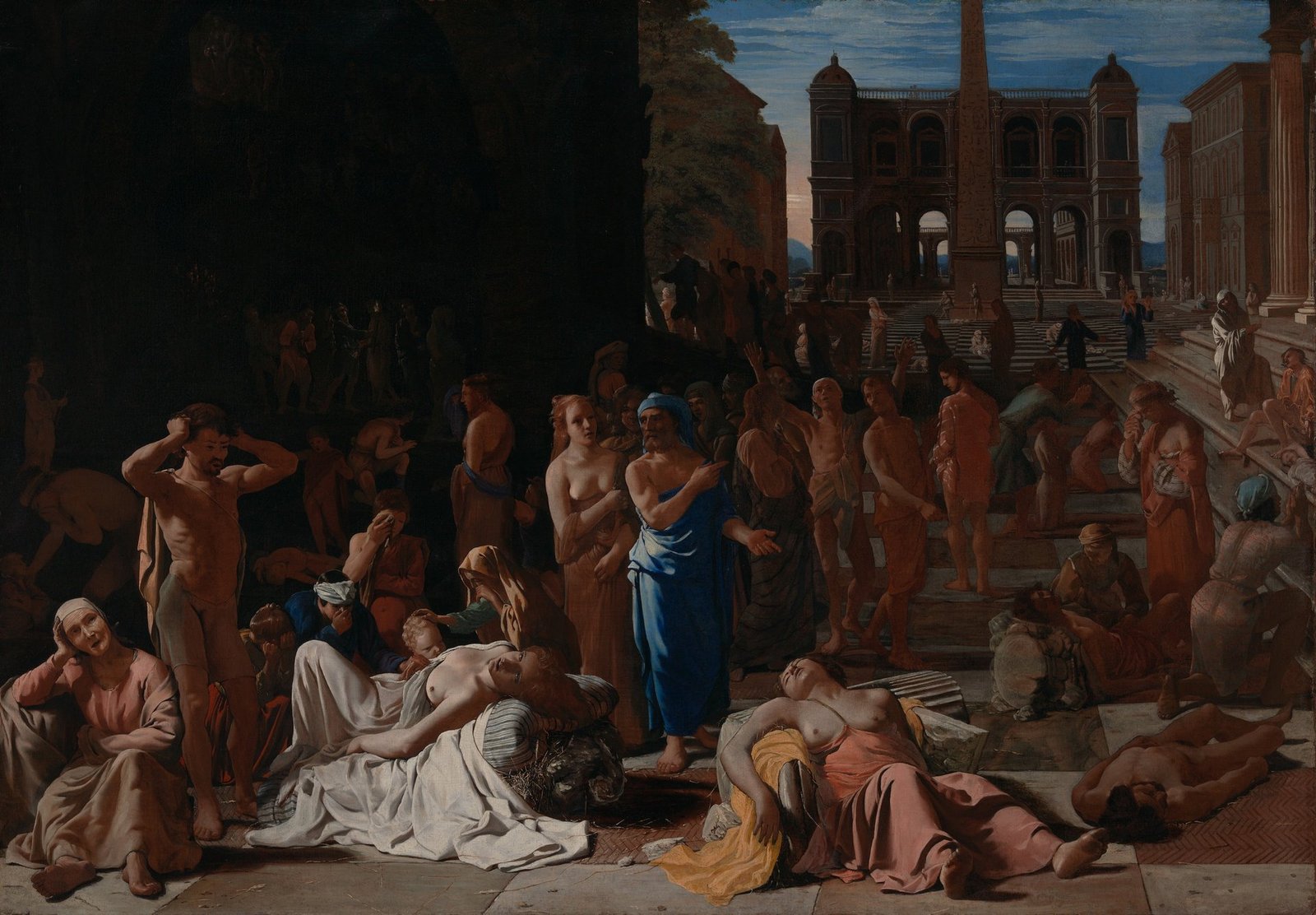
Neither the doctors nor any other human skill could stop the plague, and appeals to shrines and oracles did no good.
A note on this passage
The paragraph runs on two oute clauses, "neither the doctors" and "nor any other human skill," each carrying its own negative, with oudemia, "none," pressing the second. The doctors are iatroi, and the verb therapeuontes means treating or tending, here "in ignorance," agnoia. Their failure was one of knowledge: they could not cope, and they died more than anyone. The reason follows in hosōi kai malista prosēisan, "in proportion as they came nearest," which puts the cause of their deaths in their closeness to the sick.
The religious remedies are named in a list of three: begging at the shrines, consulting oracles, kai tois toioutois, "and such things." The verb hiketeuō is the one for a suppliant's plea, and the shrines are just hiera, "sacred things." The closing word for the plague is only to kakon, "the evil," and the people apestēsan, "stood away" from these practices, beaten by it.
Read the full commentary — and tap any word for its dictionary entry — in the interlinear reader.
Open Thucydides, History of the Peloponnesian War 2.47.4 in the full reader
Always open passages in the reader
From the Great Library
You are reading a page of the Thucydides, History of the Peloponnesian War — the whole book is free in our interlinear reader.
The Great Library Project presses the classics in their original languages, glossed word by word — free to read, always. Browse the whole library.
Also on our shelves:
Thucydides, History of the Peloponnesian War 2.47.4 — The Great Library Project interlinear edition · greatlibraryproject.com/book/thucydides/2.47.4/