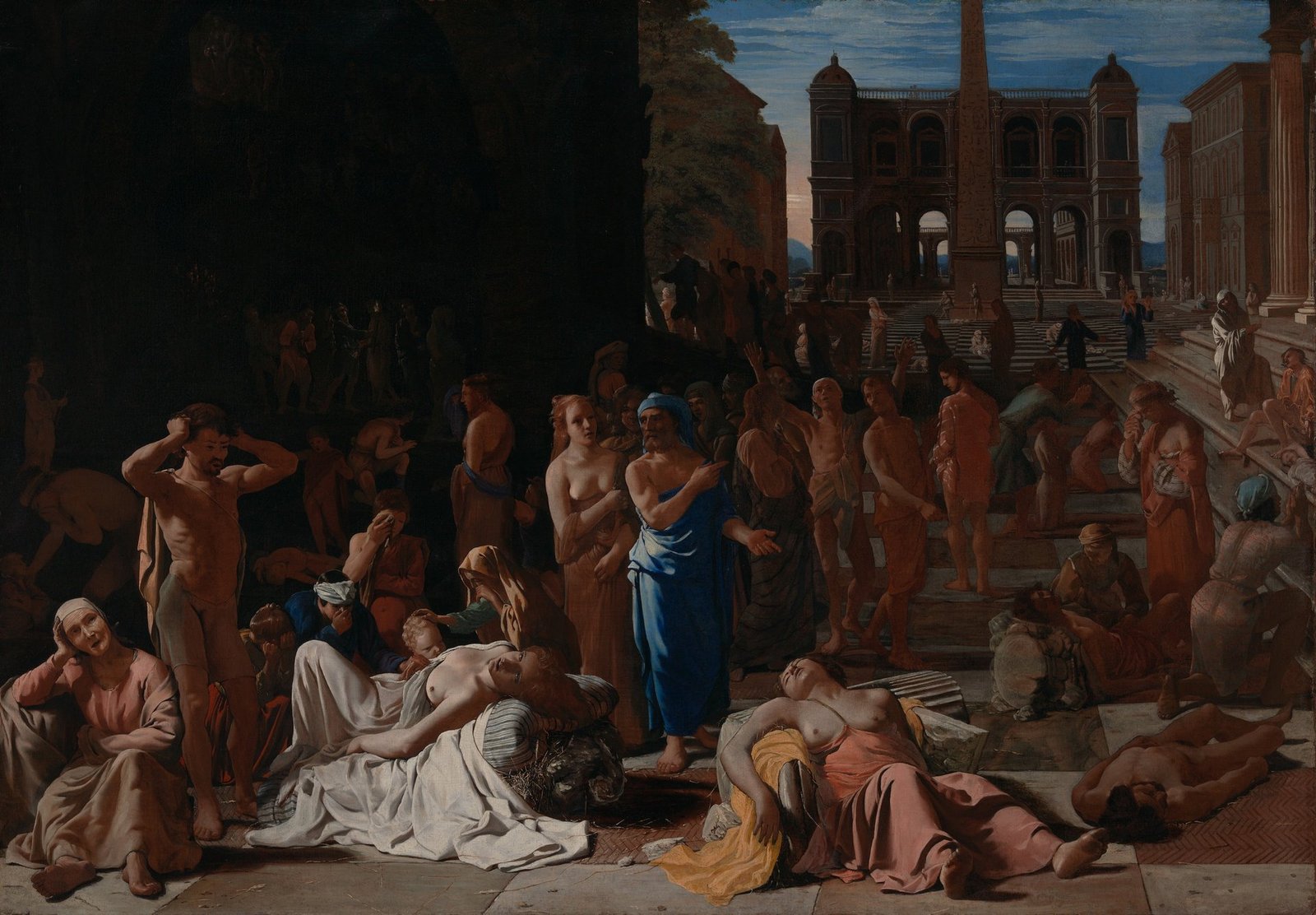
Thucydides, History of the Peloponnesian War 2.48.2 · 2.48.2
It reaches Athens and the Piraeus
Read the full text in our reader
ἐς δὲ τὴν Ἀθηναίων πόλιν ἐξαπιναίως ἐσέπεσε, καὶ τὸ πρῶτον ἐν τῷ Πειραιεῖ ἥψατο τῶν ἀνθρώπων, ὥστε καὶ ἐλέχθη ὑπ’ αὐτῶν ὡς οἱ Πελοποννήσιοι φάρμακα ἐσβεβλήκοιεν ἐς τὰ φρέατα· κρῆναι γὰρ οὔπω ἦσαν αὐτόθι. ὕστερον δὲ καὶ ἐς τὴν ἄνω πόλιν ἀφίκετο, καὶ ἔθνῃσκον πολλῷ μᾶλλον ἤδη.
It fell on the city of the Athenians suddenly. It first took hold of people in the Piraeus, and for that reason they even said that the Peloponnesians had thrown poisons into the wells, since there were no springs there yet. Later it reached the upper city as well, and then people died in much greater numbers.
Word by word
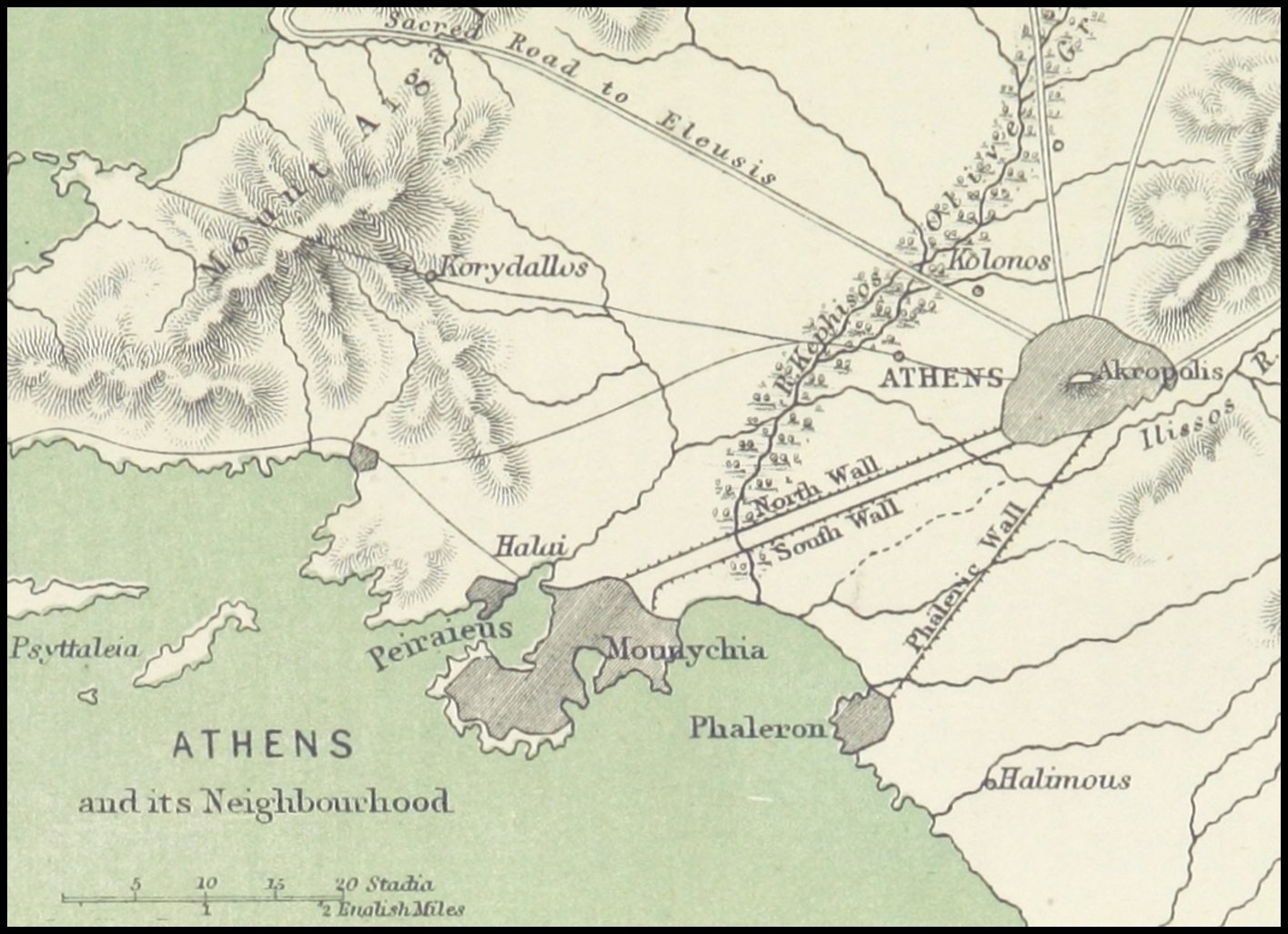
The setting
The sickness falls on Athens without warning, strikes first at the harbor town, and gives rise to the rumor that the Peloponnesians had poisoned the wells.
A note on this passage
The first victims were in the Piraeus, the harbor town, and the rumor that followed is reported only as speech: elechthē hyp' autōn, "it was said by them." Thucydides neither accepts nor rejects it. He adds a plain fact in a gar clause, that krēnai, "springs," did not yet exist there, so the harbor drew its water from phreata, wells or cisterns, and a poisoner would have had somewhere to strike. The word for the supposed poison is pharmaka, the same plural that Greek uses for drugs and potions.
The verbs change as the story widens. Esepese, "fell into," is sudden and violent, and ēpsato, "touched," takes the genitive, tōn anthrōpōn, as if the sickness laid a hand on people. When it reaches the upper city (tēn anō polin) the imperfect ethnēiskon shows the dying going on and on, and pollōi mallon, "by much more," gives the scale: the deaths became far more frequent.
Read the full commentary — and tap any word for its dictionary entry — in the interlinear reader.
Open Thucydides, History of the Peloponnesian War 2.48.2 in the full reader
Always open passages in the reader
From the Great Library
You are reading a page of the Thucydides, History of the Peloponnesian War — the whole book is free in our interlinear reader.
The Great Library Project presses the classics in their original languages, glossed word by word — free to read, always. Browse the whole library.
Also on our shelves:
Thucydides, History of the Peloponnesian War 2.48.2 — The Great Library Project interlinear edition · greatlibraryproject.com/book/thucydides/2.48.2/