Thucydides, History of the Peloponnesian War 2.48.3 · 2.48.3
I had it myself
Read the full text in our reader
λεγέτω μὲν οὖν περὶ αὐτοῦ ὡς ἕκαστος γιγνώσκει καὶ ἰατρὸς καὶ ἰδιώτης, ἀφ’ ὅτου εἰκὸς ἦν γενέσθαι αὐτό, καὶ τὰς αἰτίας ἅστινας νομίζει τοσαύτης μεταβολῆς ἱκανὰς εἶναι δύναμιν ἐς τὸ μεταστῆσαι σχεῖν· ἐγὼ δὲ οἷόν τε ἐγίγνετο λέξω, καὶ ἀφ’ ὧν ἄν τις σκοπῶν, εἴ ποτε καὶ αὖθις ἐπιπέσοι, μάλιστ’ ἂν ἔχοι τι προειδὼς μὴ ἀγνοεῖν, ταῦτα δηλώσω αὐτός τε νοσήσας καὶ αὐτὸς ἰδὼν ἄλλους πάσχοντας.
Let everyone, doctor or layman, say what he thinks about it: where it was likely to have come from, and what causes he believes were strong enough to bring about so great a change. I will say what it was like, and I will set out the signs by which someone could recognize it, if it ever struck again, and not be ignorant of it. I can do this because I was sick with it myself and saw others suffering from it.
Word by word
The setting
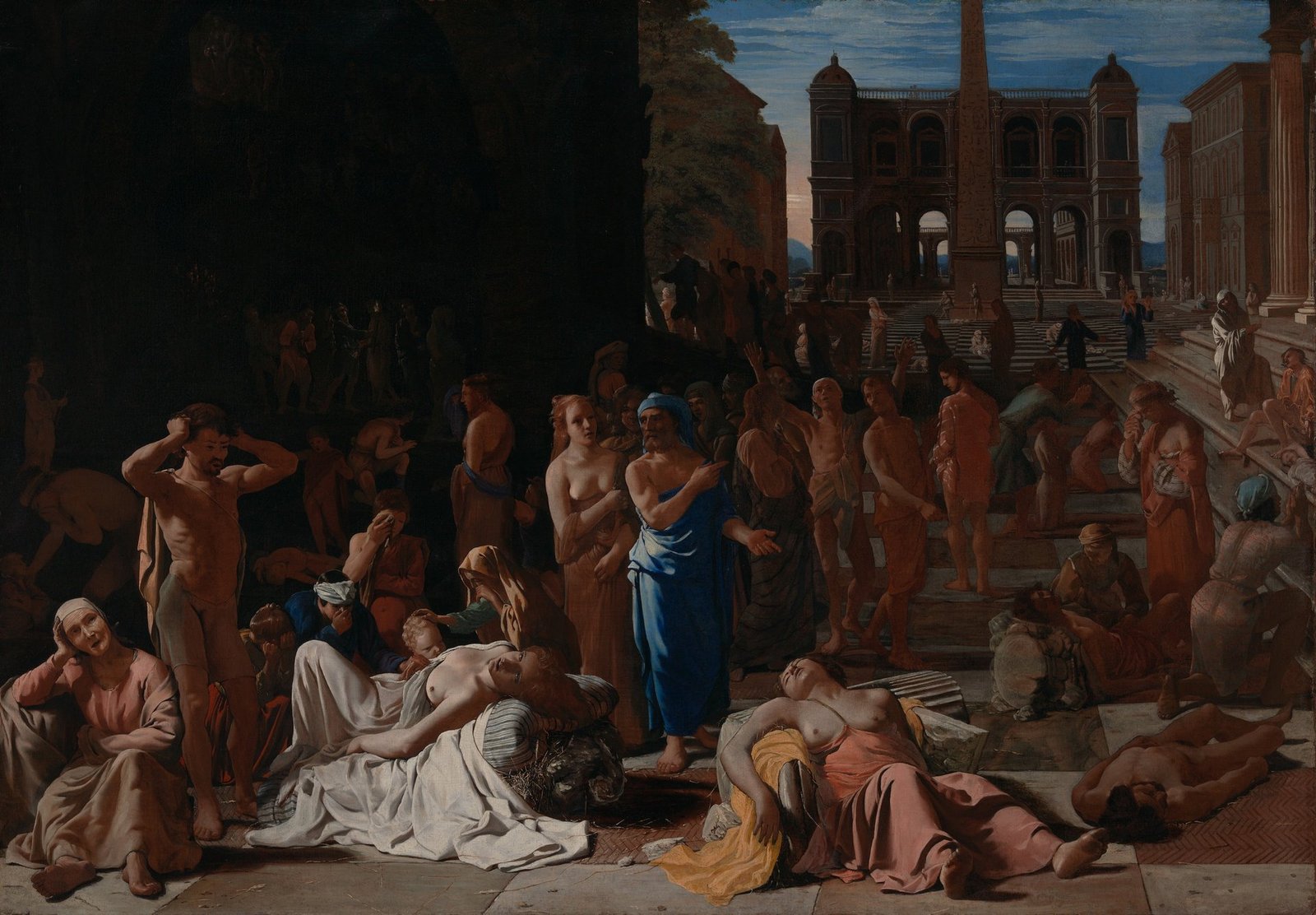
Thucydides leaves causes to doctors and laymen, promises to describe what the sickness was like so that it can be recognized if it returns, and says he had it himself and watched others suffer.
A note on this passage
Thucydides separates himself from the explainers. Iatros kai idiōtēs, "doctor and layman," covers every kind of speaker, and he leaves both groups to guess at the aitiai, the causes, and at the dynamis, the power, that they think could metastēsai, produce so great a shift. For himself he promises only hoion egigneto, "what it was like as it came about," in plain description.
The purpose is practical. Proeidōs, "knowing in advance," and mē agnoein, "not to be ignorant," say that a reader who has the description could recognize the sickness if it epipesoi, "fell upon" the city again. The last clause gives his credentials in two participles, nosēsas, "having been sick," and idōn, "having seen," each with its own autos, "myself." He was a patient and an onlooker, and he says so before listing a single symptom.
Read the full commentary — and tap any word for its dictionary entry — in the interlinear reader.
Open Thucydides, History of the Peloponnesian War 2.48.3 in the full reader
Always open passages in the reader
From the Great Library
You are reading a page of the Thucydides, History of the Peloponnesian War — the whole book is free in our interlinear reader.
The Great Library Project presses the classics in their original languages, glossed word by word — free to read, always. Browse the whole library.
Also on our shelves:
Thucydides, History of the Peloponnesian War 2.48.3 — The Great Library Project interlinear edition · greatlibraryproject.com/book/thucydides/2.48.3/