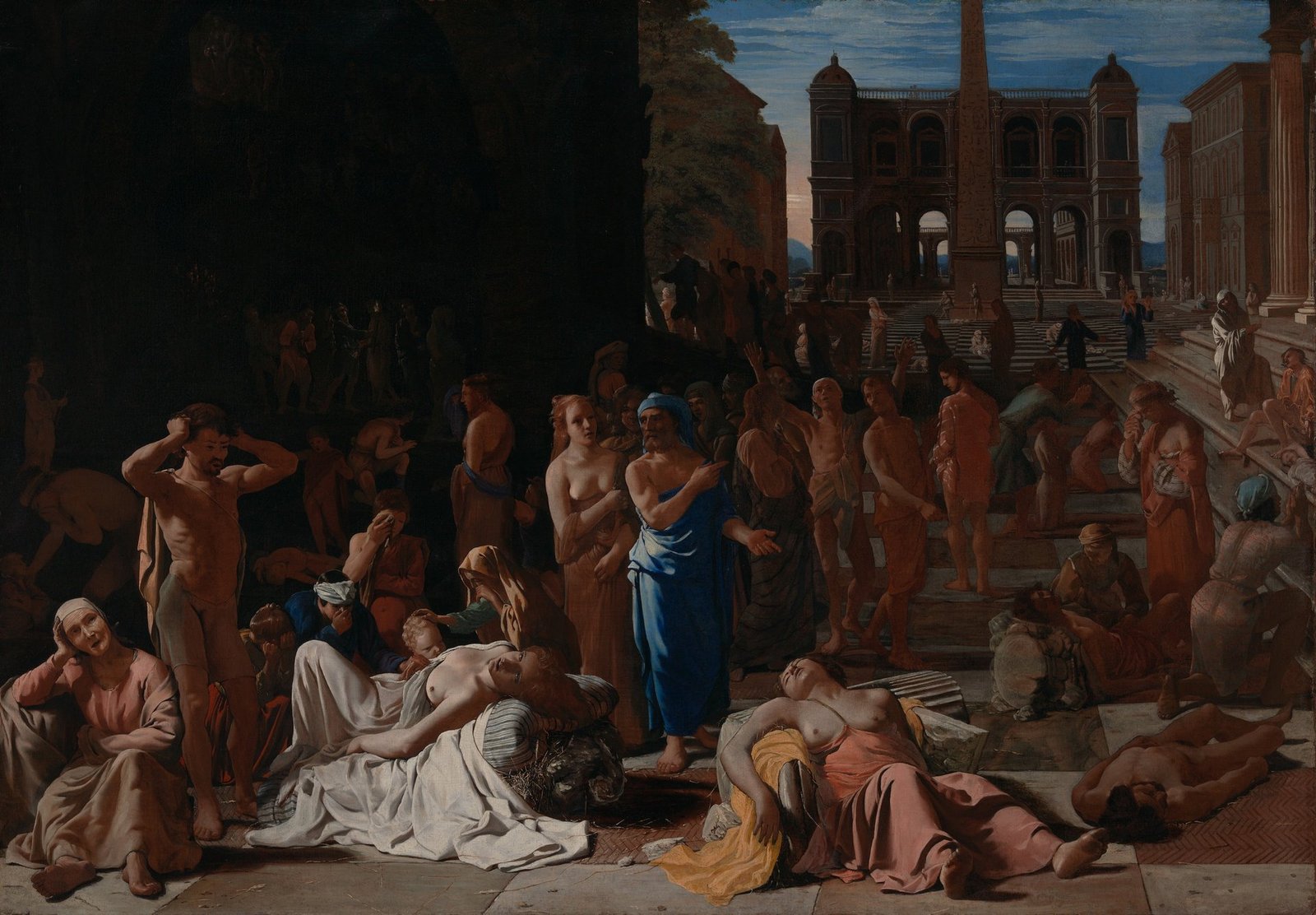
Thucydides, History of the Peloponnesian War 2.49.8 · 2.49.8
Lost limbs, eyes and memory
Read the full text in our reader
κατέσκηπτε γὰρ ἐς αἰδοῖα καὶ ἐς ἄκρας χεῖρας καὶ πόδας, καὶ πολλοὶ στερισκόμενοι τούτων διέφευγον, εἰσὶ δ’ οἳ καὶ τῶν ὀφθαλμῶν. τοὺς δὲ καὶ λήθη ἐλάμβανε παραυτίκα ἀναστάντας τῶν πάντων ὁμοίως, καὶ ἠγνόησαν σφᾶς τε αὐτοὺς καὶ τοὺς ἐπιτηδείους.
For it fell on the genitals and on the tips of the hands and feet, and many survived at the cost of these, and some even lost their eyes. Others, the moment they first got up, were seized by a loss of memory for everything alike, and they did not know themselves or their friends.
Word by word
The setting
The illness fell on the genitals, fingers and toes, and many survived only by losing them, or their eyes. Others rose from the sickbed with no memory of anything, not even themselves or their friends.
A note on this passage
The verb kateskēpte comes from kataskēptō, which is used of a thunderbolt or a blow that strikes down from above, so the illness that began in the head now "comes down on" particular places. He names them without softening: aidoia, literally "the parts of shame," then akras cheiras kai podas, the tips of the hands and the feet. The participle steriskomenoi means "being deprived," and the sentence puts it plainly: many escaped death, but only by being stripped of these parts, and some of their eyes as well.
The last sentence turns from the body to the mind. Lēthē is forgetting, and it took hold parautika anastantas, "at the very moment of getting up," so recovery and loss of memory arrive together. Tōn pantōn homoiōs means "of all things alike," and the aorist ēgnoēsan says that they did not know sphas autous, "themselves," nor tous epitēdeious, "their close ones."
Read the full commentary — and tap any word for its dictionary entry — in the interlinear reader.
Open Thucydides, History of the Peloponnesian War 2.49.8 in the full reader
Always open passages in the reader
From the Great Library
You are reading a page of the Thucydides, History of the Peloponnesian War — the whole book is free in our interlinear reader.
The Great Library Project presses the classics in their original languages, glossed word by word — free to read, always. Browse the whole library.
Also on our shelves:
Thucydides, History of the Peloponnesian War 2.49.8 — The Great Library Project interlinear edition · greatlibraryproject.com/book/thucydides/2.49.8/