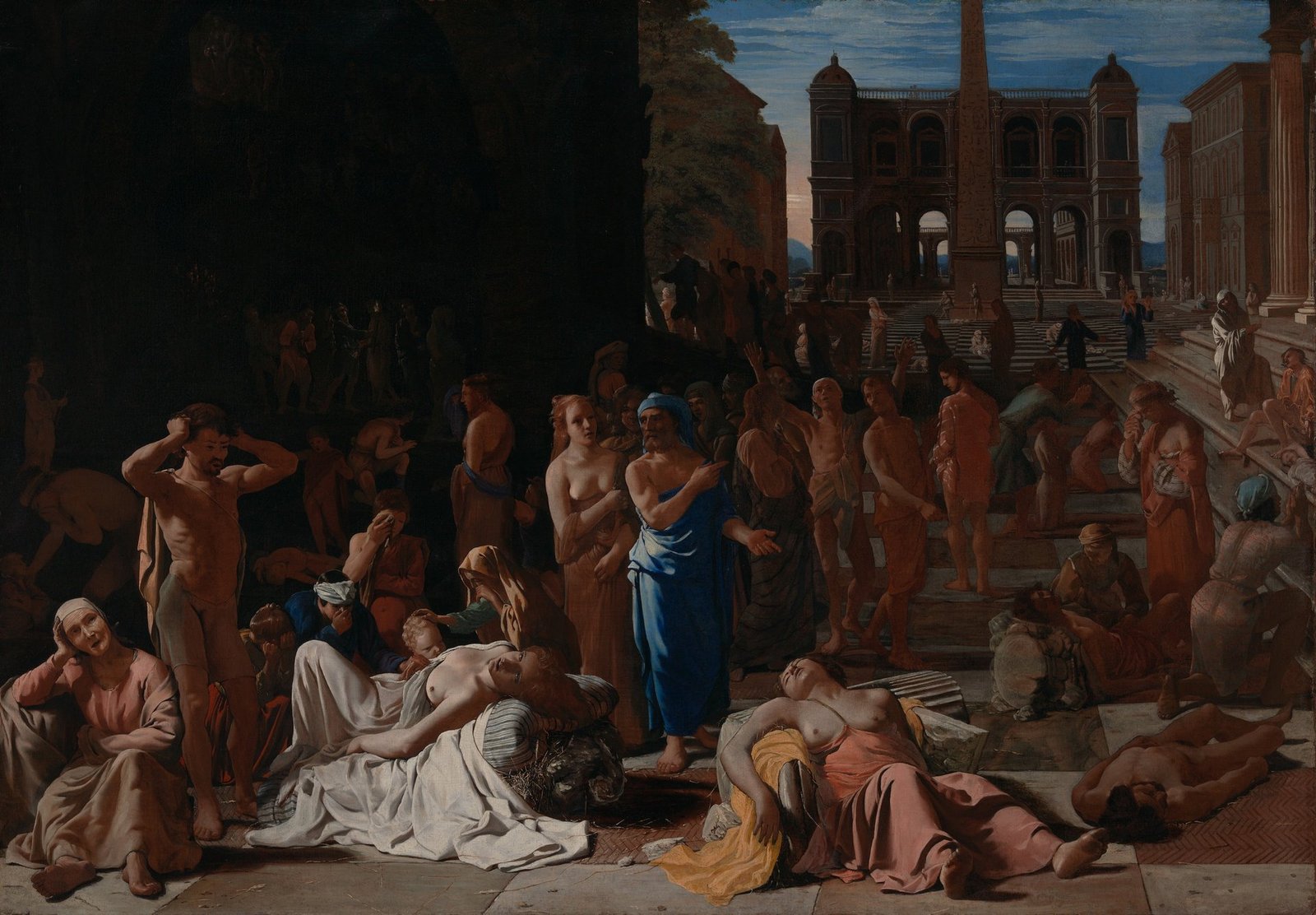
Thucydides, History of the Peloponnesian War 2.51.5 · 2.51.5
No one to nurse them
Read the full text in our reader
εἴτε γὰρ μὴ ᾽θέλοιεν δεδιότες ἀλλήλοις προσιέναι, ἀπώλλυντο ἐρῆμοι, καὶ οἰκίαι πολλαὶ ἐκενώθησαν ἀπορίᾳ τοῦ θεραπεύσοντος· εἴτε προσίοιεν, διεφθείροντο, καὶ μάλιστα οἱ ἀρετῆς τι μεταποιούμενοι· αἰσχύνῃ γὰρ ἠφείδουν σφῶν αὐτῶν ἐσιόντες παρὰ τοὺς φίλους, ἐπεὶ καὶ τὰς ὀλοφύρσεις τῶν ἀπογιγνομένων τελευτῶντες καὶ οἱ οἰκεῖοι ἐξέκαμνον ὑπὸ τοῦ πολλοῦ κακοῦ νικώμενοι.
If people were afraid and refused to go near one another, they died alone, and many houses were emptied for want of anyone to nurse the sick. If they did go near, they were destroyed, and above all those who made any claim to goodness. Shame made them careless of themselves when they went in to their friends. In the end even the relatives, worn out by the wailing of the dying, gave way, overcome by the sheer weight of the misery.
Word by word
The setting
Those who stayed away from the sick died alone, and those who visited them caught the sickness, the best people most of all.
A note on this passage
The two eite clauses, "if they were unwilling" and "if they approached," close both exits in turn, and each ends on the same verb of ruin: apollunto for those who stayed away, diephtheironto for those who came. The second is the same verb that Greek used for corrupting or spoiling anything, so the nurse and the one left alone are destroyed in matching words.
The phrase about those who laid claim to aretē, "excellence," is a plain observation of who died most: the people who thought it a point of honour to go in. Thucydides gives their motive in a single word, aischunē, "shame," and then adds that even the family, hoi oikeioi, "the household," tired of the lamentations (olophurseis) and gave up.
Read the full commentary — and tap any word for its dictionary entry — in the interlinear reader.
Open Thucydides, History of the Peloponnesian War 2.51.5 in the full reader
Always open passages in the reader
From the Great Library
You are reading a page of the Thucydides, History of the Peloponnesian War — the whole book is free in our interlinear reader.
The Great Library Project presses the classics in their original languages, glossed word by word — free to read, always. Browse the whole library.
Also on our shelves:
Thucydides, History of the Peloponnesian War 2.51.5 — The Great Library Project interlinear edition · greatlibraryproject.com/book/thucydides/2.51.5/