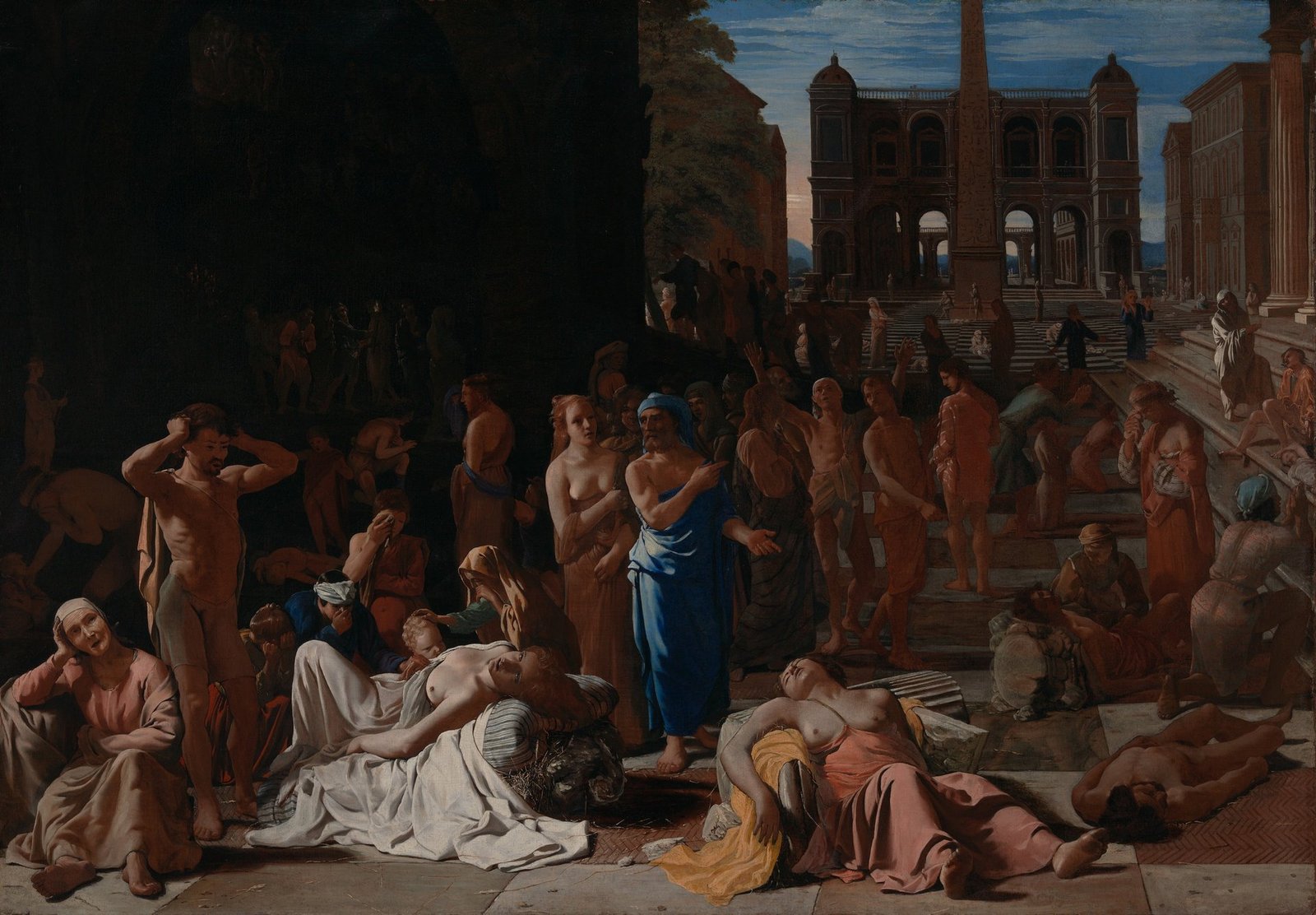
Thucydides, History of the Peloponnesian War 2.52.3 · 2.52.3
Bodies in the temples
Read the full text in our reader
τά τε ἱερὰ ἐν οἷς ἐσκήνηντο νεκρῶν πλέα ἦν, αὐτοῦ ἐναποθνῃσκόντων· ὑπερβιαζομένου γὰρ τοῦ κακοῦ οἱ ἄνθρωποι, οὐκ ἔχοντες ὅτι γένωνται, ἐς ὀλιγωρίαν ἐτράποντο καὶ ἱερῶν καὶ ὁσίων ὁμοίως.
The temples, in which people had made their camp, were full of the dead who had died there. For as the calamity grew past all bearing, people, not knowing what was to become of them, fell into disregard for sacred and profane things alike.
Word by word
The setting
The temples where people had made camp were full of the dead, and as the sickness overpowered them, people stopped caring for sacred and ordinary things alike.
A note on this passage
Thucydides notes a grim detail about the temples, ta hiera. People had pitched tents in them, eskēnēnto, from skēnē, "tent," and so the sacred places held the living first and then the dead, who died autou, "right there." The genitive absolute hyperbiazomenou tou kakou adds that the trouble was "forcing its way beyond measure."
The idiom ouk echontes hoti genōntai literally says "not having what they might become," and means they had no idea what was to happen to them. Their answer is oligōria, "thinking little" of things, and it covers hierōn and hosiōn alike. The pair names what belongs to the gods and what is permitted to people, so the contempt reaches both the temples and the ordinary rules.
Read the full commentary — and tap any word for its dictionary entry — in the interlinear reader.
Open Thucydides, History of the Peloponnesian War 2.52.3 in the full reader
Always open passages in the reader
From the Great Library
You are reading a page of the Thucydides, History of the Peloponnesian War — the whole book is free in our interlinear reader.
The Great Library Project presses the classics in their original languages, glossed word by word — free to read, always. Browse the whole library.
Also on our shelves:
Thucydides, History of the Peloponnesian War 2.52.3 — The Great Library Project interlinear edition · greatlibraryproject.com/book/thucydides/2.52.3/