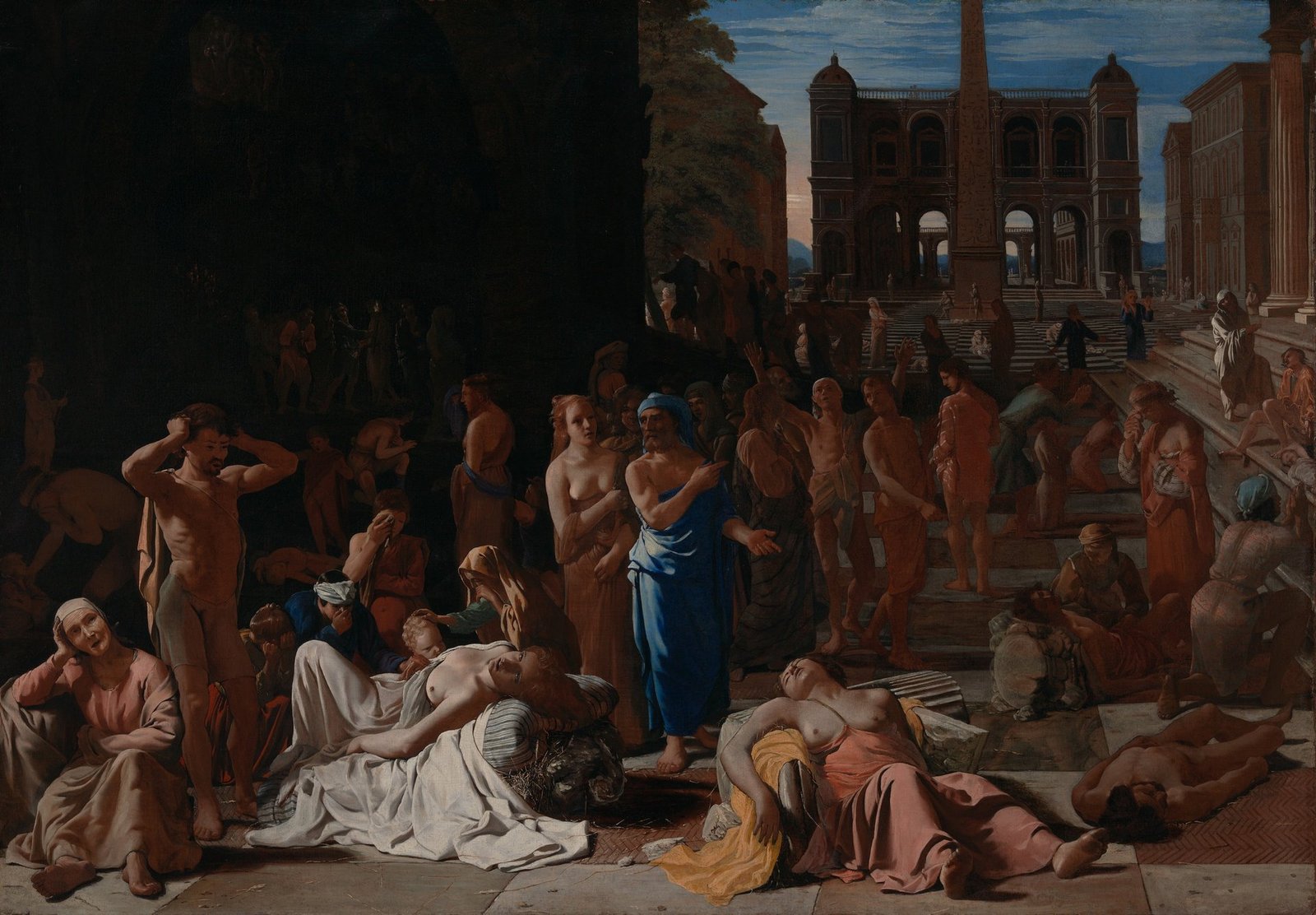
Thucydides, History of the Peloponnesian War 2.52.4 · 2.52.4
Burial customs thrown into confusion
Read the full text in our reader
νόμοι τε πάντες ξυνεταράχθησαν οἷς ἐχρῶντο πρότερον περὶ τὰς ταφάς, ἔθαπτον δὲ ὡς ἕκαστος ἐδύνατο. καὶ πολλοὶ ἐς ἀναισχύντους θήκας ἐτράποντο σπάνει τῶν ἐπιτηδείων διὰ τὸ συχνοὺς ἤδη προτεθνάναι σφίσιν· ἐπὶ πυρὰς γὰρ ἀλλοτρίας φθάσαντες τοὺς νήσαντας οἱ μὲν ἐπιθέντες τὸν ἑαυτῶν νεκρὸν ὑφῆπτον, οἱ δὲ καιομένου ἄλλου ἐπιβαλόντες ἄνωθεν ὃν φέροιεν ἀπῇσαν.
All the customs they had formerly observed in burial were thrown into confusion, and each buried as he could. Many turned to shameless ways of disposing of the dead, for lack of what was needed, because so many of their own had already died. Some got to a pyre that others had built, put their own dead on it before the builders could, and set it alight. Others, while another body was burning, threw on top the one they were carrying and went away.
Word by word
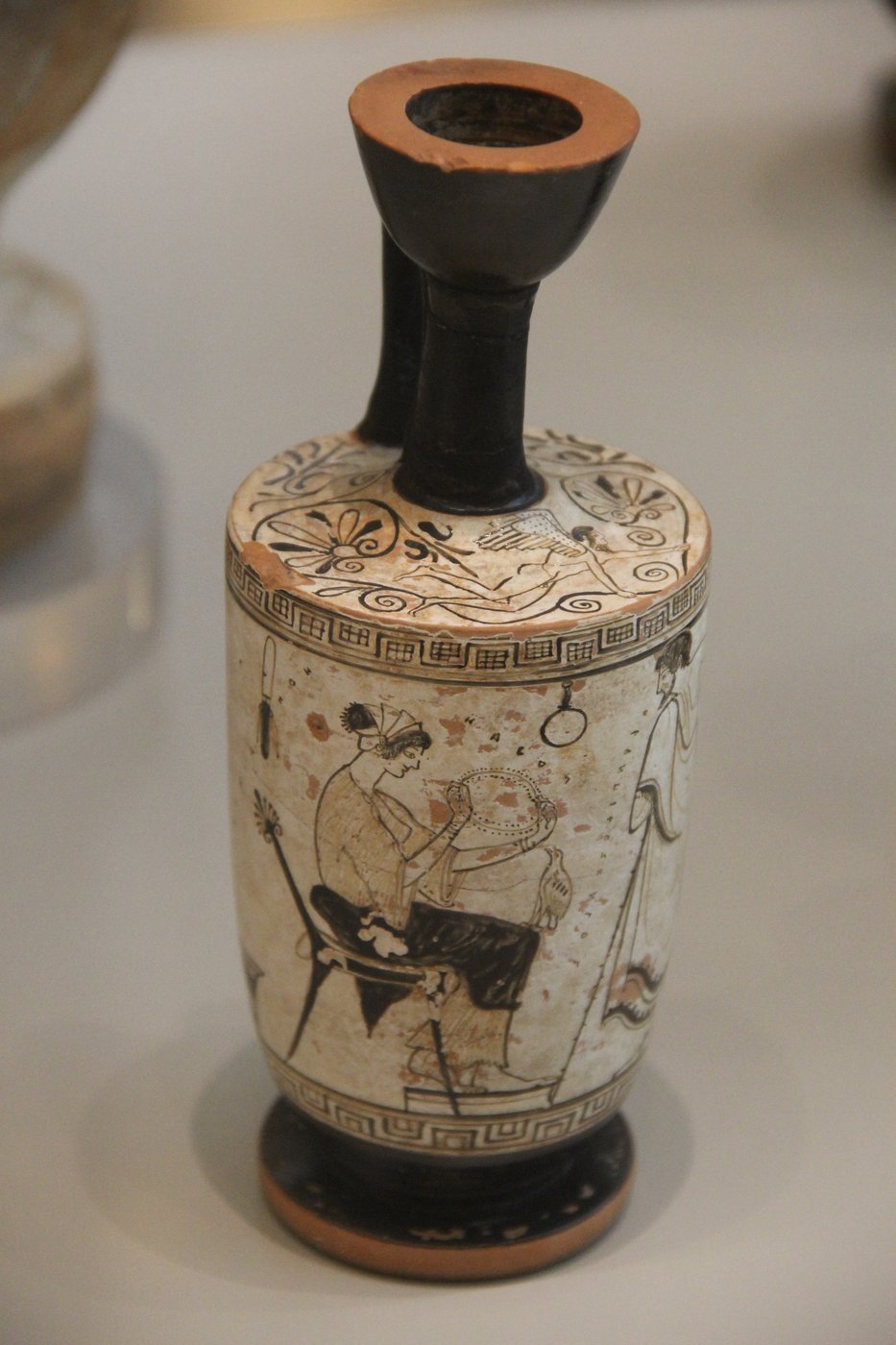
The setting
The old burial customs collapsed, and short of everything, people burned their dead on pyres that other families had built.
A note on this passage
The word for the customs is nomoi, the ordinary word for laws, and they were xynetarachthēsan, "stirred together" (the old Attic xyn- for syn-). People then buried hōs hekastos edunato, "as each could," and the sentence moves from rules to improvisation. The adjective anaischuntous on thēkas, "shameless" burial places, belongs to the same family as the earlier aischunē, "shame," here lost.
The last sentence turns on phthasantes, "getting there first," the verb of a race. The people who had built the pyre, tous nēsantas, are the owners, and others beat them to it. With hoi men and hoi de, Thucydides divides the desperate into those who lit their own dead on a stranger's fire and those who dropped a body on top of one already burning. The optative pheroien marks the carrying as something done each time, by whoever came.
Read the full commentary — and tap any word for its dictionary entry — in the interlinear reader.
Open Thucydides, History of the Peloponnesian War 2.52.4 in the full reader
Always open passages in the reader
From the Great Library
You are reading a page of the Thucydides, History of the Peloponnesian War — the whole book is free in our interlinear reader.
The Great Library Project presses the classics in their original languages, glossed word by word — free to read, always. Browse the whole library.
Also on our shelves:
Thucydides, History of the Peloponnesian War 2.52.4 — The Great Library Project interlinear edition · greatlibraryproject.com/book/thucydides/2.52.4/